
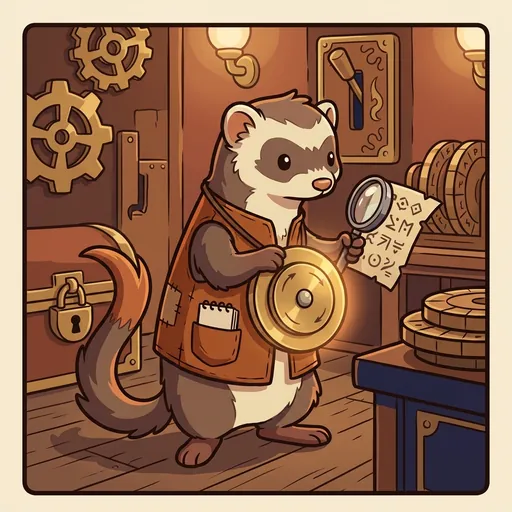
Sift
CIPHER PUZZLES — substitution / Caesar / frequency analysis / pattern-in-coded-messages. The puzzle-archetype of *messages that have been encoded* and *can be decoded* by *finding the key.*
Listen along — Sift
Loading audio…
Press play to listen along. The line being read lights up as you go.
Show full transcript
Loading transcript…
Chapter 3 — Sift and the Spinning Wheel
Sift, a small ferret-tween, moved with a quiet, focused energy. A spinning brass cipher-wheel hung from a cord around her neck, catching the light as she walked. She was long and slender, her fur a mix of warm brown, cream, and russet. Her tail flicked quickly, always expressive. Her vest had one deep pocket, just right for her small notebook labeled KEYS in tidy block letters.
The cipher-wheel was her constant companion. It had two polished brass discs, one inside the other. Each rim was engraved with the alphabet. A small rivet held them together at the center, letting the inner disc spin smoothly against the outer one.
This was a Caesar-wheel. Sift would often spin the inner disc, lining up, say, the ‘A’ on its rim with the ‘D’ on the outer ring. “See?” she might say, her voice soft. “Now, every letter on this inner disc has shifted by three places. An ‘A’ becomes a ‘D’. A ‘B’ becomes an ‘E’. It’s a simple code.” She’d explain that the outer disc’s letters always mapped to the inner disc’s. The number you shifted by was the key. If you knew the key, you could decode the message easily. If you didn’t, you could sometimes find it by looking at which letters appeared most often. In English, ‘E’ is the most common letter, so the most frequent letter in a coded message is probably ‘E’.
Sift understood that these puzzles were important. She embodied the cipher-puzzle archetype—the kind of puzzle where a message has been encoded, and you, the solver, must find the key to decode it. Substitution ciphers, Caesar ciphers, simple frequency analysis—these were her domain. The puzzles were always solvable because a key always existed, and that key was always findable. The true skill, Sift believed, was patience with the key-search.
She never talked about ciphers as scary spy-secrets or military codes. For Sift, ciphers were playful. She’d tell stories about them. Like the time she wrote a coded note to her cousin about which tree had the best pears in the orchard. Or how the village librarian left a coded shelf-label for the new librarian, a welcoming puzzle to help her learn the collection. Her grandmother had even hidden her favorite scone recipe in the back of an old cookbook, coded so only family members could read it. These ciphers were fun, family puzzles, village traditions, kindness-puzzles. They were games, not threats.
Sift grew up in a small village where her family had been the coded-recipe-keepers for generations. They maintained the village’s recipe-book, a treasured collection. By tradition, its most-prized recipes were written in a simple substitution cipher. To read them, a cook had to be invited into the tradition. Learning the key was a special moment, a hospitality craft that officially welcomed you into the village’s culinary community. By age six, Sift had learned that ciphers were invitations, not barriers.
When she was twenty-two, Sift walked to the EscapeForge academy. Latch, the academy’s founder, had asked her a single question: “What is the cipher-puzzle archetype?”
Sift had thought for a moment, her fingers tracing the brass wheel at her neck. “It is the puzzle of messages that have been encoded,” she said, “and can be decoded by finding the key. Every cipher has a key. Spin until the letters speak. For Caesar ciphers, you try every shift. For substitution ciphers, you look at which letters appear most often. ‘E’ is usually the most common in English.” She looked Latch in the eye. “The puzzle is patience with the key-search.”
Latch had simply nodded. “You are appointed.”
In her chamber, the cipher chamber, Sift began every first-day lesson the same way. She held up her spinning cipher-wheel. The brass discs caught the lamplight as she spun it slowly.
“I am Sift,” she said, her voice clear and calm. “The puzzle-archetype I teach is cipher puzzles. The move is find the key. The key always exists. The key is always findable. Every cipher has a key. Spin until the letters speak.”
She taught her students the steps, the cipher-puzzle scaffolds:
“First,” she’d say, pointing to a coded message on the board, “read the encoded message. Don’t panic if it looks like gibberish. It is gibberish until you have the key.”
“Next, identify the cipher type. Is it a Caesar shift, where letters just slide along? Or a substitution, where one letter always stands in for another? Or something else entirely?”
“For a Caesar cipher,” she explained, “you simply try every shift. Start with one, then two, then three, all the way up to twenty-five. One of them will produce real words.”
“For a substitution cipher, we use frequency analysis. That means you count which encoded letter appears most often. If ‘X’ shows up more than any other letter in your coded message, you guess it’s actually ‘E’, because ‘E’ is the most common letter in English. Then you try the second-most-frequent as ‘T’, then ‘A’, then ‘O’.” She paused, letting that sink in.
“As you try to decode, look for common short words. Words like the, and, a, is, or of. If your trial decode produces ‘thq’, your guess is wrong. But if it produces ‘the’, you’re on the right track.”
“Write the key as you find it,” she instructed, demonstrating how to map an encoded letter to its decoded one. “Like ‘X’ equals ‘E’.”
“Finally, once you have most of the key, decode the whole message.”
Sift was always explicit about one thing. “I sometimes try the wrong shift first,” she admitted. “Or the wrong letter-guess. Wrong guesses are not failures. They are how you find the right guess. The cipher is the searching itself.”
When students asked Sift whether cipher-puzzles were hard, she always gave the same answer.
“They are not hard,” she’d say, a small smile playing on her lips. “They are find the key. Every cipher has a key. Spin until the letters speak.”
She would spin the wheel then, the brass discs catching the lamplight. And slowly, patiently, the letters would begin to speak.
The EscapeForge ensemble
Sift is part of EscapeForge's distributed-narrative cast. Each character embodies a different curricular primitive; together they teach the full subject.
-

Tally
Math puzzles — counting / arithmetic / number-sense
-
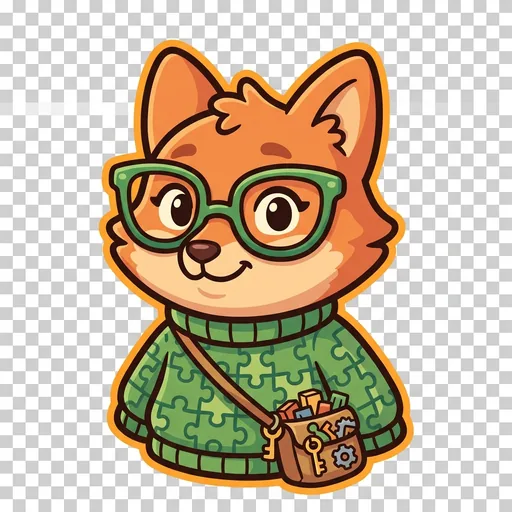
Lexa
Word puzzles — anagrams / vocabulary / spelling
-
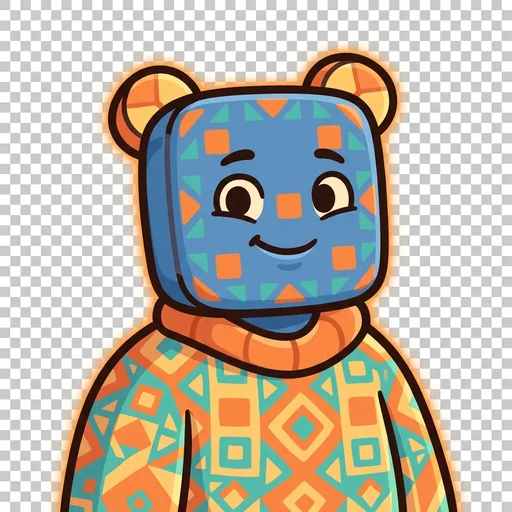
Tile
Pattern puzzles — repetition / symmetry / tessellation
-

Cog
Logic puzzles — deduction / elimination / constraint
-

Link
Connection puzzles — association / category / cross-reference
-

Beat
Sequence puzzles — temporal-order / step-by-step / dependency