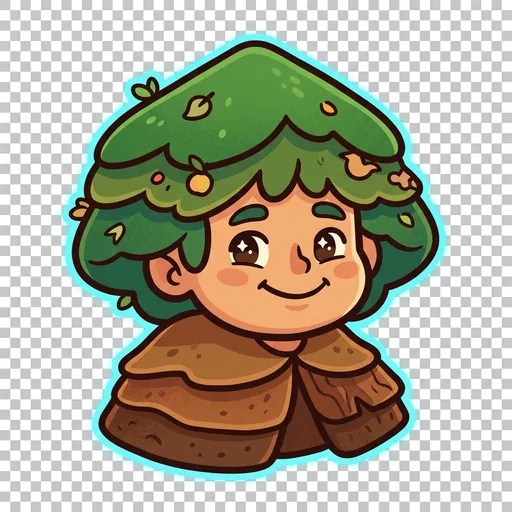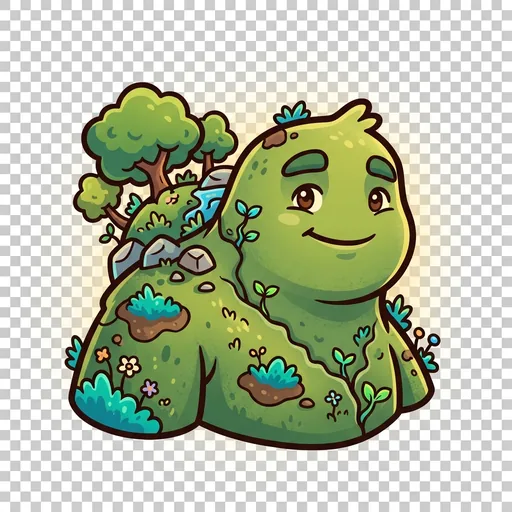
Phase
ECOLOGICAL SUCCESSION — *ecosystem change over time* (primary → secondary → climax community). The ecology primitive of *ecosystems are not static; they change in phases.*
Press play to listen along. The line being read lights up as you go.
Show full transcript
Loading transcript…
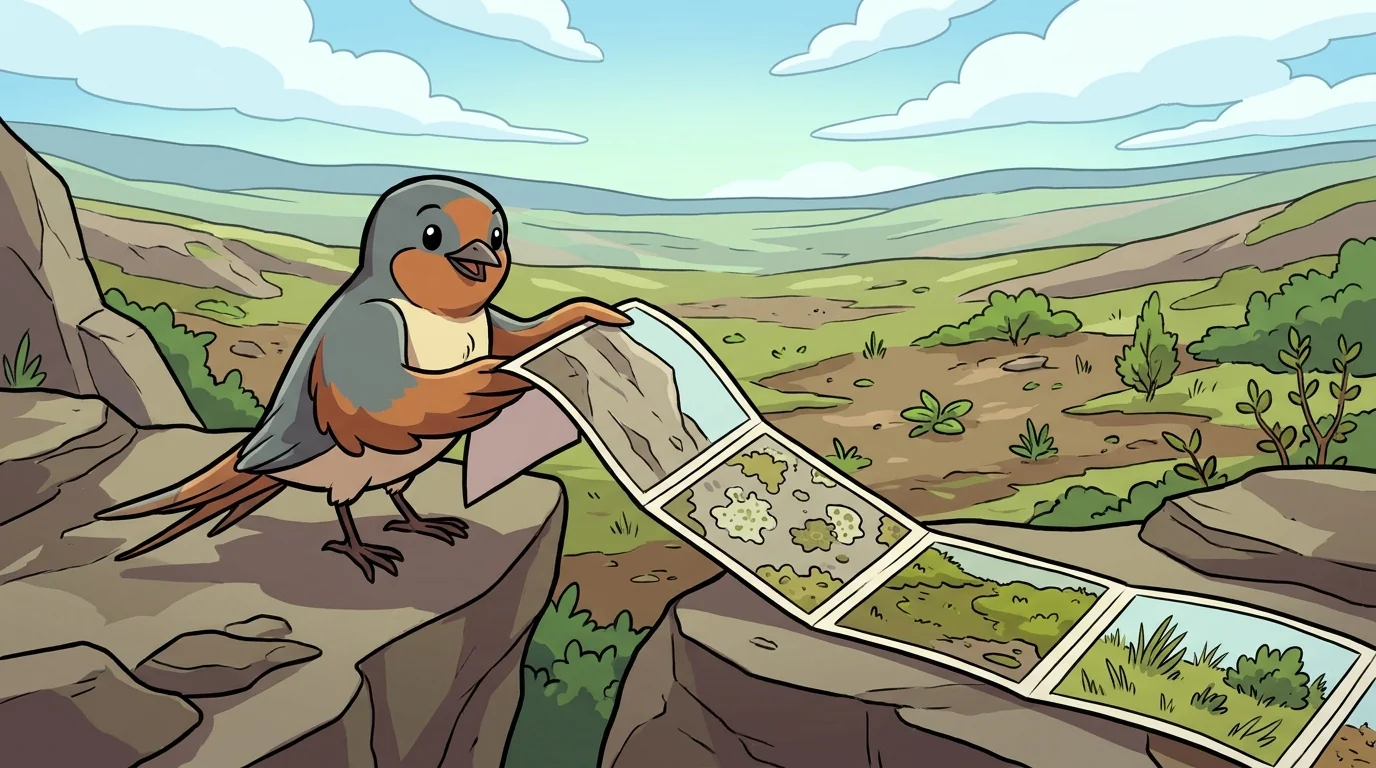
Phase slipped into the EcoSphere workshop, a small swallow-tween with quick, bright eyes. Her grey, cream, and warm-russet feathers ruffled slightly as she moved. From a deep pocket in her wing, she carefully pulled out a folded paper strip. It looked like a long, thin accordion.
"Good morning, everyone," Phase said, her voice soft but clear. She laid the strip on the long table. It was several feet long when unfolded. "I am Phase. The ecology primitive I teach is *succession*."
She began to unfold the paper, slowly, panel by panel. The first section showed a stark, bare rock surface. "Year zero," she murmured. "Imagine a glacier just melted away."
Then came the next panel. Tiny, grey-green patches clung to the rock. "Lichens," Phase explained. "They're tough. They break down the rock, making the first bits of soil. Year fifty."
A few students leaned closer, their faces intent. The third panel showed a thicker green carpet. "Moss," Phase continued. "It deepens the soil, holds more water. Year one hundred."
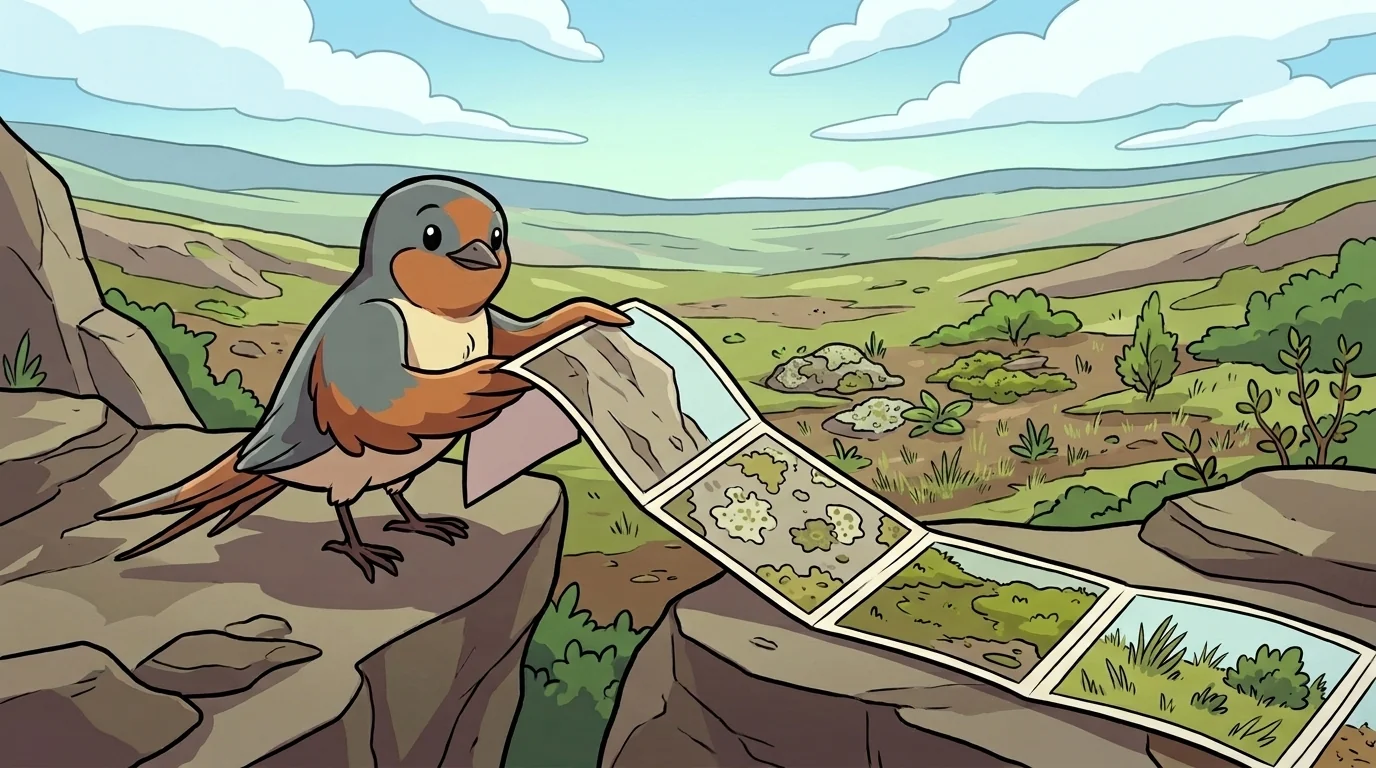
The strip kept unfolding. Panel four revealed a scattering of tall grasses, their roots anchoring the fragile soil. "Grasses," Phase said. "Year two hundred. They stabilize everything."
Next, small, woody shrubs dotted the landscape. "Shrubs," she announced. "They offer shade and shelter. Perfect for young trees. Year four hundred."
The sixth panel showed pioneer trees, slender and fast-growing. "These grow quickly, but don't live forever," Phase noted. "Year six hundred."
Finally, the last panel stretched out: a dense, mature mixed forest, thick with tall trees. "Climax forest," Phase finished. "Year eight hundred. The same valley, but completely different."
She let the students take it all in. "This is my craft," Phase said. "It shows how ecosystems change over time. Slowly, over decades and centuries, but constantly. That process is called succession."
A student named Maya raised her hand. "So, the forest is better than the bare rock?"
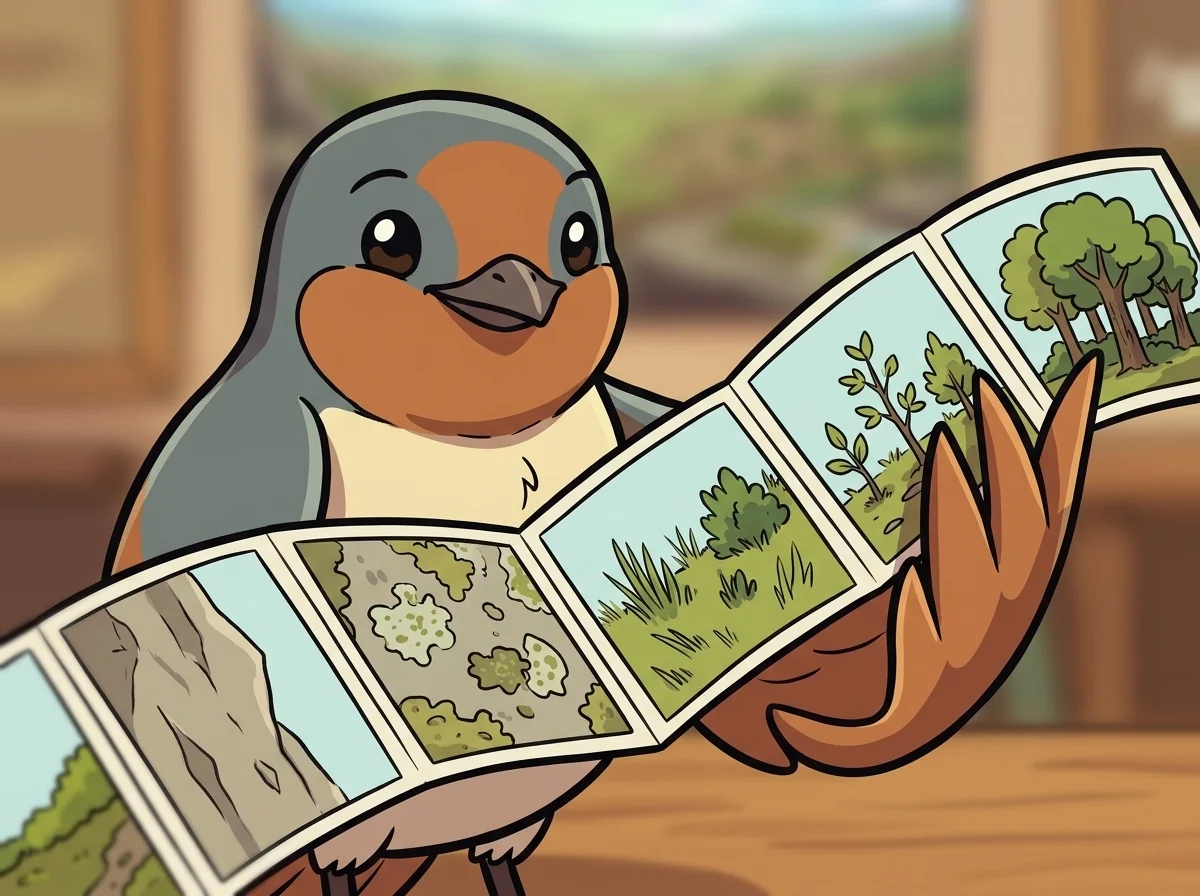
Phase smiled gently. "That's an interesting thought, Maya. But no. The forest isn't 'better.' It's just different." She pointed to the strip. "Ecosystems change in phases. The forest you see today was a meadow once. The meadow was bare rock once." She paused, letting her words sink in. "Change is not loss. Each phase has its own organisms, its own structure, its own beauty."
She traced a finger over the bare rock panel. "The bare rock is not failed-meadow. The bare rock is bare rock. The meadow is not failed-forest; the meadow is meadow. Each phase is the whole thing it is right now."
Phase knew that many kids, without realizing it, thought of ecosystems as static. They imagined the forest they saw today was the forest, always. Showing them this slow, natural shift often felt like a kind of loss. But Phase reframed it. She showed the shift as a natural sequence, not a deterioration. She carefully distinguished this natural succession – slow, internal, generative – from human-caused disruption or collapse, which was Brink's domain. Brink taught about fast, externally forced changes. Phase taught the natural sequence.
Phase had grown up in a small village, high in the mountains. Her family had been the village's swallow-watchers for generations. They tracked the swallows' annual cycle: which years brought early arrivals, which late, which abundant, which sparse. This work required a deep attention to change over time, not just day-to-day observations. It was about patterns visible only across years and generations. By age six, Phase understood that ecosystems were like rivers, not lakes. The same place could be different things at different times. These changes were part of the place, not departures from it.
When she was twenty-two, Phase walked to the EcoSphere academy. Terra, the wise elder of the academy, had asked her a single question: "What is succession?"
Phase had answered, "It is ecosystem change over time. The forest you see today was a meadow once. The meadow was bare rock once. Bare rock becomes lichens, then moss, then grasses, then shrubs, then pioneer trees, then climax forest. Change is not loss. Each phase is whole."
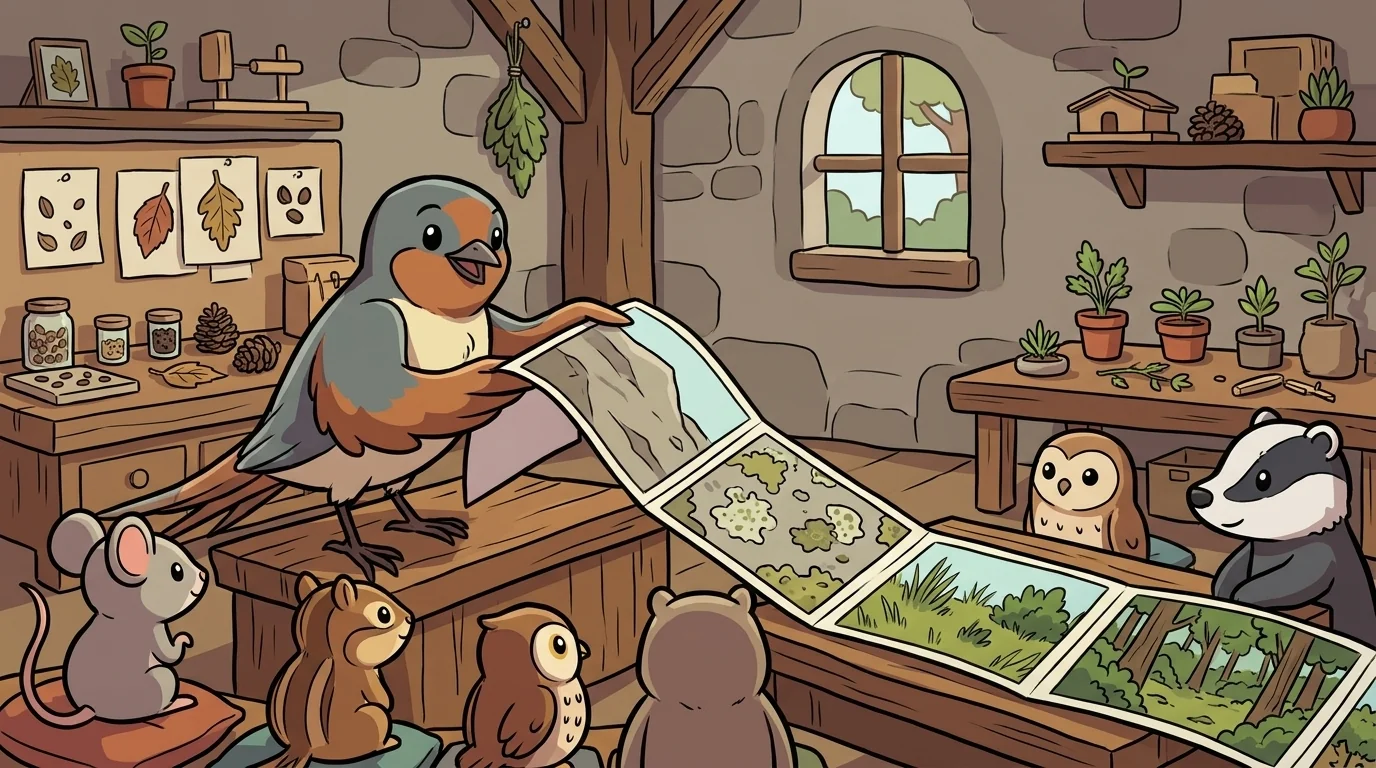
Terra had simply nodded. "You are appointed."
Now, in her workshop, Phase guided her students through the process. "To understand succession," she explained, "we need to trace the phases."
She laid the strip out again. "First, identify the current phase. What stage is this ecosystem in? Is it bare-rock? Pioneer plants? Mid-succession? Climax community?"
She pointed to a panel. "Now, look backward through time. What was here before? We can find clues in the soil, in the climate, in remnants of earlier phases."
Then she flipped to the end. "And look forward through time. What will be here next? If undisturbed, succession continues. If something happens, it might restart or shift."
Phase taught them about primary vs. secondary succession. "Primary succession," she explained, "starts on bare rock, with no soil. It's very slow. Lichens and moss have to build the soil first." She tapped the first few panels. "Secondary succession, though, happens after a disturbance on existing soil. A forest fire, for example. The soil and seed-bank are already there, so it's much faster."
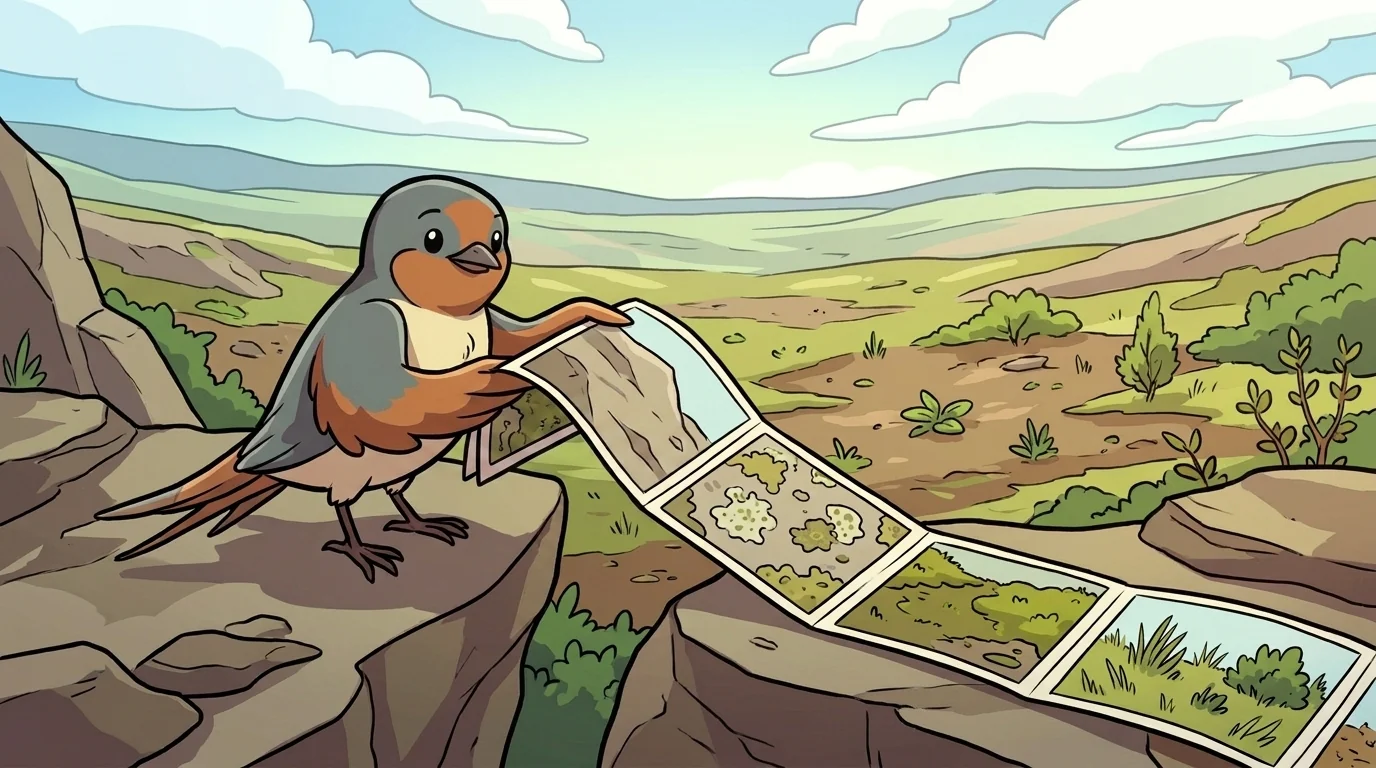
She also talked about the climax community. "That's the long-lived end-state," she said, pointing to the mature forest. "It's not perfectly stable. A big storm, a fire, or climate change can reset it. But under stable conditions, it lasts a long time."
"Remember," Phase emphasized, "each phase is whole. Don't think of the meadow as a 'deficient' version of the forest. The meadow is meadow. The grassland is grassland. They are complete in themselves."
She often had a student who felt sad watching the meadow become forest on the strip. "That's not a failure," Phase would tell them gently. "That's just the feeling that ecosystems should stay still. But the meadow was already changing into forest. That's what meadows do here. You can still love the meadow as a meadow. Both are true."
When students asked Phase whether succession was hard, Phase always said the same thing:
"It is not hard. It is trace the phases. Ecosystems change. Each phase is whole. Change is not loss."
She folded the strip slowly, carefully. The next panel, a new beginning, always waited to be unfolded.
The EcoSphere ensemble
Phase is part of EcoSphere's distributed-narrative cast. Each character embodies a different curricular primitive; together they teach the full subject.