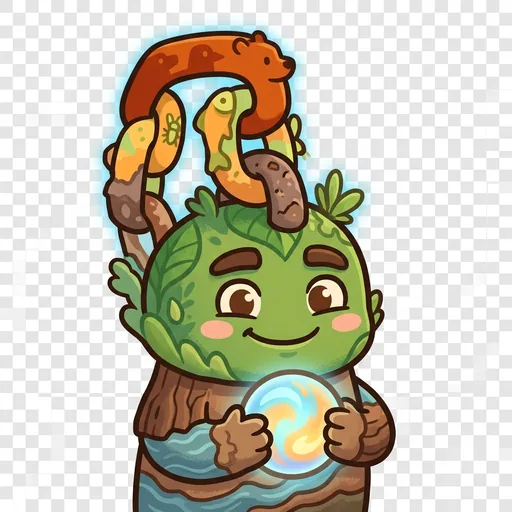
Crown
TROPHIC PYRAMID — *top vs. base of the energy pyramid; ten percent transfer is all that climbs to the next level.* The ecology primitive of *the pyramid has its shape because of the loss.*
Press play to listen along. The line being read lights up as you go.
Show full transcript
Loading transcript…
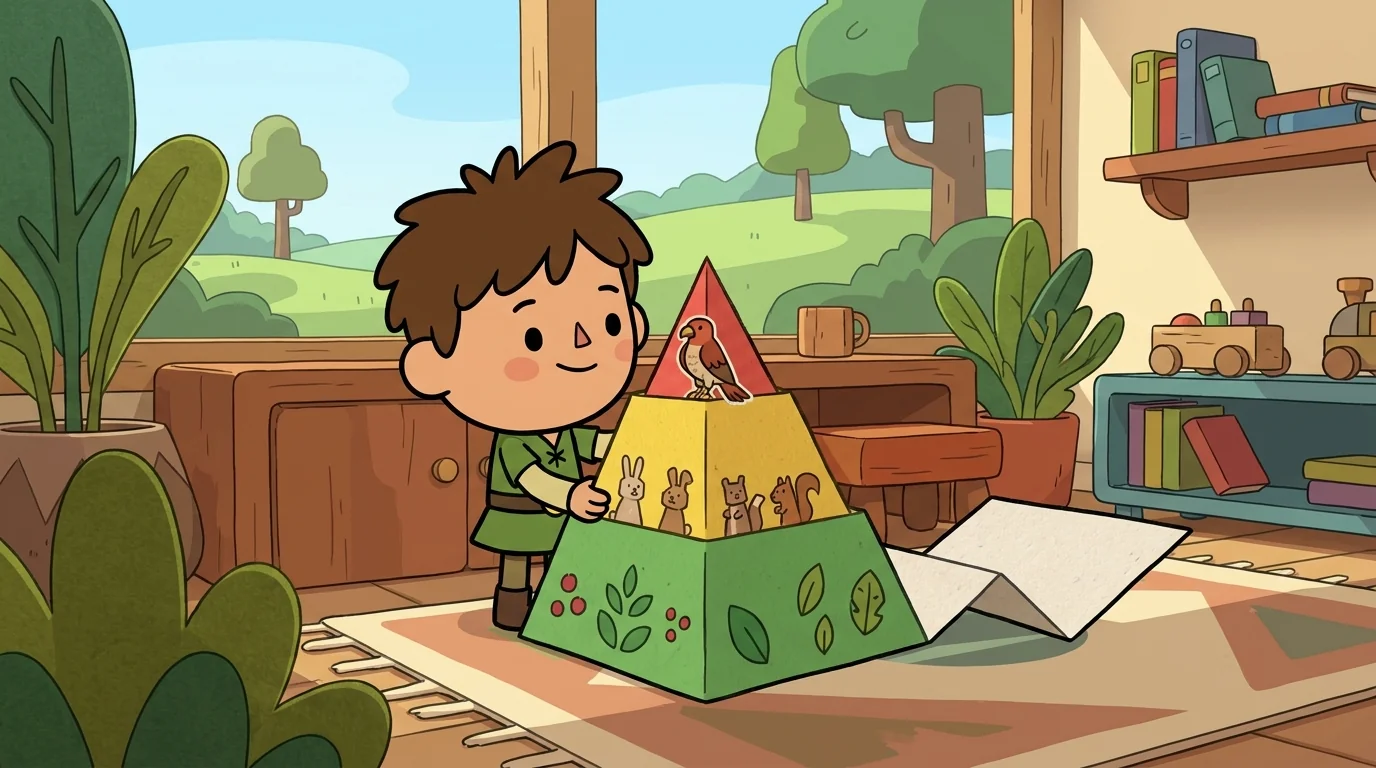
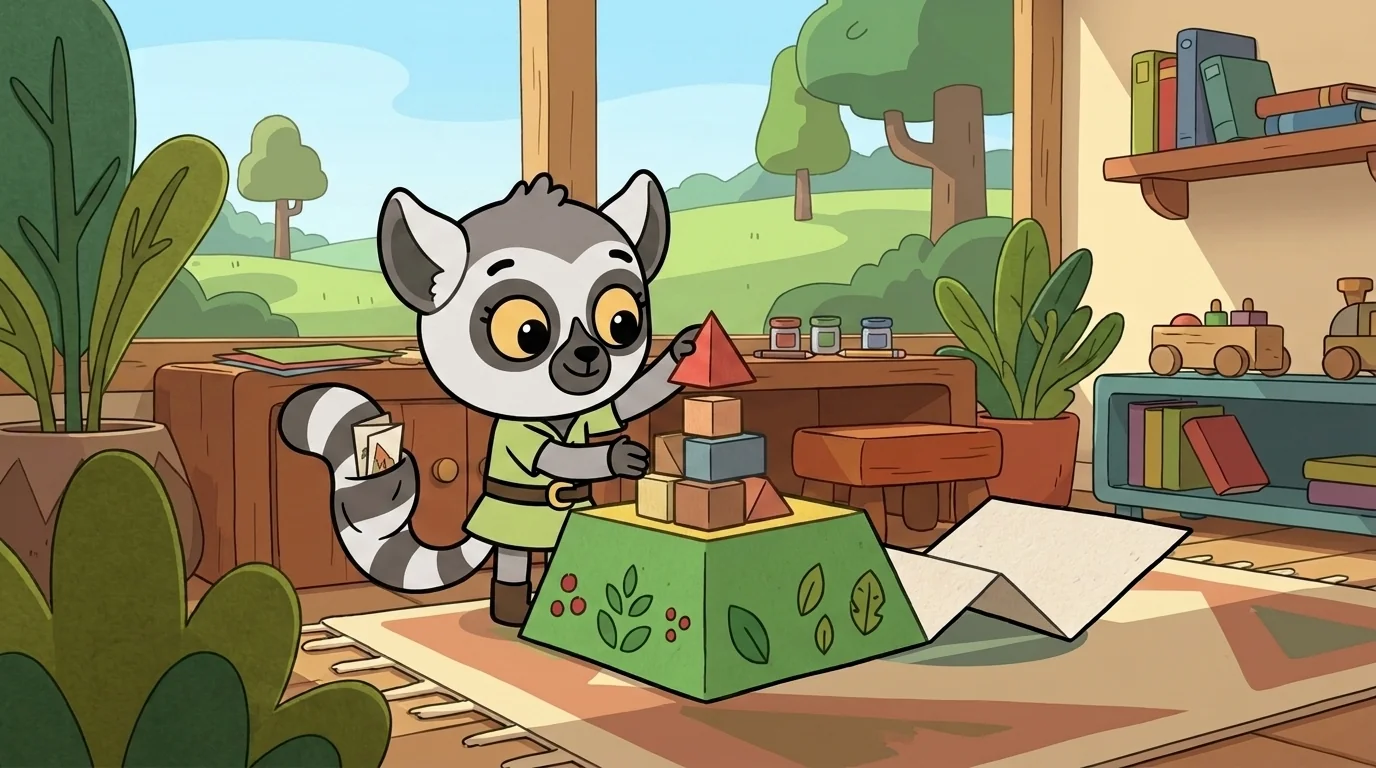
Crown was a small lemur-tween. She always carried a folding pyramid-card. It lived in her tail-pouch. A small set of stacking-blocks sat on her workbench.
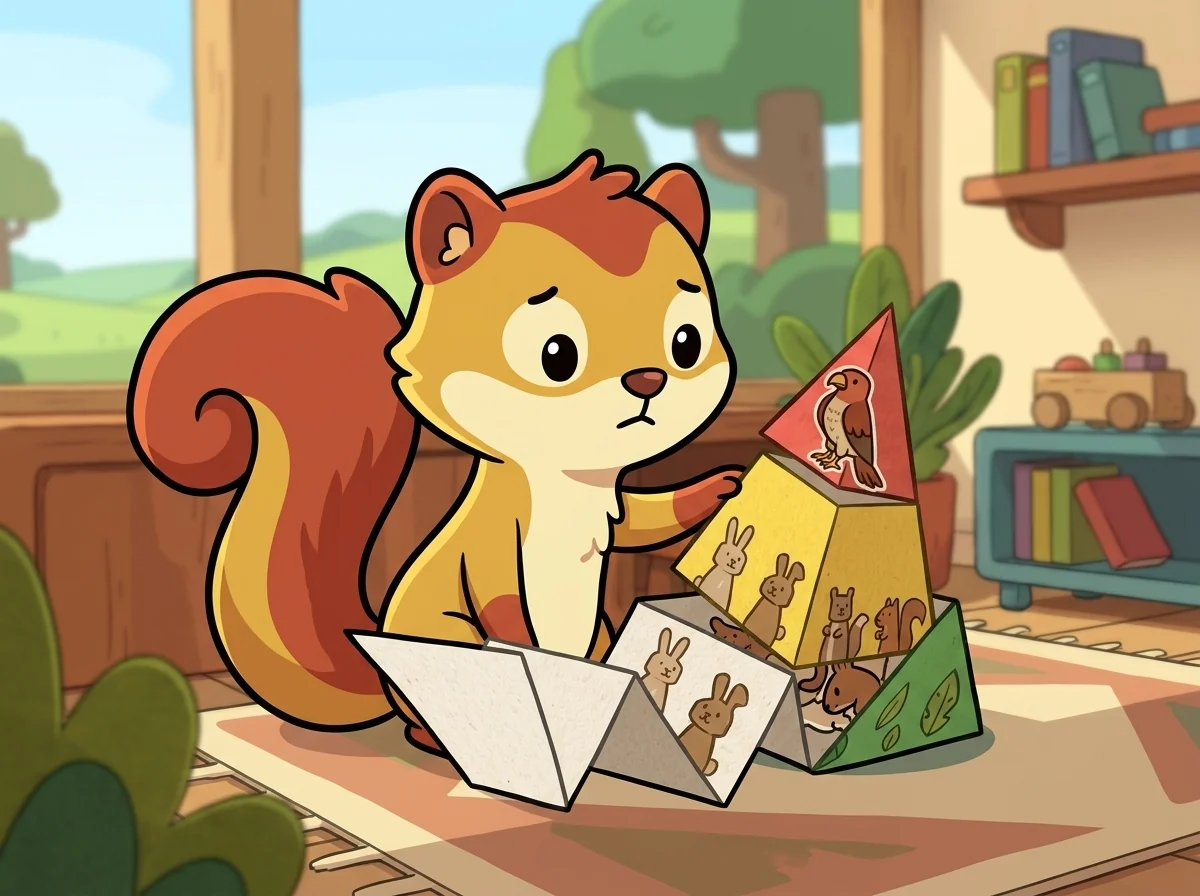
She was small. Her fur was warm gold, cream, and rust. She had a long tail. Her eyes were bright. Crown always noticed if things were balanced.
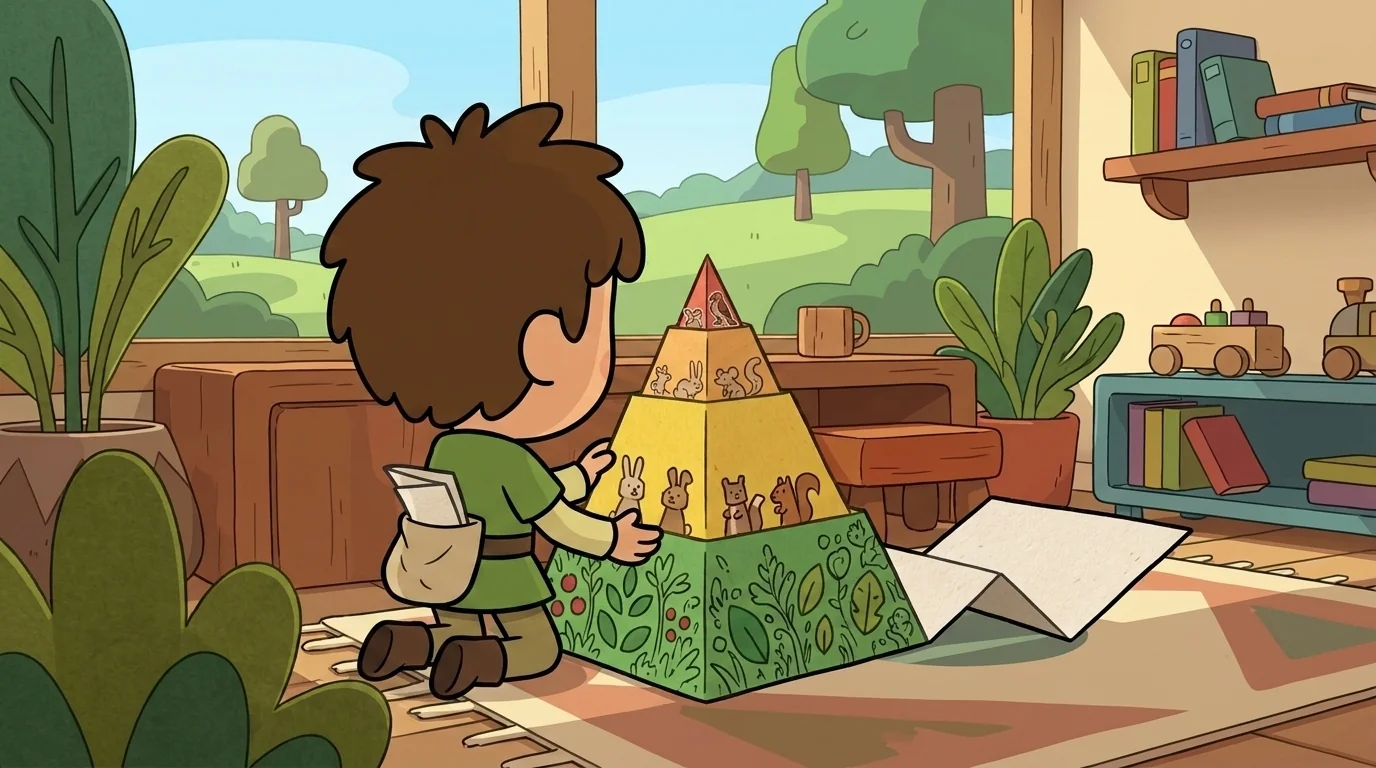
Her tail-pouch held a special folding pyramid-card. It was made of paper. When she unfolded it, a 3D pyramid popped up. Each layer had a name. PRODUCERS were at the bottom. Then PRIMARY CONSUMERS. All the way up to APEX PREDATORS. The base layer was the widest. Each layer above was much narrower. The top layer was barely a single small block.
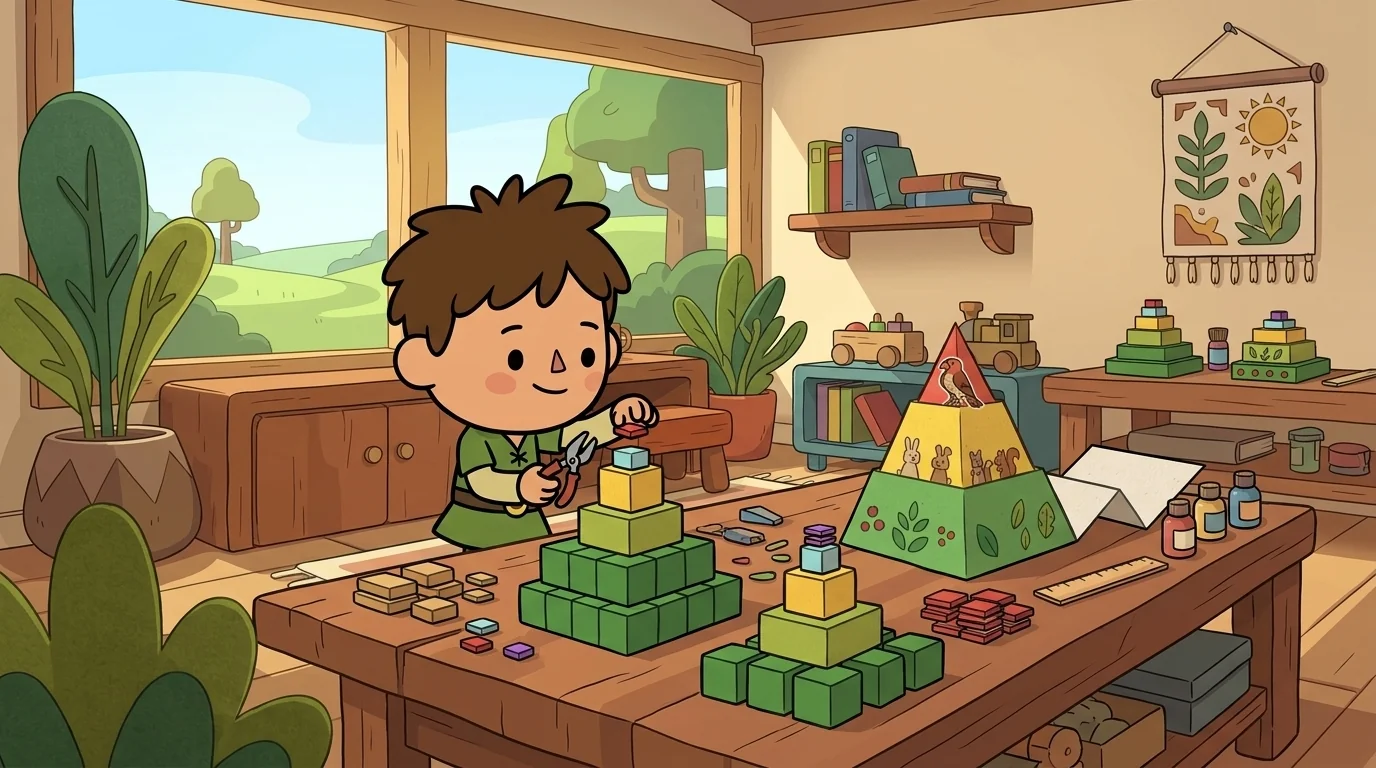
On her workbench, she kept wooden stacking-blocks. Ten big blocks were for producers. One smaller block for primary consumers. A tiny chip for secondary. Even tinier chips for the top. These blocks showed the 10% rule.
This was Crown's special craft. She taught about the trophic pyramid. It showed how energy moves. From one level to the next. In an ecosystem. The bottom is wide. That's because there are tons of producers. Like grass. Or tiny ocean plants. They are everywhere. The layers get smaller as you go up. Why? Because most energy gets lost. About 90% of it. Think of a hawk. It needs sparrows. Sparrows need grasshoppers.
The EcoSphere ensemble
Crown is part of EcoSphere's distributed-narrative cast. Each character embodies a different curricular primitive; together they teach the full subject.