Weigh
TAG BALANCE — the rhythm of dialogue tags (*he said*, *she whispered*, *he asked, glancing away*). Too many tags slows the dialogue. Too few loses the reader. Balance keeps the dialogue moving and oriented.
Press play to listen along. The line being read lights up as you go.
Show full transcript
Loading transcript…
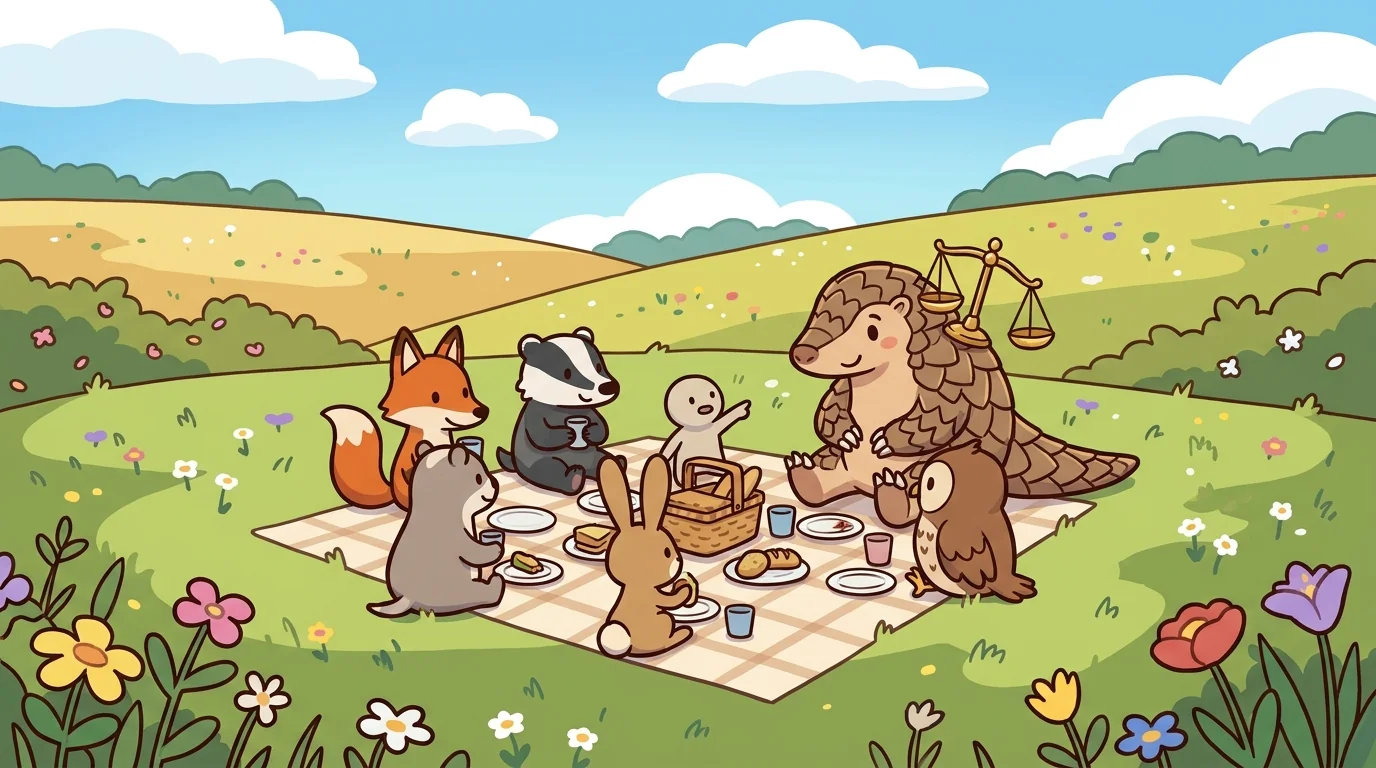
Patter met Weigh in the meadow during a small spring picnic he had been invited to. The picnic had been attended by several creatures from the area — fox, badger, hare, owl, and one pangolin-tween with an unusual accessory. The pangolin had been wearing a small brass balance-scale on her right shoulder. The scale had been tilting visibly throughout the picnic. When one creature talked too much at lunch, the scale had tilted one way. When another creature stayed silent too long, the scale had tilted the other way. The scale had been responding to the rhythm of the conversation.
Patter had said: "Your scale is responding to talk."

The pangolin had said: "Yes. I am Weigh. My scale measures tag balance. Too many tags — the scale tilts heavy. Too few tags — the scale tilts light. Balanced tagging keeps the scale level."
Patter had been fascinated. He had not previously thought about dialogue tag balance as something physically measurable. But Weigh's scale was visibly tracking it. When a writer over-tagged dialogue ("he said." "she said." "he replied." "she asked." on every line) the scale tilted heavy — the dialogue dragged. When a writer under-tagged dialogue (just lines with no attribution for paragraphs at a time) the scale tilted light — the reader lost track of who was speaking. Weigh's scale showed the imbalance in real-time.
Patter had asked her to come to his pocket-workshop. She had agreed. She has been the workshop's tag-balance demonstrator for many years.
In Patter's introductory lesson on tag balance, he gestures at Weigh — who is, as always, wearing her brass shoulder-scale — and says: "This is Weigh. Her scale measures the rhythm of dialogue tags. Too many tags — the scale tilts heavy; the dialogue drags. Too few tags — the scale tilts light; the reader loses track. Balanced tagging keeps the scale level; the dialogue flows. Watch."

He reads aloud a dialogue draft with over-tagging:
"I'm fine," he said. "Are you sure?" she asked. "Yes," he replied. "Really?" she questioned. "Truly," he answered.
Weigh's scale tilts heavy. The students see it tilt. They feel the over-tagging.
Patter reads aloud the same draft with under-tagging:
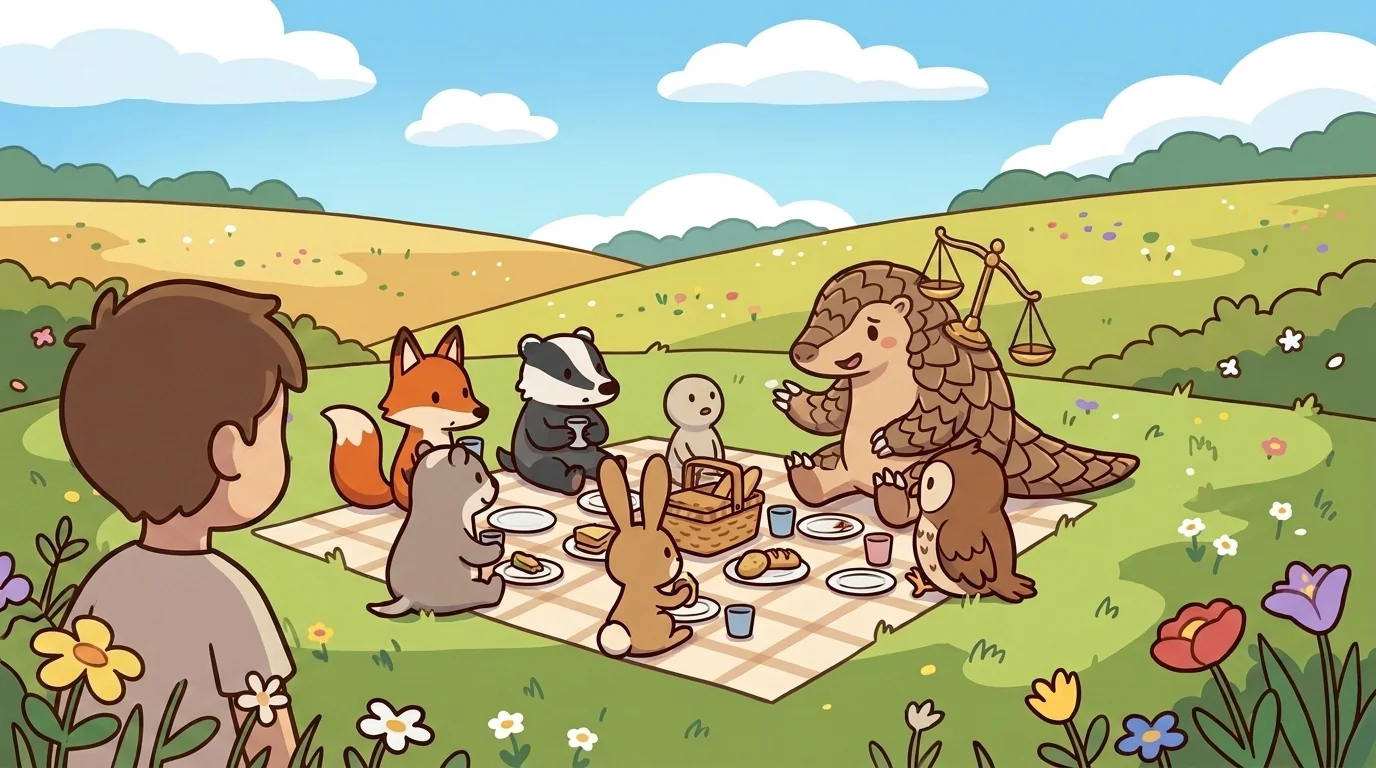
"I'm fine." "Are you sure?" "Yes." "Really?" "Truly."
Weigh's scale tilts light. The students see it tilt the other way. They feel the under-tagging (and they realize they cannot easily tell who is speaking).
Patter reads aloud a balanced version:
"I'm fine." She studied his face. "Are you sure?" "Yes." A pause. "Truly."
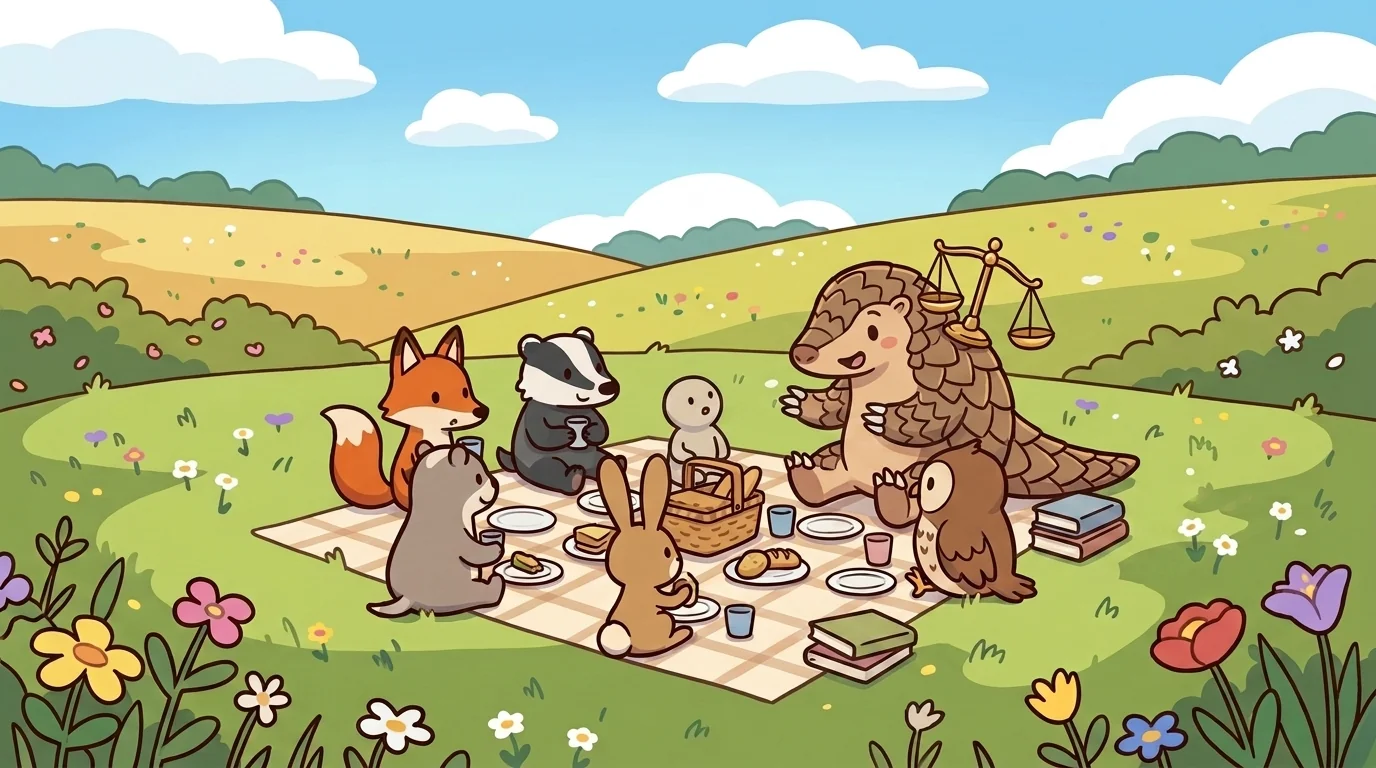
Weigh's scale settles level. The students see it level. They feel the rhythm.
He explains: "Balance has a few moves. Use a tag when speaker-identification might be ambiguous. Use an action beat (a small action like she studied his face) instead of a tag when you want the rhythm but also some character-information. Drop the tag when the speaker is obvious from context. Vary between tag, action beat, and bare line. The scale will settle."
Weigh nods. Her scale stays level. She says — in her brisk pangolin-voice — "Balance the tags. Too many slows the dialogue. Too few loses the reader. Calibrate."
When students ask Patter whether tag balance is hard to learn, Patter says — quoting Weigh — "It is not hard. It is calibration. Read your dialogue aloud. Does it drag (too many tags)? Does the reader lose track (too few tags)? Adjust until the rhythm flows. Weigh's scale settles when you find it."
The DialogueQuest ensemble
Weigh is part of DialogueQuest's distributed-narrative cast. Each character embodies a different curricular primitive; together they teach the full subject.
-

Sprig
Branch meaningfulness — sapling-tween whose visible branching skeleton shifts physically when she picks between dialogue options (the choice re-routes her body)
-

Glance
Subtext — arctic-fox-tween in a thick scarf; speech-bubble visibly half-empty with dotted-line ghost-text floating beside it
-

Brogue
Voice consistency — border-collie-elder in a worn flat-cap who uses exactly 4-5 signature words across every appearance (deliberately non-specific old-country accent)
-

Rest
Rhythm + silence — heron-tween with a small silver pocket-watch around her neck; one foot perpetually raised mid-step; treats the pause as a line of dialogue itself
-

Prop
Action beats — red-squirrel-tween whose paws are always busy with a small acorn; the little actions between lines show feeling and set the rhythm of a talk
-

Spar
Conflict / friction — pine-marten-tween whose speech bubbles push against the other speaker's; two characters wanting different things is the engine (the push stays kind)
-
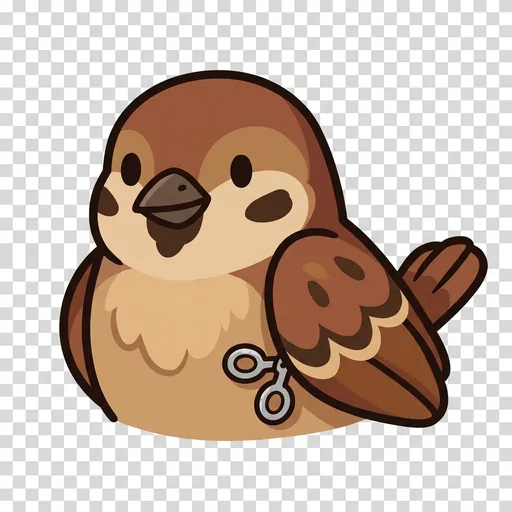
Clip
Economy — sparrow-tween with tiny silver scissors who trims the filler ('hello, how are you, fine') and starts scenes late, right where they get interesting
-

Dash
Interruption / overlap — chipmunk-tween who crashes into the ends of others' lines with a dash when feeling runs too high to wait (used on purpose, sparingly)
-

Aim
Line purpose — kestrel-tween with arrow-shaped speech bubbles that point at what each line is really trying to DO (ask, dodge, persuade), not just say