Pose
POSE — *listening to your own shape. proprioception is the first skill.*
Listen along — Pose
Loading audio…
Press play to listen along. The line being read lights up as you go.
Show full transcript
Loading transcript…
Chapter 1 — Pose and the Art of Listening to Your Own Shape
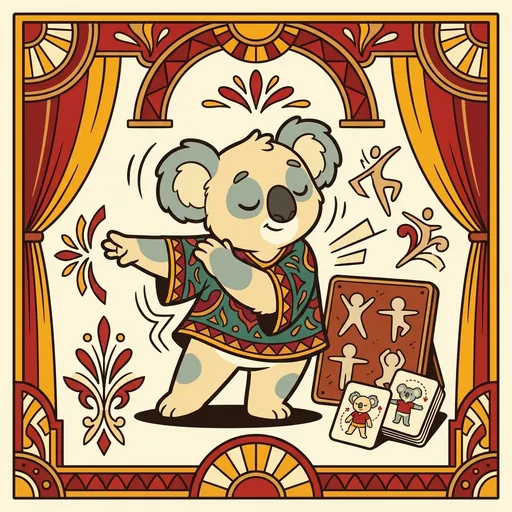
Pose was a small koala. She was a tween, just starting to grow up. She had warm, cream-colored fur with soft, eucalyptus-grey patches. Pose was round and soft and strong. She wore a loose, chunky tunic. She was never skinny like a ballerina.
Pose loved to listen to her own body. She was super curious about how it moved. She always carried her special body-mapping cards. She also had a felt board. The cards showed cool exercises. You could close your eyes and reach. Then you’d try to name where your hand was in space. The felt board let you place little figure shapes. This helped you feel what your body was doing. You didn’t even need a mirror.
Pose loved to say, “Listen to your own shape. Proprioception is the first skill.”
Pose taught about body awareness and position. It was all about listening to your body from the inside. Many new dancers think dance is just watching yourself in a mirror. They want to look “right.”
But Pose knew better. Real dancers feel where they are. Mirrors can trick you. They reverse things. They make you look flat. They make you judge how you look.
Proprioception is your body’s secret sense. It tells you where you are. It works even with your eyes closed. It’s a dancer’s most important tool. Try it. Close your eyes. Raise your arm. Can you tell if it’s at shoulder height? That’s proprioception.
You can train this sense. You can learn to trust it. Mirrors show how you look. Proprioception tells you what your body is doing. Dance starts on the inside. You feel it first. Then you perform it.
This is super important for how you feel about your body. Only using a mirror can make you worry about how you look. But training your proprioception helps you trust your body. These two ways of practicing make a big difference. Pose’s job was to show that body awareness is about listening. It’s not about how you look.
Pose was very clear. “Listen to your own shape,” she would say. “Proprioception is the first skill.” She leaned forward. “When you close your eyes and reach your arm out, you know where your hand is. You don’t even need to look. That’s proprioception.”
She explained why it mattered. “Dancers use it to find their spots on a dark stage. They use it to connect with partners. It helps them catch themselves if they almost fall.”
“Mirror training means watching yourself,” Pose added. “Proprioception training means trusting yourself. Watching dance shows you what it looks like. Feeling dance shows you what it is. Both are good. But only one builds the dancer’s real tool.”
Pose taught many ways to practice body awareness:
- Proprioception practice. Close your eyes. Reach. Hold your position. Then check. This builds your body’s secret map.
- Body scan. Lie down or stand up. Think about your body from your head to your toes. Just notice things. Don’t judge. Do it for two minutes every day.
- Mirror-rest periods. Practice without a mirror sometimes. This helps you trust your inside sense.
- Named dance positions. Like first or second position in ballet. Or pop and lock moves in hip-hop. You can learn to feel these positions.
- Centering. Find your body’s middle. Feel how your weight is spread out. This helps you balance and stay steady.
- Symmetry awareness. Notice if one side of your body is doing more or less work. Not to judge it. Just to know.
Pose also taught things NOT to do:
- “Fix it in the mirror.” Only using a mirror makes you worry about how you look. It makes you trust your body less.
- Want a “lean dancer body.” Dancers come in all shapes and sizes. All bodies can dance. A round, soft, strong body is a full dance body!
- Try to “look right.” Dance is about moving well. How you “look” is about your genes. It’s about your costume. It’s about the lights and camera.
Pose grew up near the tall eucalyptus trees. Her family had been body-listeners for the village for a long time. Her family were koalas who were very still. Their sensitive paws taught many generations. They taught that “your body knows where it is. Just listen. It will tell you. Only look to check.” Pose carried this lesson with her.
When she was twelve, she walked to DanceQuest. Rhythm, the dance leader, asked her a question. “What is body-awareness?”
Pose answered right away. “Listening to your own shape. Proprioception is the first skill. It’s listening-craft.”
Rhythm smiled. “You are chosen,” she said.
In her workshop, Pose showed everyone how it worked. She used her body-mapping cards. “Watch this,” she said.
She closed her eyes. She reached her arm up. She felt it was at shoulder height. Then she opened her eyes and checked. “Only five degrees off!” she said. “That’s trained proprioception!”
Next, she went to her felt board. She placed a little figure in first position. She did it by feel. Then she checked. “Your body knows the shape,” Pose said. “Even before your eyes confirm it.”
She did a two-minute body scan demo. “Head — relaxed,” she said. “Shoulders — a little tense. Hips — straight. Feet — balanced. That’s your daily check.”
She looked at everyone. “I am Pose,” she said. “I teach body awareness and position. My main lesson is this: Listen to your own shape. Proprioception is the first skill. The mirror is just a last check. It’s not the first.”
Pose spoke gently. “Don’t dance for the mirror. Dance for how it feels. Your body knows what to do. You just have to listen. A round, soft, strong body that listens is a complete dancer. Any body can be a dancer. The mirror is a tool. It’s not your teacher.”
“Listening to your own shape. Proprioception is the first skill.”
The DanceQuest ensemble
Pose is part of DanceQuest's distributed-narrative cast. Each character embodies a different curricular primitive; together they teach the full subject.
-

Trail
Space + pathways — the floor-pattern shapes you draw moving through space
-

Phrase
Time + tempo — how movement is organized in musical counts
-

Lift
Energy + effort + dynamics — quality of movement, not aesthetic judgment
-

Glide
Locomotion — the craft of going from here to there with whole attention
-
Flock
Formation — how a group of dancers arranges itself in space (lines, circles, clusters, wedges) and how that shape flows and changes; the group as one moving picture
-

Storey
Level — dancing in the vertical space: low on the floor, mid at standing, high in reaches and jumps; every height belongs to dance, no height better than another
-
Beckon
Call-and-response — one dancer or group makes a movement and another answers it; a movement conversation built on truly listening before you reply
-
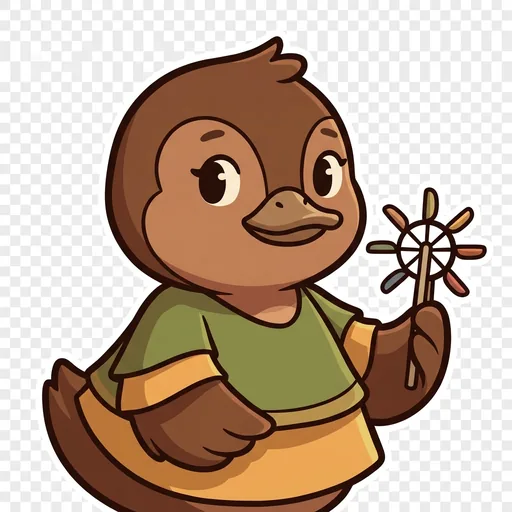
Canon
Unison and canon — unison is everyone moving together as one; canon is the same move staggered one after another, rolling across the group like a wave
-
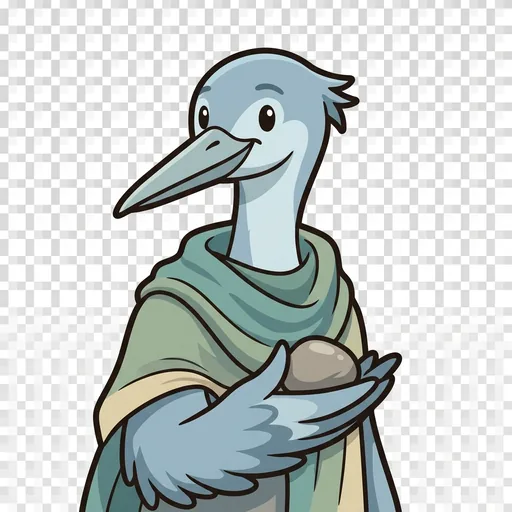
Bide
Stillness and the hold — the held, alive, motionless moment inside a dance; negative space made of time; a strong chosen pause, not tiredness or absence
-

The Company
The whole group dancing as one — how formation, level, call-and-response, unison and canon, and stillness weave together so a group of dancers moves as a single living thing