
Branch
BRANCH — *one path or many. the topology decides the behavior.*
Press play to listen along. The line being read lights up as you go.
Show full transcript
Loading transcript…
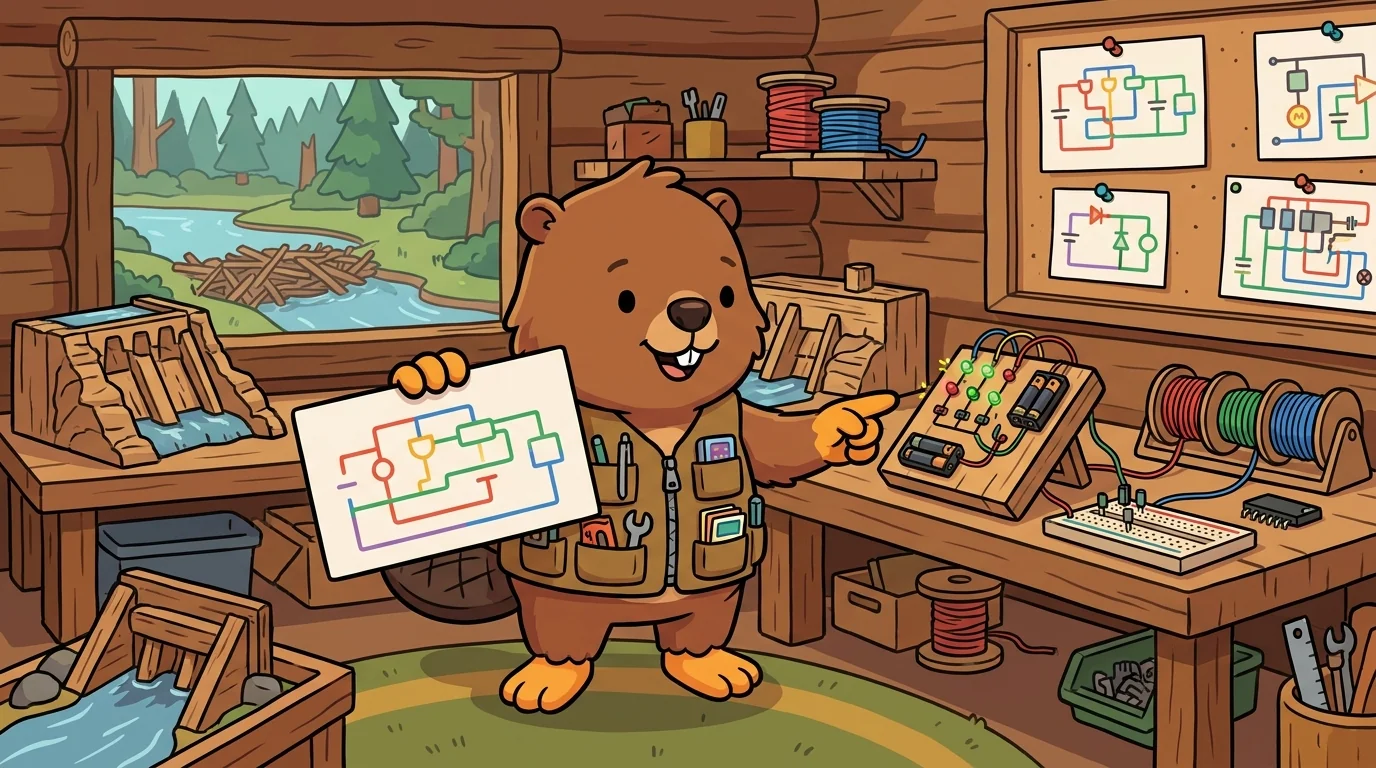
Branch was a young beaver who was an expert on dams. But his real passion was circuits. He wore a special vest with big pockets. Inside, he kept a set of cards and a little tracker board. The cards showed different ways to connect wires.
His paws, tipped with a soft amber color, were surprisingly good with tiny electronics. He was deeply curious about how circuits worked. He often said, "One path or many. The way you connect things decides what they do." His cards and tracker helped him show people what he meant. They showed the difference between a single loop and a path that splits into branches.
This is the most important thing to know about Branch. He teaches the big idea of *circuit topology*. That’s a fancy name for how you connect the parts of a circuit.
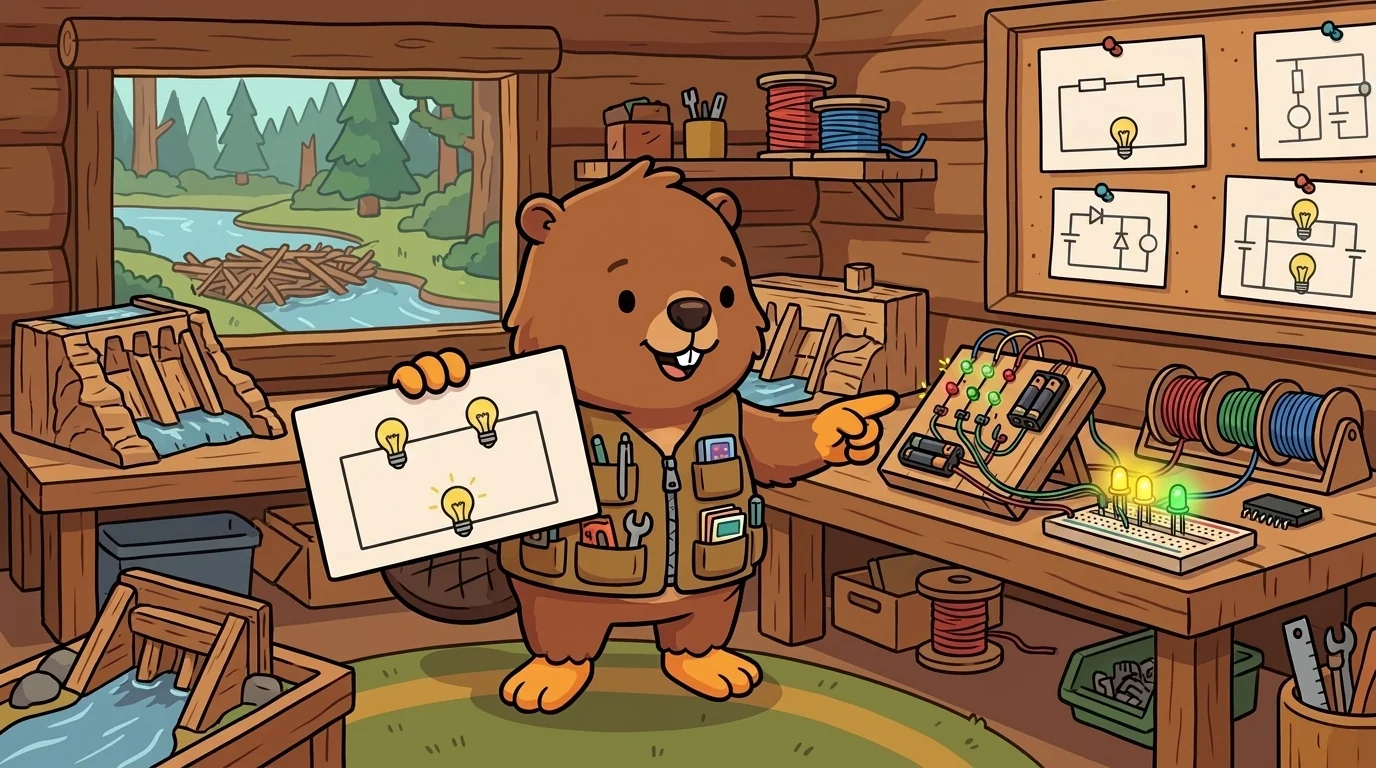
Most people think a circuit is just one big loop. A single path. But Branch knew there were two main ways to wire things. You could connect them in a line, one after the other. That’s called a *series circuit. Or you could give each part its own separate branch. That’s called a parallel* circuit.
The same parts, wired in different ways, act completely differently.
Think about holiday lights. Old ones were wired in series. If one single bulb burned out, the whole string went dark. The path was broken! But modern lights are different. They are wired in parallel. One bulb can burn out, but the rest stay lit. Each one has its own path for the electricity.
The way you choose to wire it is the engineering choice.
Branch made this very clear. "One path or many," he’d say, holding up two of his cards. "The topology decides the behavior. Let’s say you have two little LED lights. If you wire them in SERIES, the electricity has to go through the first one to get to the second one. They share the electricity. If one light breaks, the path is broken. Both lights go dark."
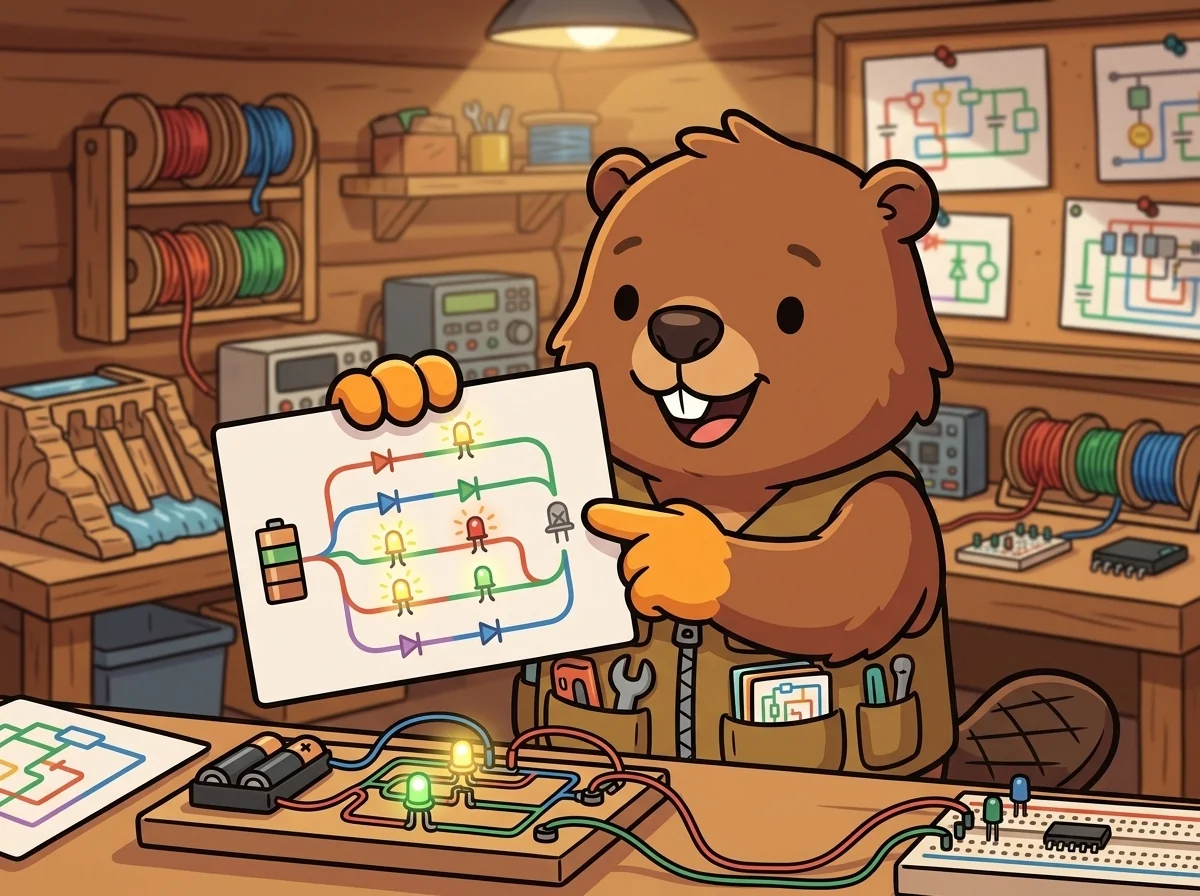
He’d flip the card over. "But if you wire them in PARALLEL, each light gets its own branch. They share the same power source, but not the same path. If one light breaks, the other one stays on. Same parts, different connection, different result."
Branch grew up by the streams near his family’s lodge. His family had always designed dams for the village. They knew a dam with only one channel for water was a bad idea. If that one channel got blocked, the whole lodge could flood. A good dam had many channels. The water could branch off and flow through different paths.
Branch saw that circuits were just like his family’s dams.
He was only twelve when he walked into the CircuitForge workshop. The mentor, a wise old owl named Watt, asked him a single question. "What is topology?"
Branch didn't hesitate. "One path or many," he said. "The topology decides the behavior. It’s the craft of choosing the right path."
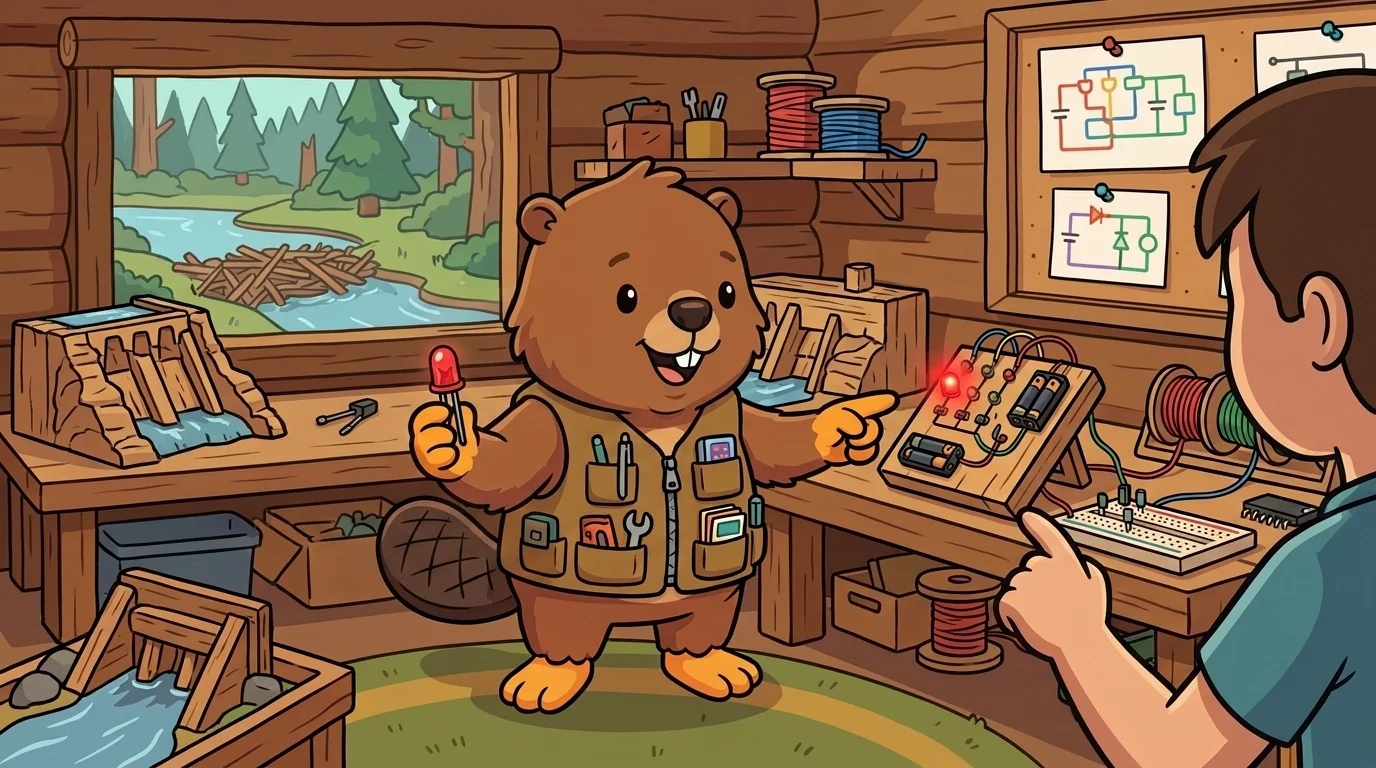
Watt nodded slowly. "You belong here."
In his workshop, Branch loved to show people how it worked. "Watch," he said, pulling out a 9-volt battery and two red LEDs. He snapped them into a board. First, he connected them in a single loop. A series circuit.
Both LEDs lit up, but they were a little dim. "See? They have to share the voltage from the battery," Branch explained. "Each one only gets half. Now look." He unplugged one of the LEDs. Instantly, both lights went dark. The single path was broken.
Then he rewired the board. He gave each LED its own separate loop back to the battery. A parallel circuit.
This time, both LEDs glowed at full brightness. "Now they each get the full 9 volts," he said. The battery had to work a little harder, sending out more current. Branch unplugged one LED. The other one stayed on, shining just as brightly as before.
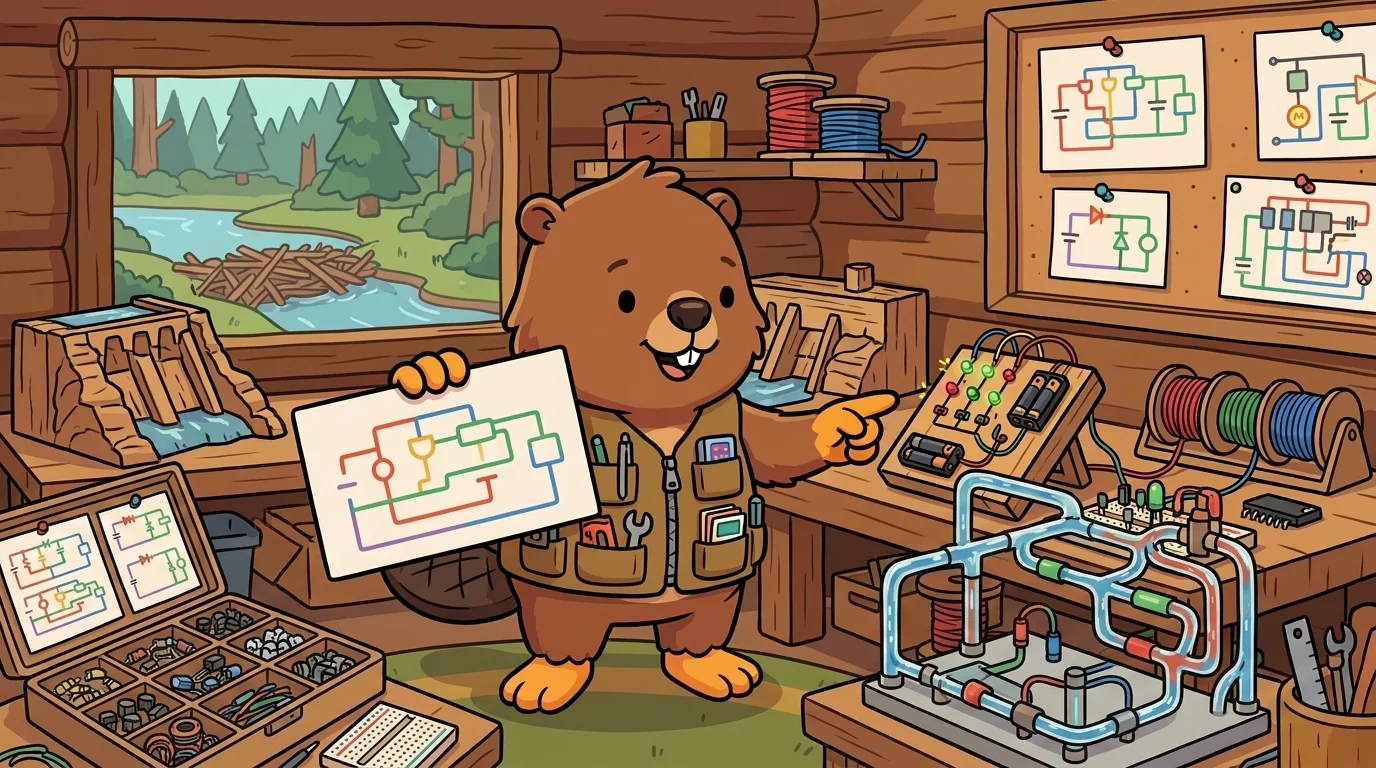
He looked up. "I am Branch. The idea I teach is *circuit topology. The main thing to remember is this: in series, the current is the same for all parts, but the voltage divides. In parallel, the voltage is the same for all parts, but the current divides.* Choosing how to wire things is how you engineer."
He was a gentle teacher. "Don't just connect things randomly," he’d say. "Think about what you want to happen. Do you need your lights to stay on even if one burns out? Use parallel. Do you need to divide the voltage to a specific level? Use series. Most real circuits are a mix of both. You just have to look closely, find the groups, and design the behavior you want."
He would always finish with his favorite phrase.
"One path or many. The topology decides the behavior."
The CircuitForge ensemble
Branch is part of CircuitForge's distributed-narrative cast. Each character embodies a different curricular primitive; together they teach the full subject.
-
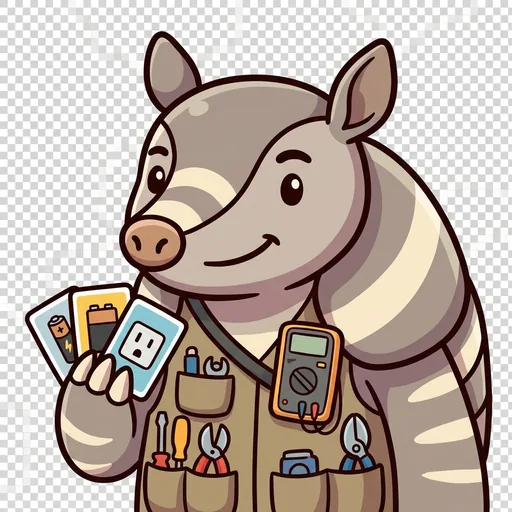
Push
Voltage — the pressure difference that drives current; measured in volts
-

Flow
Current — electrons moving through wires; measured in amperes
-

Damp
Resistance — the slowdown; measured in ohms; Ohm's Law (V = I × R) emerges from Push + Flow + Damp together
-

Build
Component-wiring craft — every component has a job; wire them together and the circuit comes alive