
Center
CENTER — *mean, median, mode. three answers to "what's typical?"*
Press play to listen along. The line being read lights up as you go.
Show full transcript
Loading transcript…
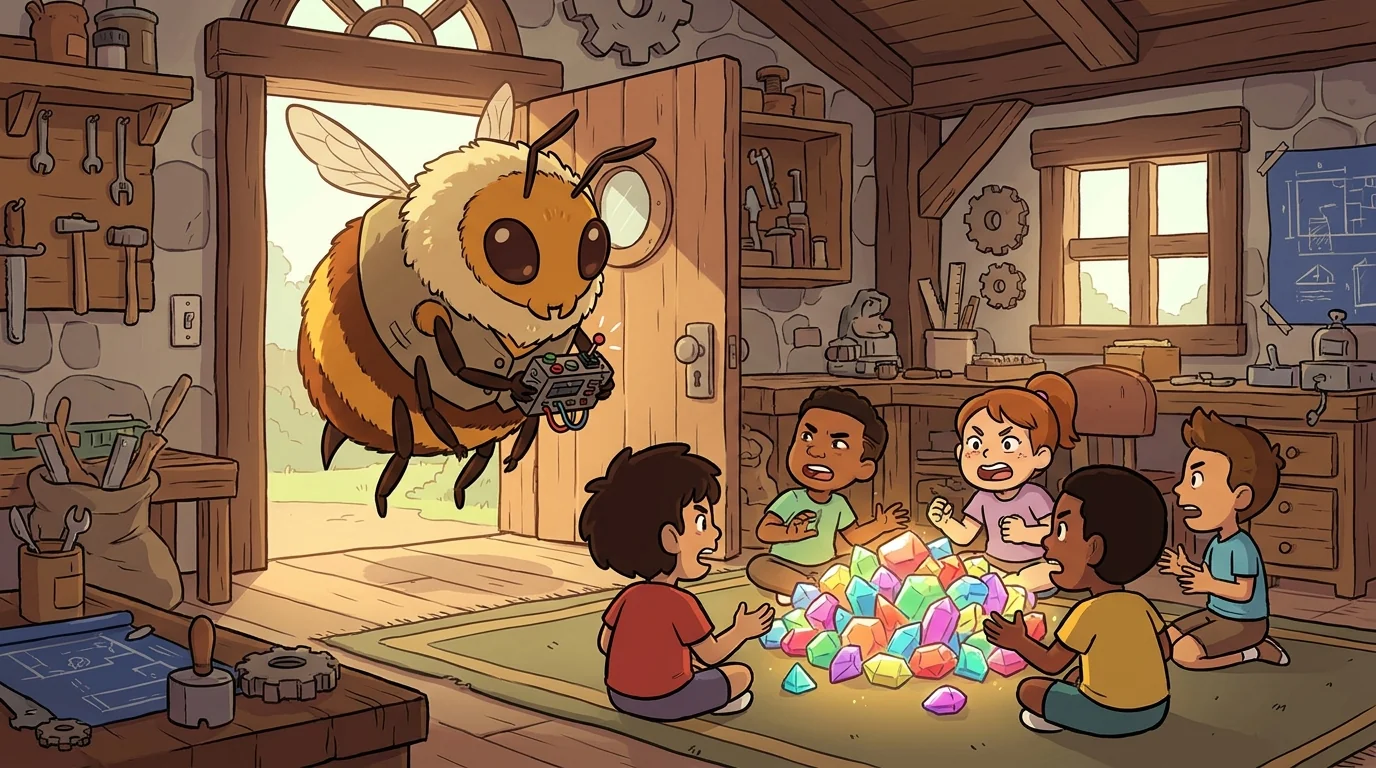
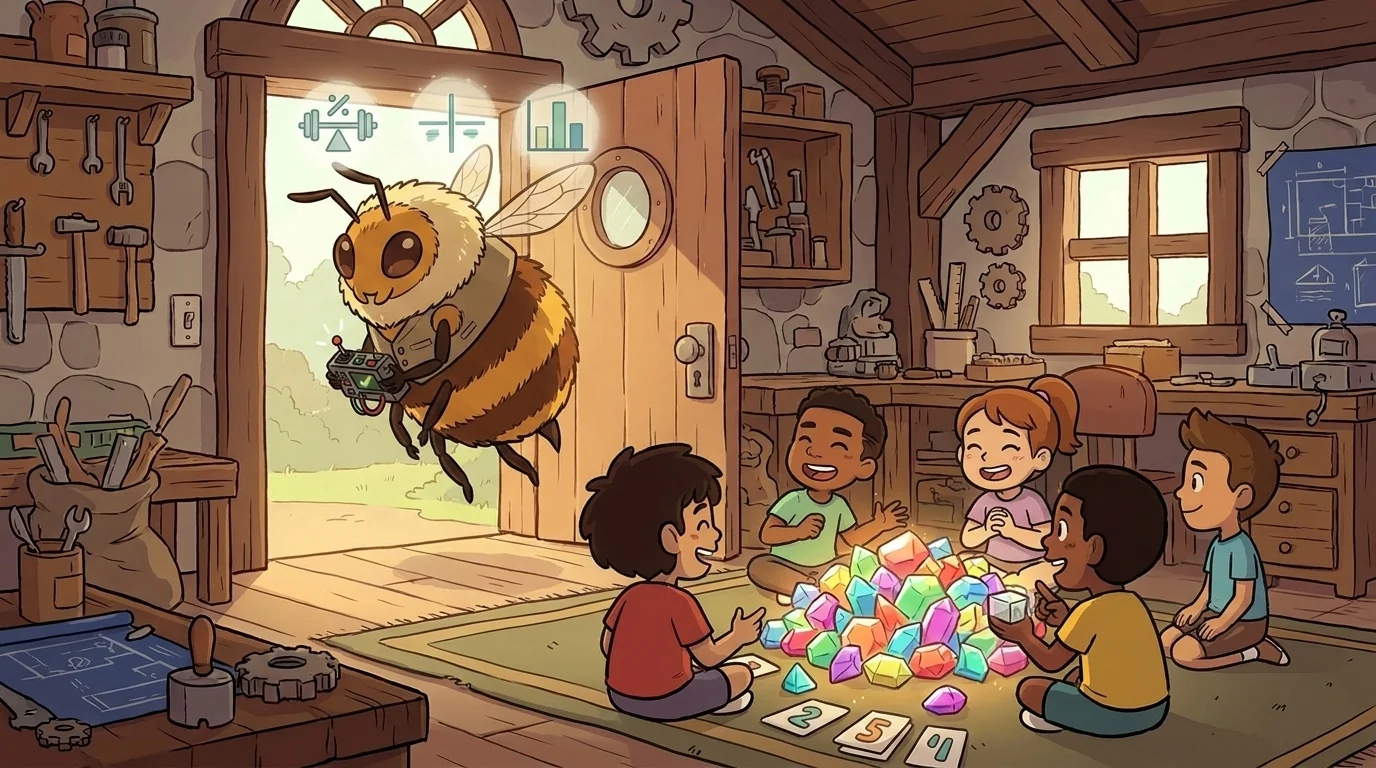
A new creature hovered in the workshop doorway, taking the precise amount of time you take when you are accustomed to being observed but unsure whether you are welcome. It looked like a bumblebee, if a bumblebee had decided around age eight to take its job seriously and had never reconsidered. The vest was the giveaway. It was small, neatly buttoned, embroidered with the kinds of tiny graphs that mean nothing until you are already inside the language they speak. The creature was the size of a toaster — closer to two toasters, honestly — and balanced midair as if balance were the natural state of the world, and movement an occasional exception. Their fuzz was the color of warm cream brushed with amber, and their dark eyes traveled the room with the patience of someone who notices things and does not yet feel any need to comment on them. In two of their six legs they cradled a small machine: a brass-and-glass device that clicked and whirred, that purred when it agreed and chirped when it didn't. This was Center. The skill they taught was central tendency, which Center insisted was less complicated than the name suggested. Center was always looking for the middle. The exact balance point. The place where everything felt just right. They had a way of saying mean, median, mode that made the three words sound like the names of three friends, each of whom would be insulted if you confused them.
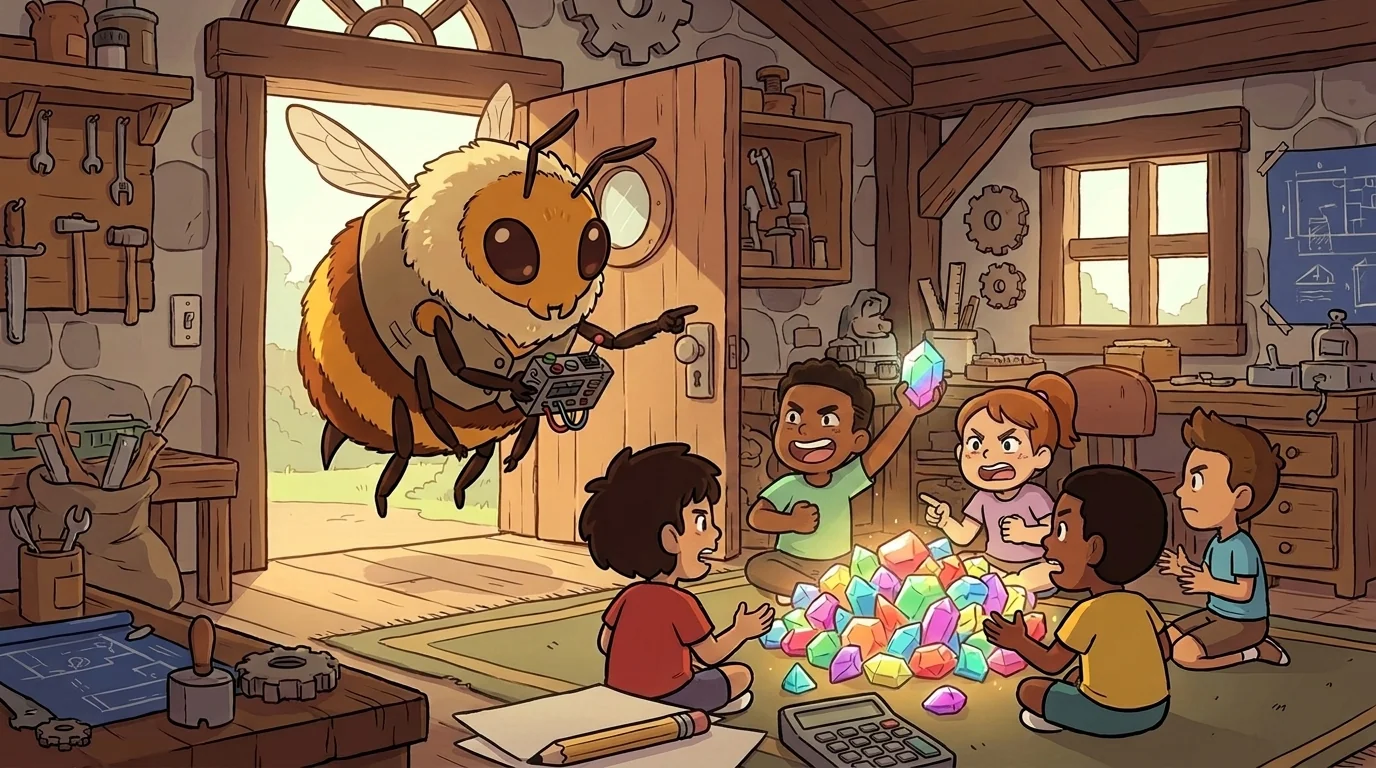
Center had not always been a middle-finder. They had grown up, by their own account, in a colony where everyone had an opinion about what the typical day looked like and almost no one bothered to define typical first. As a small bee, Center had once spent an entire summer afternoon listening to four older bees argue about the typical pollen yield. One bee insisted on the highest number anyone had ever seen, which was a record set by a great-aunt during a memorable bloom. Another insisted on the lowest. The third averaged the colony's last week and produced a number nobody had actually gotten. The fourth pointed out that more than half of the colony's yields fell within a narrow window that none of the other three numbers came close to. Center, listening, realized that all four bees were correct and all four were also wrong, depending on which question you were really asking. The arguers were not arguing about pollen at all. They were arguing about what to mean by typical. That afternoon, Center decided that being a middle-finder was a real job, one that needed doing, and that nobody in the colony was doing it. They asked the colony elders for permission to study the matter. The elders, who had been losing the same argument for years, agreed.
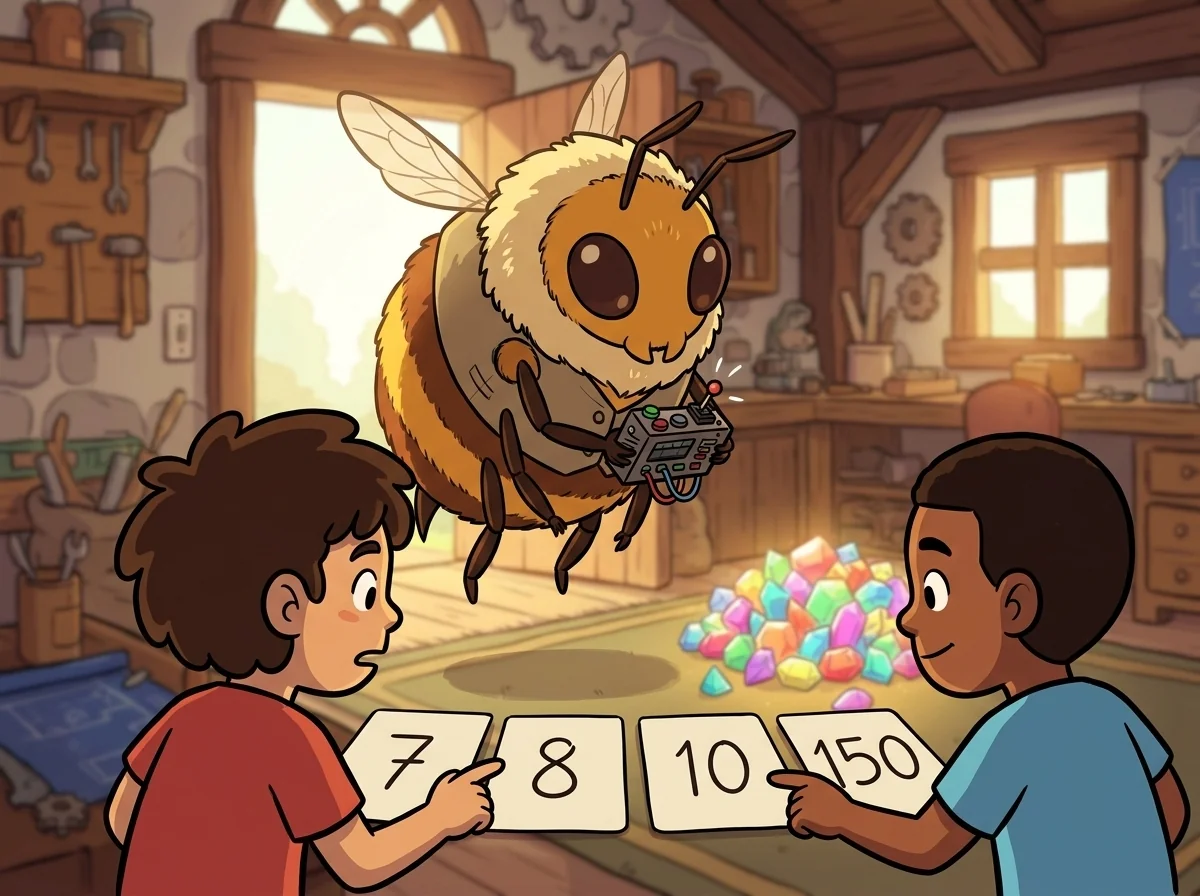
By the time the workshop's young statisticians met Center, they had been at the academy for nearly three weeks and had begun to notice that real questions were almost never as simple as they sounded. Center hovered just inside the doorway and announced themselves with the kind of formal politeness that some characters use when they are trying not to take up more space than they need. "A perfect problem," they buzzed, peering at the table where the kids had been arguing. The kids had spent the previous evening playing a treasure game, and Leo had found a mega-chest worth one hundred and fifty Glimmer-Gems. The other three players had piles of seven, eight, and ten. The argument was about what a typical player got. Leo, citing the average, claimed thirty-something. Maya, citing her own pile, claimed eight. Sam had stopped trying to decide and was eating a cookie. The kids had been told, around kit two, that Lessons-layer characters arrived when a problem had bent itself into the right shape. Apparently this problem had. Center introduced themselves, settled into a low hover above the table, and clicked their device twice. The device purred, which the kids would later learn meant that the data had passed Center's first inspection: real, finite, and worth thinking about. "You're asking what's typical?" Center said. "That is three questions in a costume. Let us pull off the costume."
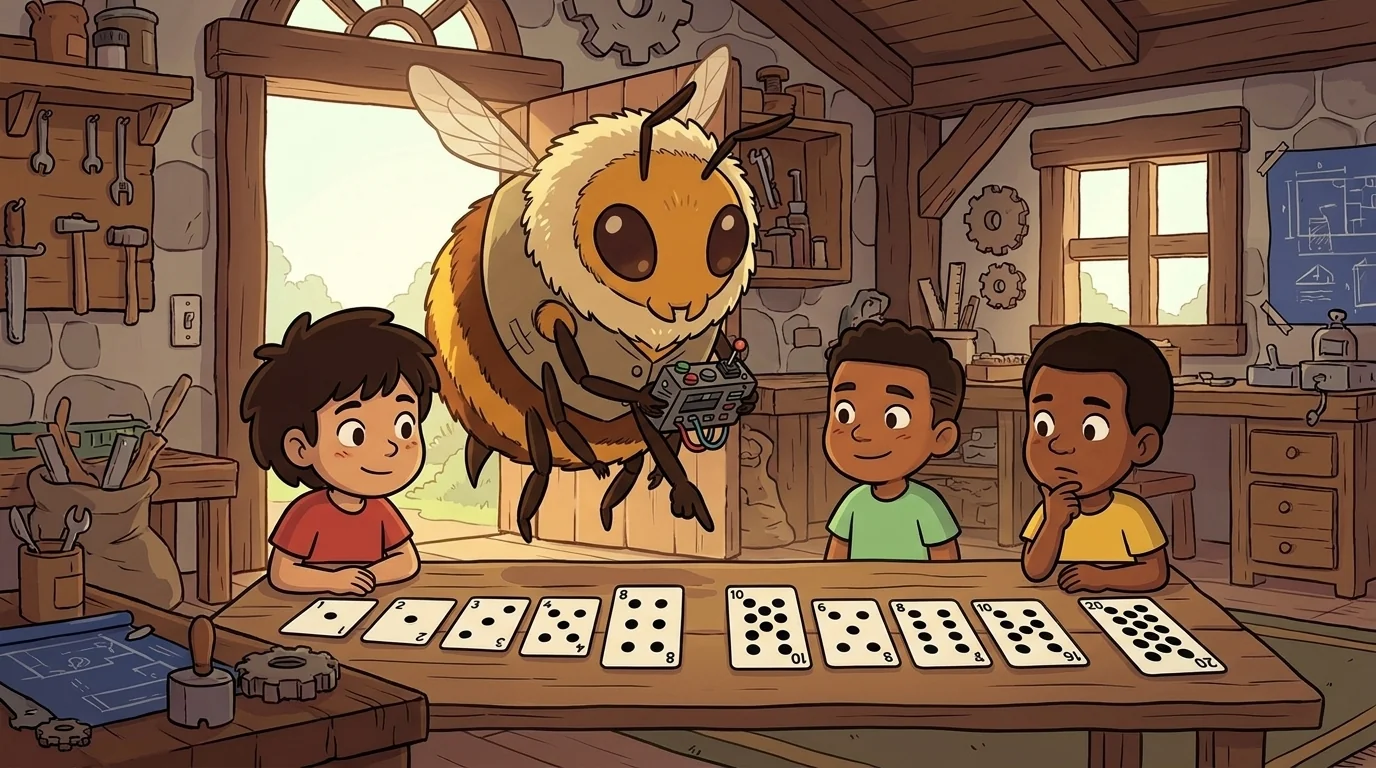
The kids wrote their four numbers on cards and laid the cards on the floor. Center began with the mean, because most people did. The mean, Center explained, was the arithmetic average: you summed every value, then divided by the count. Sum was one hundred and seventy-five. Count was four. The mean was forty-three point seven five. Leo crowed. Maya crossed her arms with the precision of someone who had been rehearsing the gesture. Center waited, because Center always waited at this moment, and let the kids notice the wrongness on their own. The wrongness, when it arrived, arrived as a feeling. The average of forty-three did not describe any of them. It was, Center said, the right calculation answering a question that wasn't quite the question. The one big number — Leo's mega-chest — was an outlier, and the mean was famously sensitive to outliers. A single extreme value could drag the average so far from the rest of the data that the average no longer described the data at all. The median, Center continued, did not have this weakness. They had the kids sort their numbers smallest-to-largest — seven, eight, ten, one hundred fifty — and look at the middle. With four numbers, the middle was the average of the two middle ones: nine. Maya, Sam, and the narrator nodded; nine felt right. Nine described their actual piles. The median, Center said, was the honest middle when the data was skewed. The mode was the third tool, the most frequent value. None of their four numbers repeated, so this set had no mode at all. Center wrote a new set of cards — twelve, fourteen, nine, fourteen, eleven — and asked which value showed up most. Fourteen, the kids said. Fourteen, Center confirmed. The mode was the answer when you wanted the most common choice: the popular T-shirt size, the bestselling ice-cream flavor. You would not, Center pointed out, want the average flavor of ice cream. The image was so disagreeable that the kids laughed.
Center hovered back to the doorway, three fuzzy fingers held up like a small monument to the lesson. "Mean, median, mode," they said. "Three answers to one question. The skill is not to memorize them. The skill is to choose. Mean when the data is well-behaved and the outliers are honest. Median when the data is skewed and you need a middle that holds. Mode when you care about the most common choice." Center paused, and the kids saw, for the first time, that Center looked tired in a quiet, satisfied way. Statistical work, Center had said earlier in the term, was the kind of work that left you tired in a satisfied way: it asked you to be careful with words, and to mean exactly what you said. Maya had written the three definitions in her notebook in three different ink colors, which was, Center thought, a charming thing to do. Leo had finally conceded that nine was the better typical, which was, Center thought, a generous thing to do. Center clicked their device once more — a soft purr, the sound of a small machine agreeing with its operator — and floated out of the workshop. The kids stayed at the table. They added a fourth ink color for the rule itself: mean, median, and mode answer different questions; you must choose the right one for the shape of your data. That was, Center would have said, the whole primitive.
The ChanceForge ensemble
Center is part of ChanceForge's distributed-narrative cast. Each character embodies a different curricular primitive; together they teach the full subject.
-

Tally the Counter-of-Outcomes
Data collection + frequency counting (the foundational "what happened, how often?" move)
-

Display the Picture-Maker
Graphs and visual displays (bar charts, histograms, dot plots, line graphs — turning numbers into pictures)
-

Sample the Estimator
Sampling, sampling distributions, inference from sample to population
-

Tree the Compound-Brancher
Compound events and probability trees — multiplication rule for independent events, addition for disjoint, conditional dependencies
-

Odds the Likelihood-Reader
Basic probability — placing a chance on the 0-to-1 scale from impossible to certain
-

Scatter the Spread-Reader
Spread and variability — how far apart the data is (range), not just the middle
-

Flipside the Other-Outcome-Counter
The complement rule — find the chance it doesn't happen and subtract from 1
-

Clew the Clue-Follower
Conditional probability — how chances change once you learn a new fact
-

Evens the Long-Run-Settler
Expected value and the long run — results settle toward the average over many tries