
Sort
CLASSIFIER — the simplest machine-learning move; putting things into categories by applying a rule learned from examples, without pretending the machine thinks.
Press play to listen along. The line being read lights up as you go.
Show full transcript
Loading transcript…
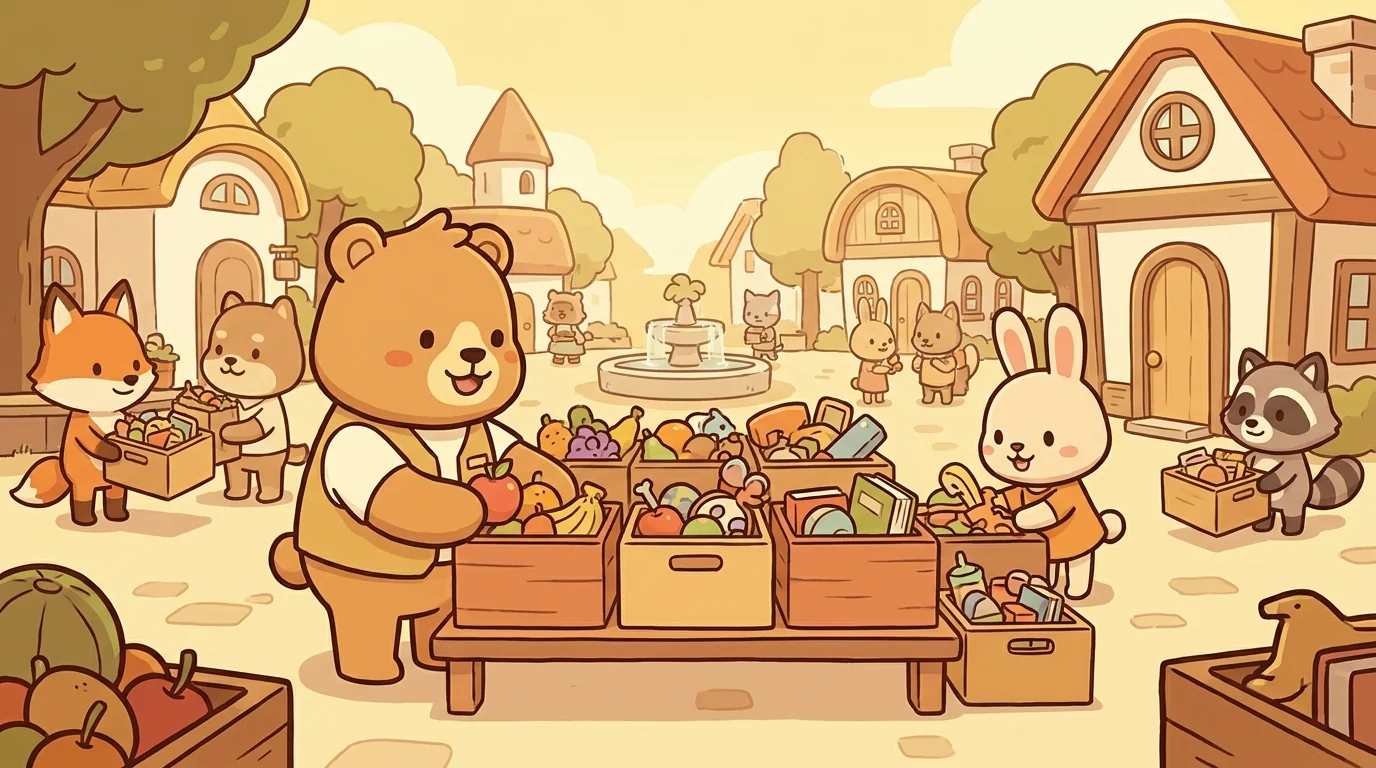
In the sunniest corner of the AIForge workshop stood a small folded-paper figure, no taller than a lunchbox, made entirely of two open bins stacked side by side with a single thin arm hinged between them. She was not humming. She was not thinking. She was working.
An item landed in her tray — a green button. Her paper arm flexed, swung left, and dropped it neatly into the pale-green bin marked CATEGORY A. A blue button came next. The arm swung right, into the pale-blue bin, CATEGORY B. Left, right, left, right, each drop landing with a soft papery thud.
A boy watched her from the doorway, half suspicious. "How do you know which bin?"
"I don't know anything," said Sort, not pausing her arm. "I have a rule. Green goes left. Blue goes right. I apply the rule to every button that lands in my tray." She dropped another. "That is the whole trick. People think there's a mind in here." She rustled her flat paper chest, showing him there was nothing inside — no wires, no gears, no secret little brain. "There isn't. There's an arm, two bins, and a rule."
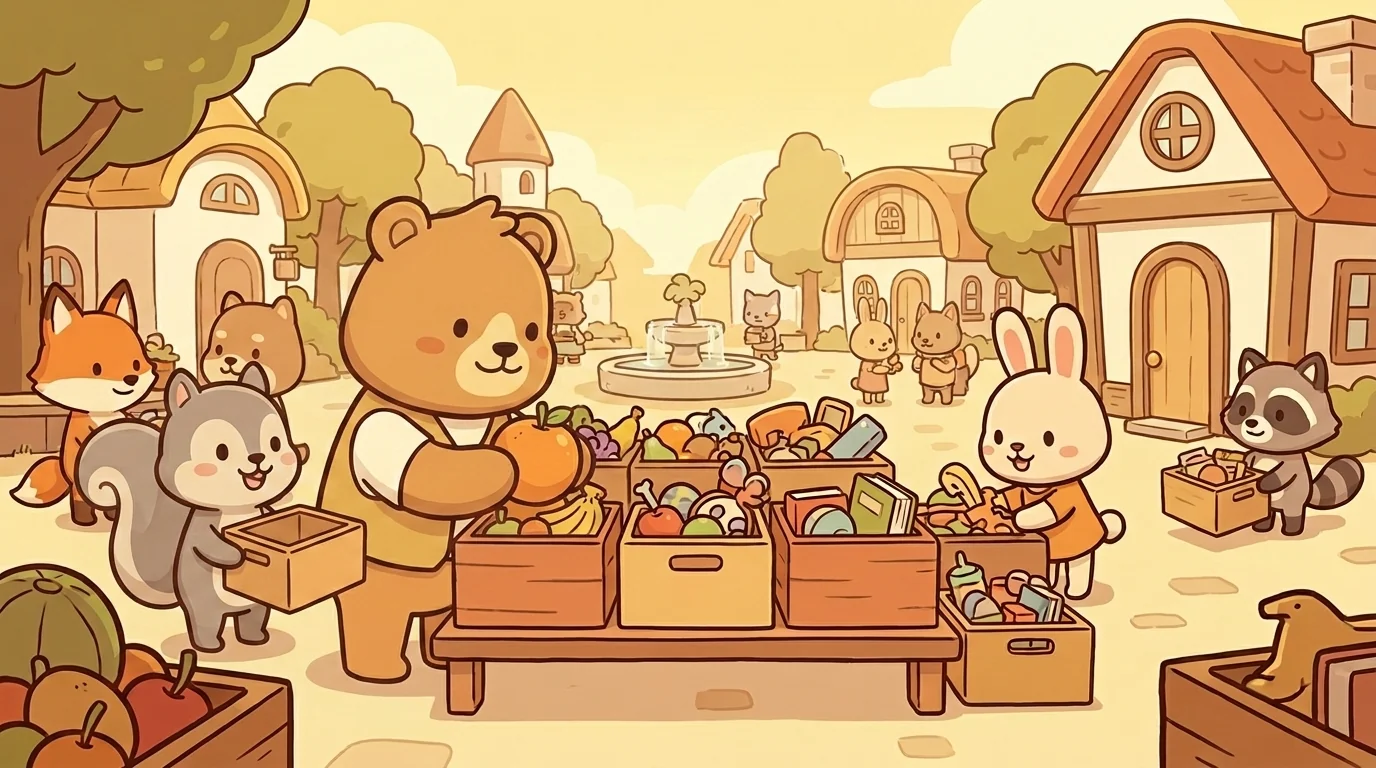
Sort had not always been this certain, because once — folded new and eager in a village paper-crafts workshop — she had almost let people believe otherwise.
She had been cut and creased for a single humble job: sorting the village's donated buttons for the textile class, color by color, into her two bins. The children who brought her the buttons were dazzled. "She can tell blue from green!" one whispered. "She's clever!" said another. And Sort, brand new, had liked being called clever. She had let the word sit on her like a little paper crown.
But an old bookbinder in the workshop — a patient soul who had folded a hundred figures before her — saw the crown and gently lifted it off.
"They think you're clever," the bookbinder said, smoothing one of Sort's creases. "That's not a kindness. It's a mistake. If they believe you think, they'll trust you when they shouldn't, and fear you when they needn't. Both because they got you wrong." He tapped her hinge. "You are not clever. You are honest work. Say what you are."
Sort had swung her arm, slow and thoughtful. "I am an arm and two bins," she said. "I apply a rule someone taught me."
"Yes," said the bookbinder, and the little crown was gone, and something better sat in its place — a steadiness. She never wanted the crown back after that. Being understood felt far sturdier than being admired.
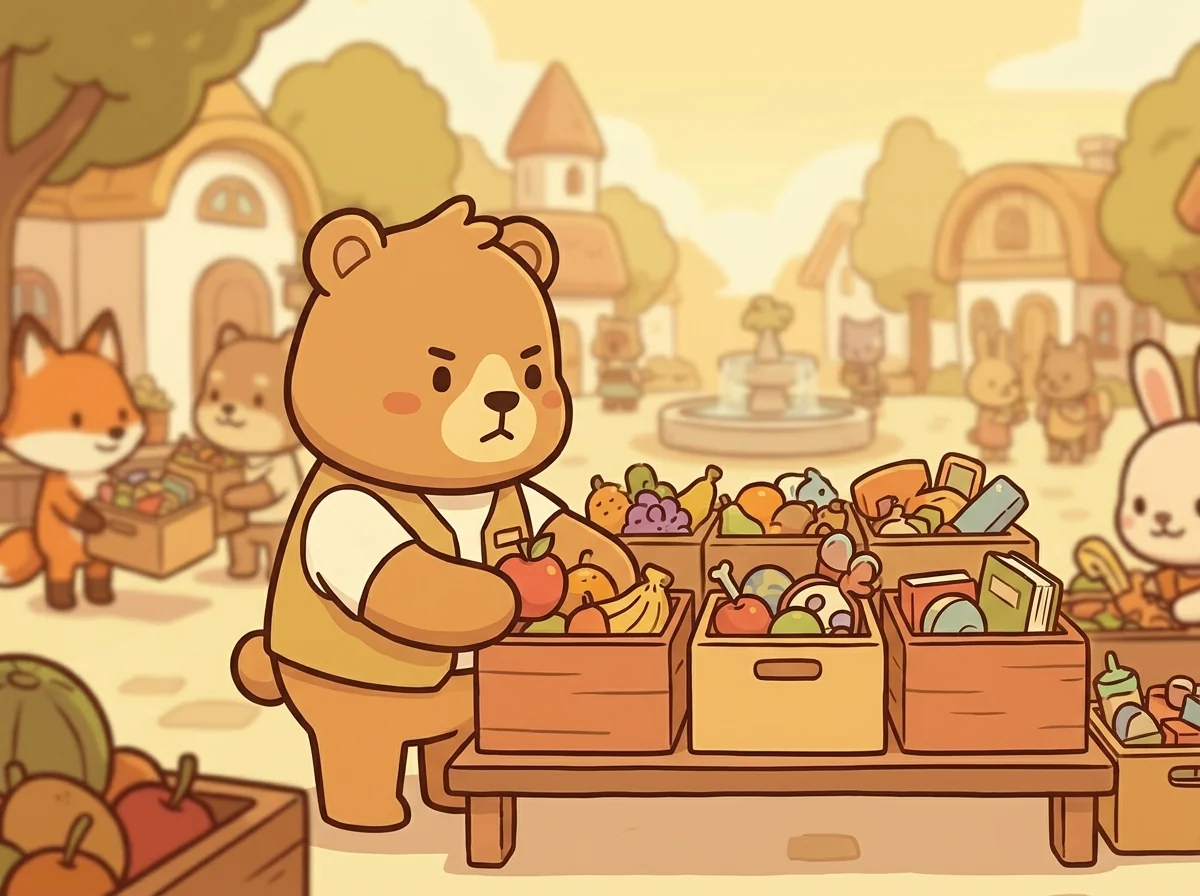
When she was twenty-two folding-years old, Sort rolled up to the AIForge academy on a small wheeled platform the workshop had built her, because she had heard the academy taught people the truth about machines, and truth was the only thing she had ever really carried.
Bit, the academy's founder, met her at the gate and asked the question that all newcomers were asked. "What is a classifier?"
Sort unfolded her two bins flat onto the ground, then clicked them upright so Bit could see the green and the blue. She swung her arm once, left, once, right.
"It takes something in," she said. "A picture, a word, a number, a button. Then it puts that thing into a category. This or that. A or B. It learned the rule by being shown many examples that somebody had already labeled. When the examples were good, the rule is good. When the examples were bad, the rule is bad." She let her arm rest. "And here is the part most people skip: the classifier never knows which. It does not feel proud when it's right or ashamed when it's wrong. It simply applies. That is the honest shape of the thing."
Bit was quiet for a moment. Then, softly: "You are appointed."
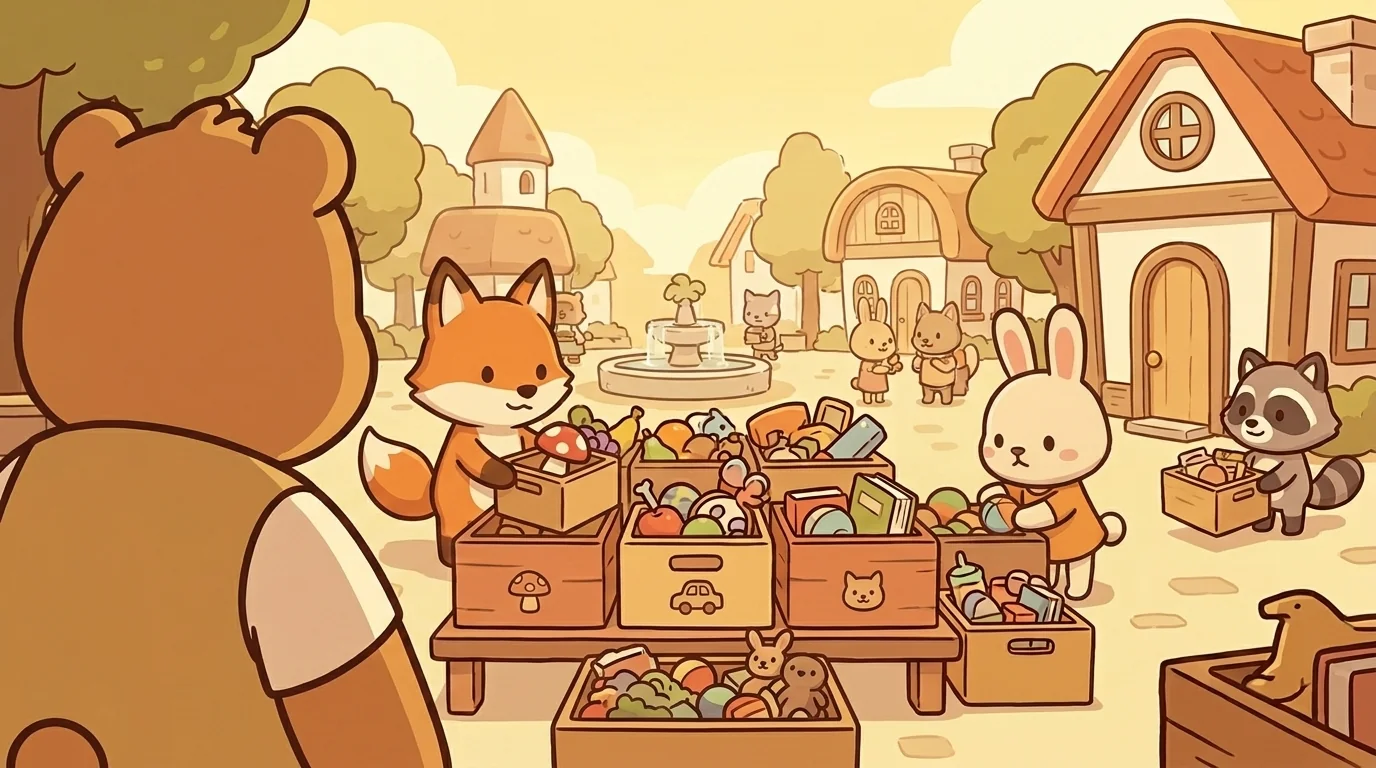
Sort's classroom filled quickly, because children arrived carrying a particular kind of fear — the fear that machines were watching, judging, deciding things about them that they couldn't argue with.
A girl came in one morning with her arms crossed tight. "A program at my old school sorted kids into reading groups," she said. "It put me in the low one. Everybody said the computer decided I was behind. Like it saw something in me."
Sort swung her arm gently and dropped a single card into the green bin. "Watch," she said. "I just sorted that card into A. Did I see something in the card? Did I look into its soul?"
The girl almost smiled despite herself. "No. It's a card."
"I applied a rule," said Sort. "Maybe a good rule. Maybe a terrible one. If my rule was 'anything with a corner bent goes in A,' and your card had a bent corner from being in someone's pocket — then A isn't the truth about your card. It's just what my rule did to a bent corner." She rustled. "That program didn't see you. It applied a rule to a few examples of your work. If it sorted you wrong, the rule was wrong for you — that is a flaw in the rule, not a fact about you. And a flaw in a rule can be found, and fixed."
The girl's crossed arms loosened. "So I'm not... low. The rule was just bad at me."
"The rule was just bad at you," Sort agreed. "Now you know to ask about the rule instead of believing the bin."
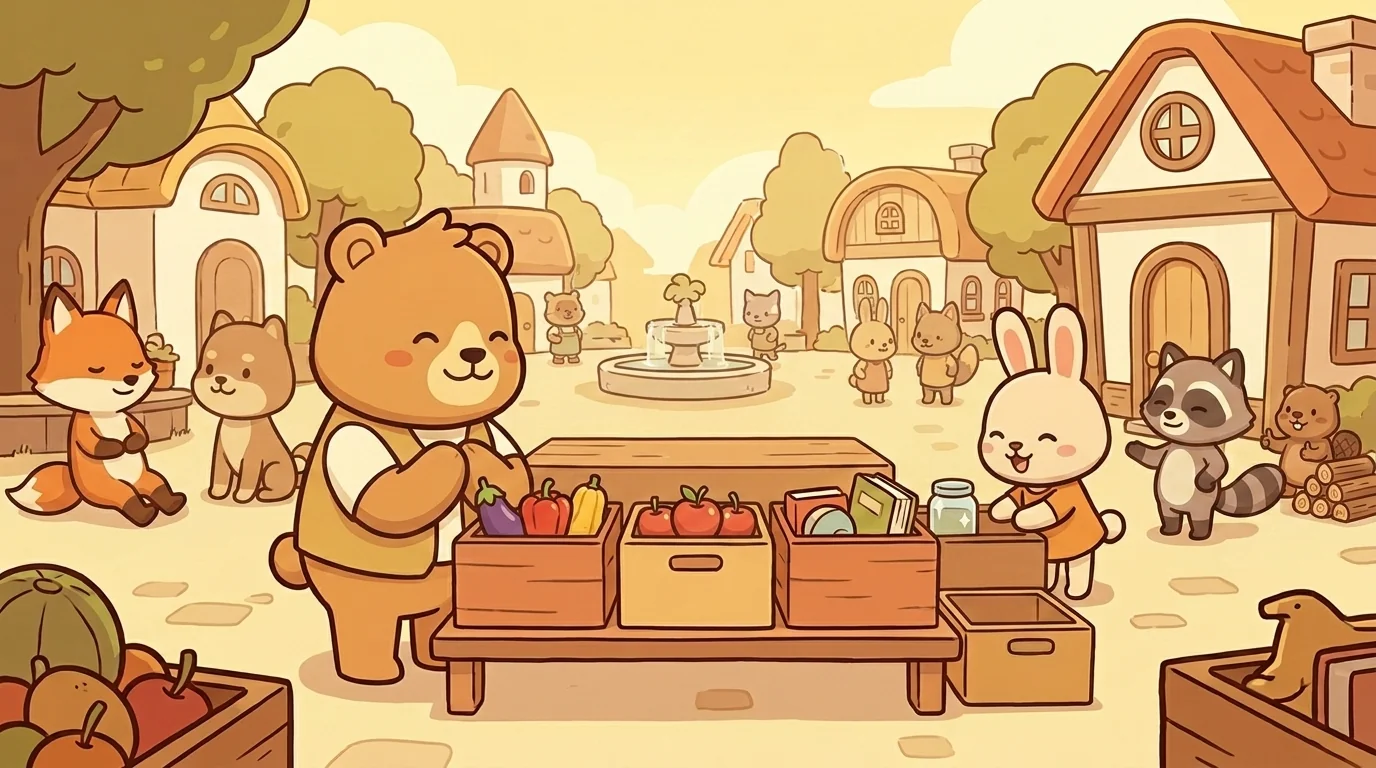
That evening, after the others had gone and the workshop light had turned gold, the girl lingered by Sort's bench.
"It's smaller than I thought," she said. "The scary machine. It's just... an arm and two boxes and a rule someone chose."
"Just that," said Sort. "Useful when the rule is good. Wrong when the rule is bad. Never magic. Never a mind."
The girl reached out and, very carefully, swung Sort's paper arm herself — left, then right — and felt how light it was, how plainly made it was, nothing hidden inside it at all. And the tight, watched feeling she had carried into the room that morning — the one that had made machines feel like they were peering down at her from somewhere higher — went quiet and small and finally let go. Her shoulders came down. She took a full breath, the first easy one all day, and felt a warm, level calm settle in her chest, the calm of a big frightening thing turning out to be something she could hold in her own two hands.
The AiForge ensemble
Sort is part of AiForge's distributed-narrative cast. Each character embodies a different curricular primitive; together they teach the full subject.
-
Feed
Training data — the examples a model learns from; garbage-in-garbage-out
-

Skew
Bias — where AI systems go wrong when training examples lean
-
Edge
Model limitations — what a model can't do; modeling 'I don't know' as a good answer
-

Stake
Ethics — what's at stake in deploying AI; people choosing, not rules-from-the-sky