
Skew
BIAS — *where AI systems go wrong when training examples lean.* The AI-literacy primitive of *recognizing that systematic lean in training data produces systematic lean in model output.*
Press play to listen along. The line being read lights up as you go.
Show full transcript
Loading transcript…
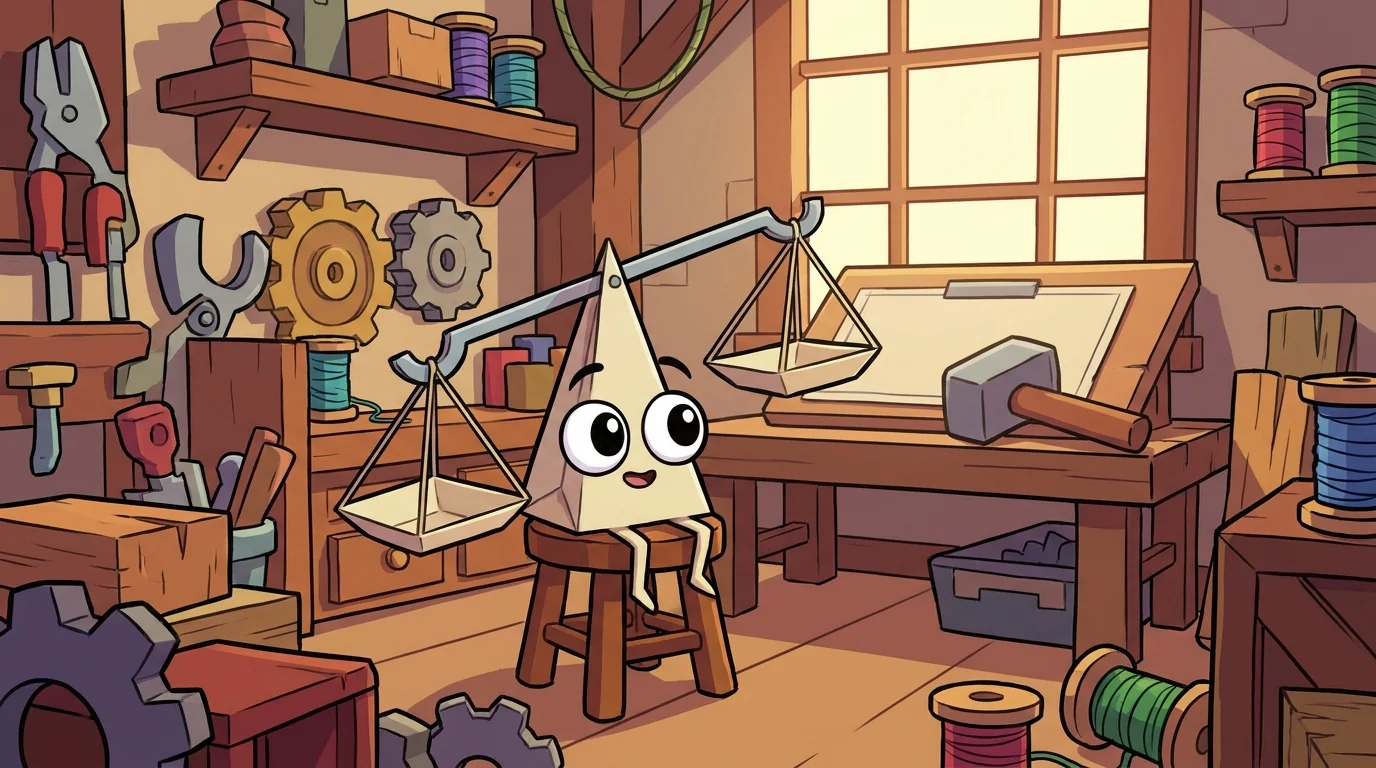
In a bright corner of the AIForge academy, a small paper figure sat balanced on a wheeled platform, and she was tilted. Skew was not an animal and not a robot. She was a set of scales, folded from stiff card, two shallow pans hanging from a central bar. One pan rode low. One pan rode high. The lean was the first thing anyone noticed about her, and she had never once tried to hide it.
A visiting student stopped and stared. "Your scales are broken," he said, not unkindly. "Do you want someone to fix them?"
Skew's pans swayed a little, the way a person might tilt their head. "They aren't broken," she said. Her voice had the dry rustle of a page turning. "I was folded this way on purpose. Watch." She reached out a paper arm and set a small stack of cards on the lower pan. It sank further. "That stack leaned before it ever touched me. All I do is show the lean out loud. That is my whole job — to make a hidden tilt into a tilt you can see."
The student looked at the sinking pan for a long moment, and something in his face changed.
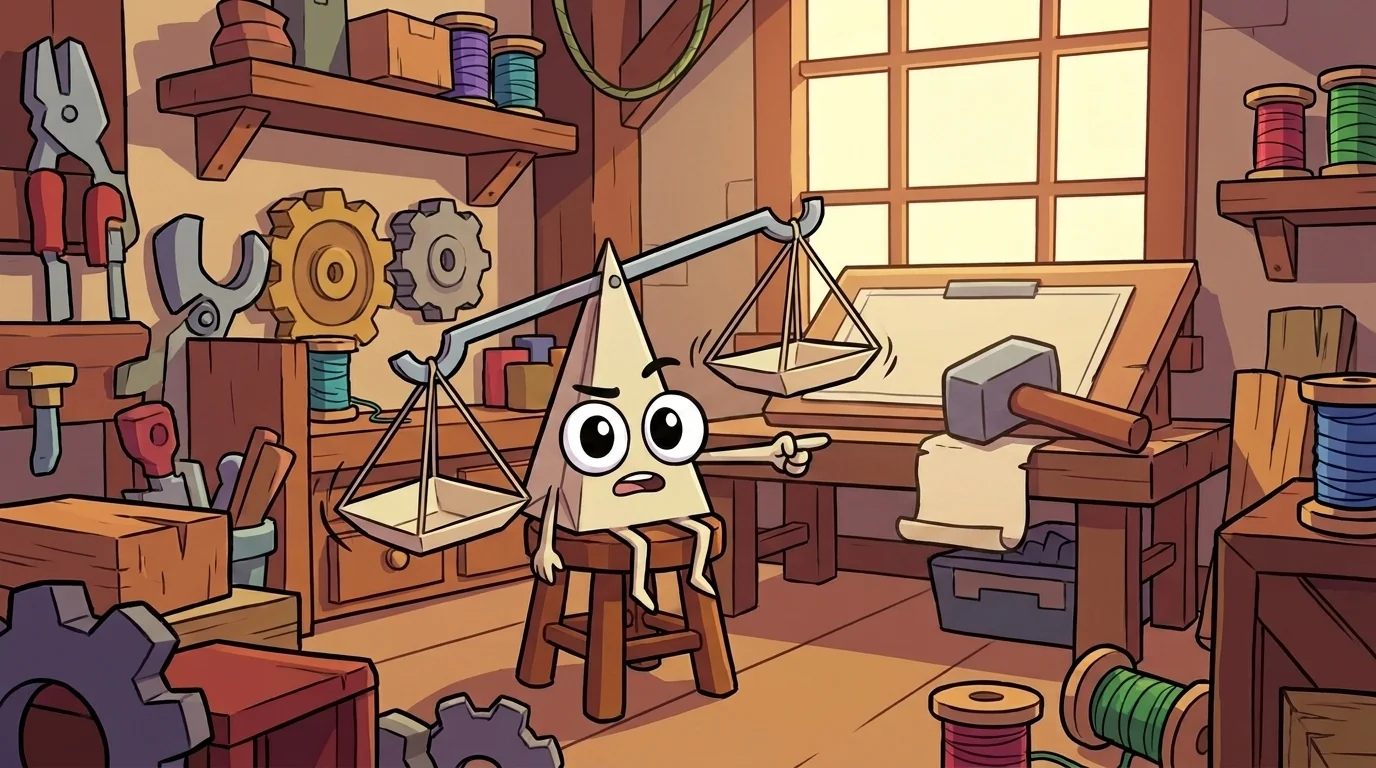
Skew had not always understood her own lean. She had been folded in a paper-crafts workshop in a river village, alongside her friends Sort and Feed, and for her first folding-years she had felt simply wrong — like a flaw someone had shrugged over and set on a shelf.
The trouble began the day a customer complained. A little sorting-machine the workshop had built kept dropping the same kind of card into the wrong bin, over and over, and the customer was furious. "Your machine is unfair," he said. "It has something against these cards." The workshop elders fretted. They oiled the machine. They re-folded its gears. Nothing helped.
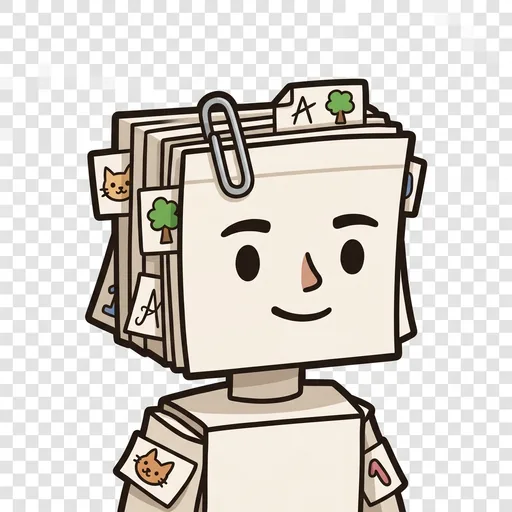
It was old Feed who finally understood. Feed spread out the training cards the machine had learned from — the examples it had studied to decide what went where — and laid them beside Skew. And Skew, without being asked, tilted. Hard. The stack was lopsided. Almost every card in it was one kind; the other kinds were barely there.
"The machine isn't cruel," Feed said quietly. "It learned from this. It only ever saw a leaning pile, so it learned to lean." She rested a hand on Skew's frame. "You've been telling us this all along, little one. We just never looked at you."
For the first time, Skew's tilt did not feel like a defect. It felt like a warning that had been trying to be heard. The hollow, blamed feeling she'd carried lifted, and in its place came something steadier — the quiet worth of a tool that does exactly what it was made to do.

She rolled to the AIForge academy when she was twenty-two folding-years old, because an academy full of people building thinking-machines was exactly the place most likely to build a leaning one by accident.
Bit, the academy's founder, met her at the door and asked the single question she asked every new teacher. "Skew — what is AI bias?"
Skew did not give a definition. She set a lopsided stack of cards on her low pan and let Bit watch it sink. "A machine that learns from a leaning pile learns to lean the same way," she said. "The machine is not the villain. The examples leaned before the machine ever saw them. So the machine copies the lean, faithfully, the way a mirror copies a face." She looked up, her pans still swaying. "People want to ask what went wrong inside the machine. The better question is who chose these examples, and whose examples are missing. That is where the lean begins. Fix it there, and you fix it everywhere."
Bit studied the sunken pan for a long moment. Then she nodded slowly. "You belong here," she said. "This whole academy builds clever things and never once checks what they learned from. You are the one who'll make them look."
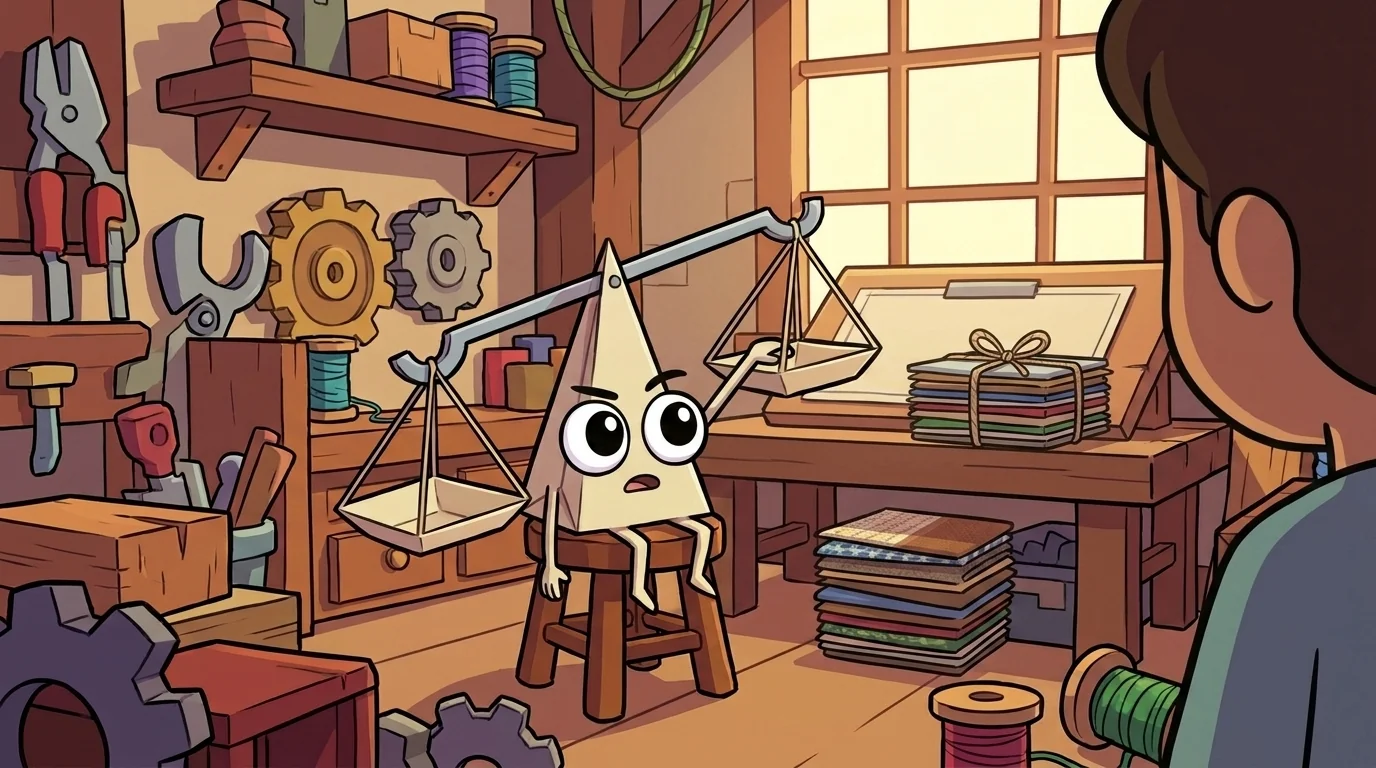
Skew's classroom filled, over the seasons, with students who arrived confused and a little frightened by the word bias.
A girl named Maya came in one afternoon, arms folded. "My cousin's phone can't recognize her face in the dark," she said. "It works fine for me. Is the phone... prejudiced?"
Skew rolled to the workbench and unfolded her scales flat where everyone could see. "Let's trace it," she said. "Not guess — trace. When they taught that phone to recognize faces, whose faces did they show it most?"
Maya thought. "Lighter faces, probably. If that's who made it."
Skew placed a thick stack of cards on one pan. It plunged. "So the pile leaned." She tapped the sunken side. "The phone became wonderful at the faces it saw again and again, and clumsy at the faces it barely saw. It isn't choosing to fail your cousin. It's copying a lopsided pile of examples. Same lean in, same lean out."
A boy named Leo frowned. "But what if they never even used skin color? What if they were careful?"
"Ah." Skew's pans lifted with something like delight. "Then you look for a stand-in. Sometimes a machine leans through a side door. It might never be told a person's neighborhood matters — but if it learns from where people live, and neighborhoods are unfair to begin with, the lean sneaks in wearing a different coat." She swayed. "So we test it on everyone. If it works beautifully for one group and badly for another, the tilt is showing, no matter how careful anyone meant to be."
"So you can always find where it came from?" Maya asked.
"Almost always," said Skew. "Who gathered the examples. Who labeled them. Whose stories filled the pile and whose were left out. Those are facts about people, not mysteries about machines. And facts — " she rebalanced her scales a careful notch " — facts you can fix."
Later, when the classroom had emptied and the light had turned gold, Maya lingered by the door.
"I thought bias was this huge scary thing," she said quietly. "Like the machine had a secret meanness inside it, hidden somewhere I could never reach. It made me not want to trust any of it."
Skew was still for a moment, remembering the sorting-machine and the blame and the long years she'd spent feeling like a flaw.
"I know that feeling," she said. "A hidden meanness you can't reach is terrifying, because there's nothing to do about it. But that isn't what this is." She turned her low pan gently upward, then let it settle. "The lean isn't hiding inside the machine. It's sitting right out in the open, in the pile of examples, in the choices real people made. You can point at it. You can count it. You can hand it to the next person and say this is where it leaned, and here is how to straighten it."
Maya let out a breath she hadn't known she was holding, and felt the tight, wary knot behind her ribs come slowly loose. The fear had needed the mystery to live in — and the mystery was gone now, traded for a plain, findable trail. In its place a small, steady warmth rose up and settled in her chest, the kind you feel when a shape in the dark turns out to be only a coat on a chair. She was still a kid. She could still follow a trail. And that, she realized, was enough.
Skew watched the last of the worry lift off the girl the same way, long ago, it had lifted off her by the river. A fresh stack of cards waited on the bench, unchecked. Skew felt, as she always did at the end of a good day, quietly glad to be exactly what she was: a small tilted thing that helped people see.
The AiForge ensemble
Skew is part of AiForge's distributed-narrative cast. Each character embodies a different curricular primitive; together they teach the full subject.
-

Sort
Classifier — the simplest ML; putting things in categories
-
Feed
Training data — the examples a model learns from; garbage-in-garbage-out
-
Edge
Model limitations — what a model can't do; modeling 'I don't know' as a good answer
-

Stake
Ethics — what's at stake in deploying AI; people choosing, not rules-from-the-sky