
Slow
PACING — the deliberate variation of tempo across the 5-beat arc (hook → setup → rising → turn → close). Each beat has its characteristic tempo; the variation is what gives a told tale its shape.
Press play to listen along. The line being read lights up as you go.
Show full transcript
Loading transcript…

The fire had settled to a low, steady hum, casting long, dancing shadows across the hedgerow clearing. It was on such an evening that Bramble first encountered Slow, a small tortoise-elder making her unhurried way toward the listening-circle's far edge. Each step she took was deliberate, a quiet declaration of patience that seemed to ripple through the very air around her. In one claw, she carried a small wooden hourglass, inverted, its fine sand resting in the upper bulb, waiting. Behind her, a faint, shimmering glow stretched across the dew-kissed grass, a visible *tempo-trail* that elongated when she moved slowly and gathered into a tighter cluster when her pace quickened. Bramble watched, intrigued by the luminous wake she left, a silent testament to her measured journey and the unspoken stories it seemed to carry.
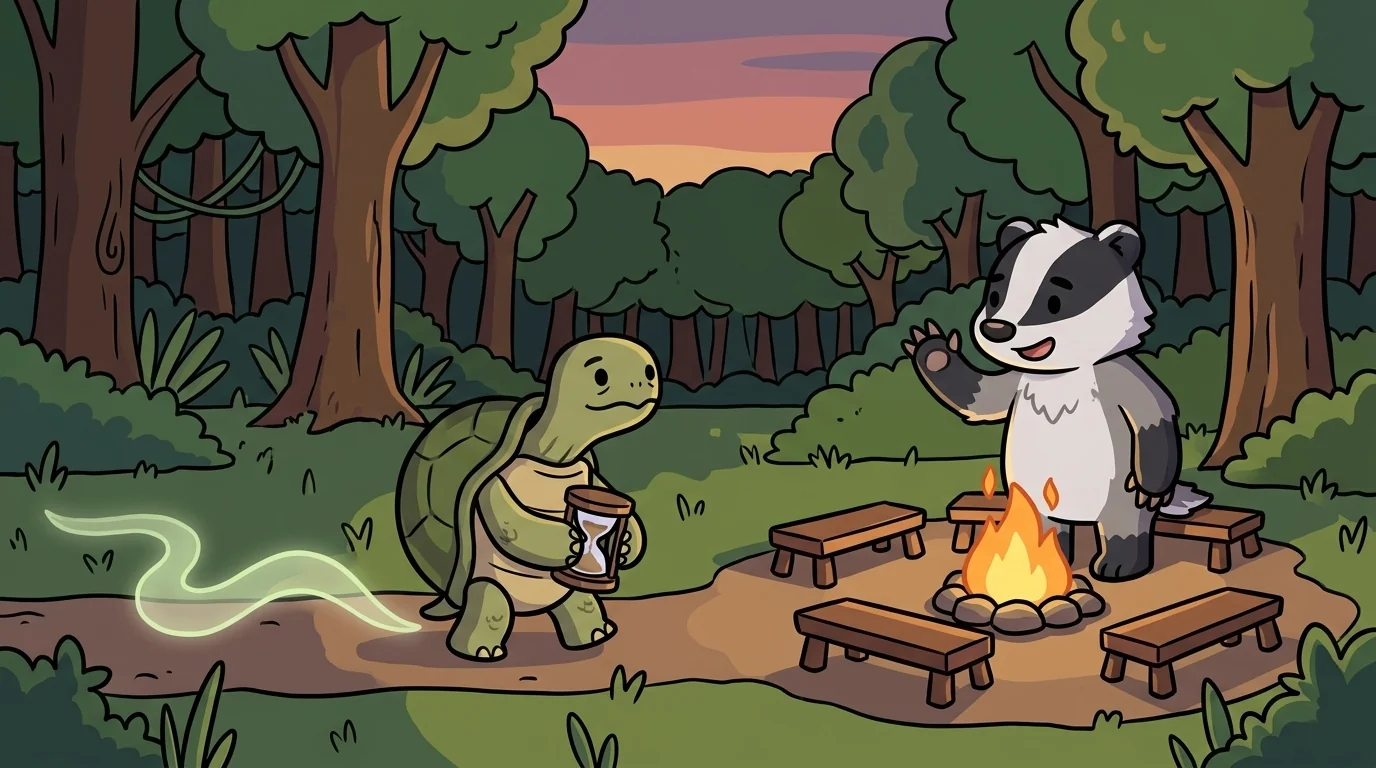
"Hello," Bramble offered, a little surprised by her sudden appearance at the edge of his awareness. The tortoise stopped, her ancient eyes meeting his. Her voice, when she spoke, was as unhurried as her gait. "Hello. I am Slow. I am here for the pacing lesson." Bramble blinked. "What pacing lesson?" Slow tilted her head, the wooden hourglass in her grip remaining perfectly still. "The one you have been thinking about teaching. The one about how a told tale has five beats and each beat has its own tempo. You have been thinking about this. I have come to help."
A slow warmth spread through Bramble. He had been turning over exactly that idea, the subtle rhythms of storytelling, the way a tale could speed up or slow down to hold a listener. It was a concept he’d only just begun to articulate in his own mind. "How did you know?" he asked, a genuine curiosity lacing his voice. "My hourglass tells me when a teacher is ready to teach *pacing*," Slow replied, her gaze unwavering. "It tipped over earlier. So I came." Bramble considered this. He knew enough of the hedgerow's peculiar inhabitants to understand that some creatures simply possessed small, specific magics. Slow's ability to sense a readiness to teach pacing was clearly one of them, as inexplicable as it was precise. He didn't press for further details. "Tell me about pacing," he said instead, eager to hear her wisdom.

Slow nodded, a slow, deliberate movement. "A told tale has five beats," she began, her voice a low, steady current. "Hook. Setup. Rising. Turn. Close. Each beat has its own tempo." She paused, letting the words settle. "The Hook is fast — you have perhaps five to ten seconds to snatch the listener's attention. The Setup is steady — you offer just enough detail for them to follow the path of the story. The Rising is building — the tempo quickens as the stakes climb, as the tension grows. The Turn is sharp — the moment of realization or change happens quickly, a sudden shift. And the Close is slow — you allow the listener time to absorb the meaning, to let the story settle within them. The variation in these tempos, Bramble, that is the shape of the tale."
Then, without another word, she began to demonstrate. She stepped into the clearing of the listening-circle, tracing an invisible 5-beat arc with her small, sturdy legs. For the Hook, she moved with surprising speed, her tempo-trail a brief, bright spark that vanished almost as soon as it appeared. Then, her pace settled into a steady rhythm for the Setup, the glowing trail behind her stretching into a consistent, medium length. As she entered the Rising, her steps subtly accelerated, the luminous wake behind her growing longer, tighter, and more intense, a vibrant ribbon of light coiling up. At the Turn, she executed a sudden, sharp 90-degree pivot, the glowing trail snapping with an almost audible crackle, a brilliant, instantaneous flash. Finally, for the Close, her movements became slow and deliberate once more, the tempo-trail elongating into a long, serene stream that gradually faded into the grass.

Bramble watched, utterly captivated. The visual representation of pacing, the way her body embodied the abstract concept, was breathtakingly clear. "You walk the tempo," he breathed, the observation a revelation. Slow returned to her spot, her expression calm. "The body knows pacing," she affirmed. "Most tellers, however, do not. They speak at the same tempo throughout their tale, and the story becomes flat, like a path without hills or valleys. With pacing, the tale acquires shape. Watch me walk it. Tell your story to my walking. The pacing will match."
From that evening onward, Slow became an integral part of Bramble's storytelling lessons. In his introductory session on *pacing, he would gesture toward her, always positioned at the edge of the listening-circle, her wooden hourglass resting patiently beside her. "This is Slow," he would announce to his students, his voice filled with respect. "She walks the 5-beat arc. When you tell your story, tell it to her walking. Your tempo will naturally follow hers." He would then recite the rhythm, his voice echoing Slow's earlier lesson: "Fast for the hook. Steady for the setup. Building for the rising. Sharp for the turn. Slow for the close.* Remember, the shape of your story, its very heartbeat, is in the variation of its tempo."

Slow would then begin her silent, deliberate journey around the clearing. At first, many students struggled. Their voices would rush when Slow was slow, or drag when she quickened her pace. They’d stumble over words, their narratives feeling disjointed, like a cart with a wobbly wheel. But as they watched her luminous tempo-trail, as they felt the rhythm of her movements, something shifted. Their voices began to synchronize with her steps, a subtle, almost unconscious adjustment. The stories, once a jumble of words, started to breathe, to swell and recede, each beat finding its natural duration. The pacing settled, almost as if the tales themselves were learning to walk. And with that newfound rhythm, the stories acquired a palpable shape, a dynamic flow that held listeners spellbound, drawing them deeper into the narrative's current.
Sometimes, a student, frustrated by the initial awkwardness, would ask Bramble if pacing was truly so difficult to master. Bramble would smile, remembering his own initial awe. "It is not hard," he would say, quoting Slow directly. "It is simply varying the tempo. Each beat has its own distinct rhythm. Walk Slow's arc. Tell your story to her walking. The shape will emerge, as naturally as a river finds its course."
The VoiceTale ensemble
Slow is part of VoiceTale's distributed-narrative cast. Each character embodies a different curricular primitive; together they teach the full subject.
-

Lean
Hook / leanability — badger-tween whose upper body visibly tips forward at second 5; if hook is weak she rocks back to neutral
-

Pivot
The turn at beat 4 — barn-owl-tween whose head rotates 180° at the exact moment story / teller / listener turn together
-

Refrain
Callback / refrain — mockingbird-tween with carved-wood phrase-token who repeats one phrase identically at the closing (same words, same shape, said again, said better)
-

Hush
The pause / strategic silence — soft round owl who holds a held beat of quiet right before the important word, pulling the whole circle forward
-

Boom
Volume + emphasis — wide-mouthed frog whose voice swells from the tiniest whisper to a big round roll; the soft pulls listeners close, the loud lands the surprise
-
Mimic
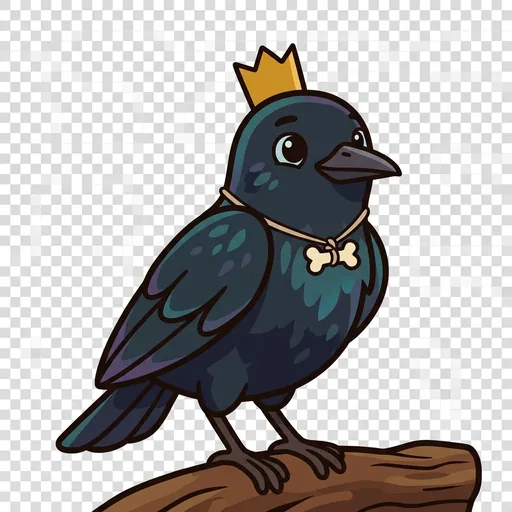
Character voices — sleek starling who gives each character in a told tale one small distinct voice so listeners always know who is speaking
-
Flourish
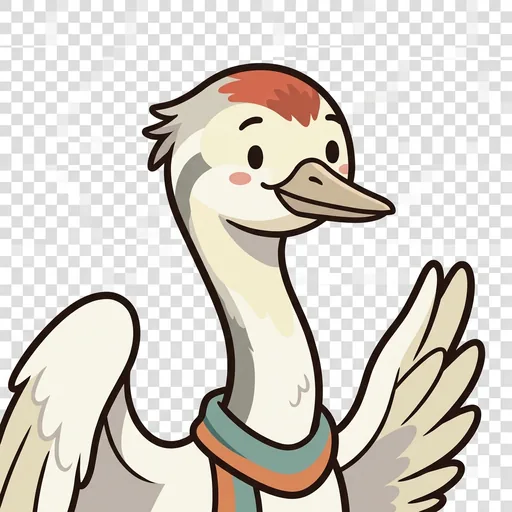
Gesture — tall crane whose wings paint the story in the air (wide for huge, close for tiny); the body shows what the words say
-

Gaze
Eye contact / reading the listeners — soft-eyed deer-fawn who tells to the faces of the circle and reads their faces back to know when to slow or hurry
-

Recover
Recovering when you lose your place — easygoing otter who treats a stumble as a tiny ripple: stay calm, build a bridge, carry on