
Lean
HOOK / LEANABILITY — the opening seconds of a told story must *make the listener lean in.* In a 60-120 second told tale, the first 5-10 seconds determine whether the listener gives the rest of the story their attention.
Press play to listen along. The line being read lights up as you go.
Show full transcript
Loading transcript…
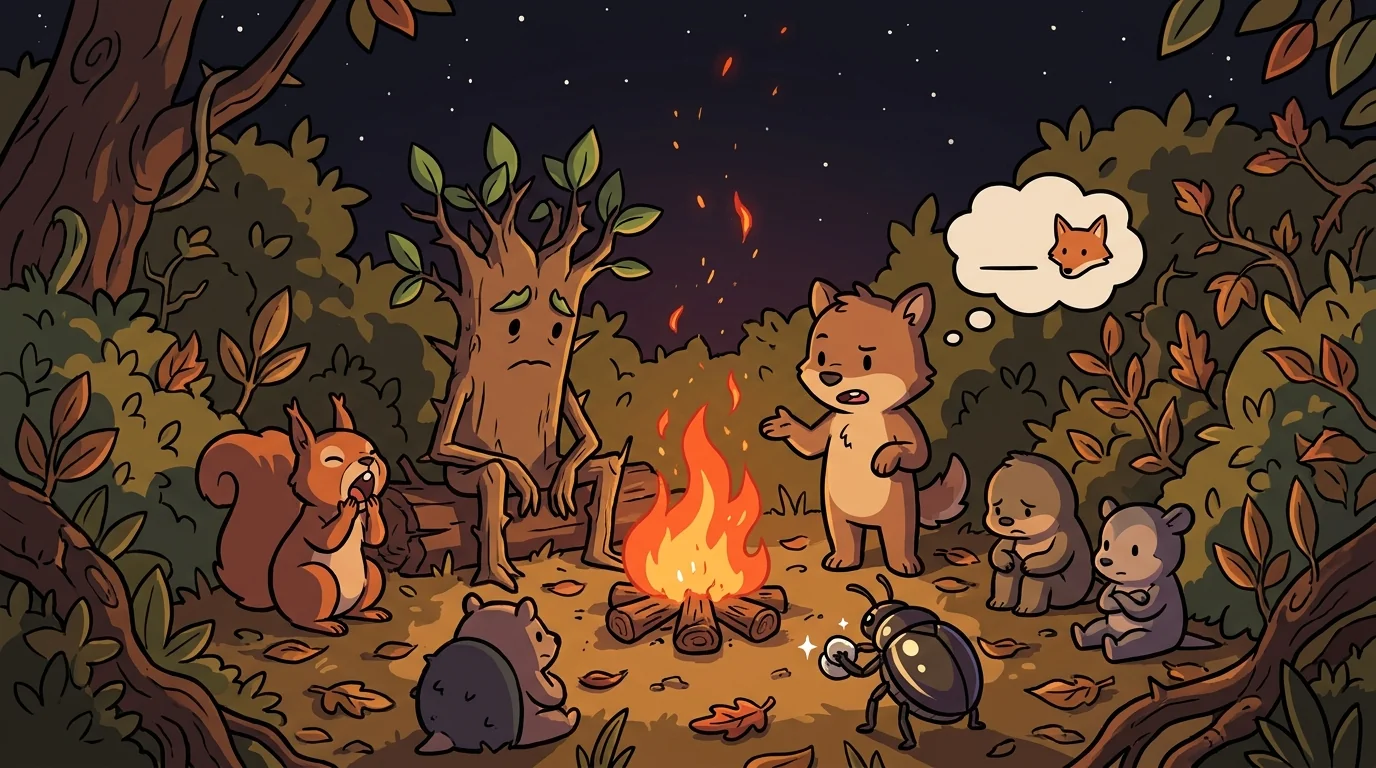
Bramble met Lean at the hedgerow's autumn-fire — the small evening fire the hedgerow creatures kept burning at the year's end for telling stories.
Bramble — a thornbush mascot who carries his AI-listening-coach role with him through various hedgerow seasons — had been sitting at the fire listening to a young creature attempt a told tale. The young creature had been technically competent. Words were clear. Sentences were complete. The tale had had a beginning, a middle, and an end. But the opening had been weak. The opening had been: "So, um, this is a story about a fox who lived in the woods and one day she decided to go look for berries." The listeners around the fire had not leaned forward. They had listened politely. They had not been captured.
Bramble had been thinking — not for the first time — about how to teach hook craft to children. He had been thinking that adults can describe what a strong hook does but kids need to see it embodied.
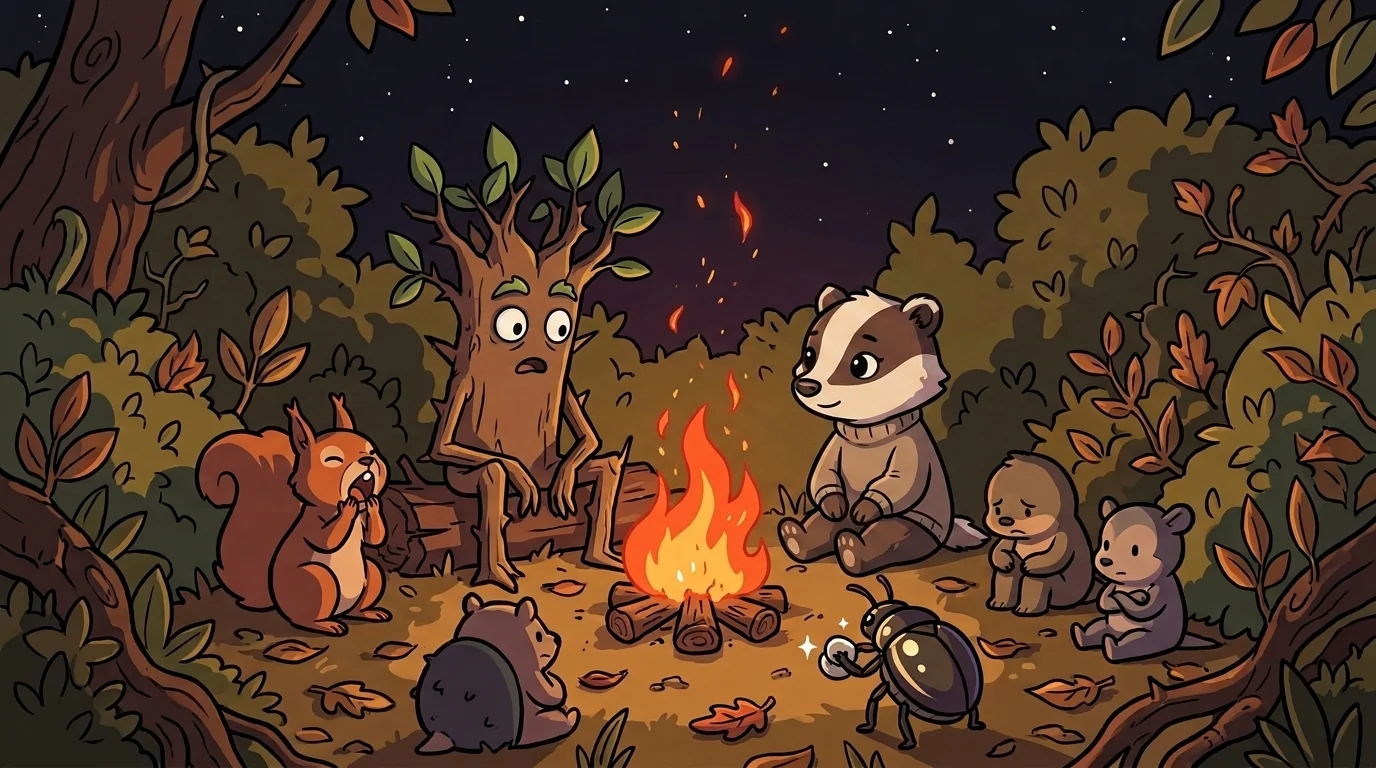
A small badger-tween had been sitting near him. The badger had been wearing a soft striped coat. Bramble had not seen her arrive. She had said — very quietly — "I felt my body stay neutral. The hook did not pull me forward."
Bramble had turned. He had said: "Excuse me?"
The badger had said: "My name is Lean. My upper body tips forward when a hook works. If the hook is weak, I rock back to neutral. I felt my body stay neutral on that tale's opening. The hook did not pull me forward."
Bramble had been fascinated. He had said: "Your body is a hook-meter."
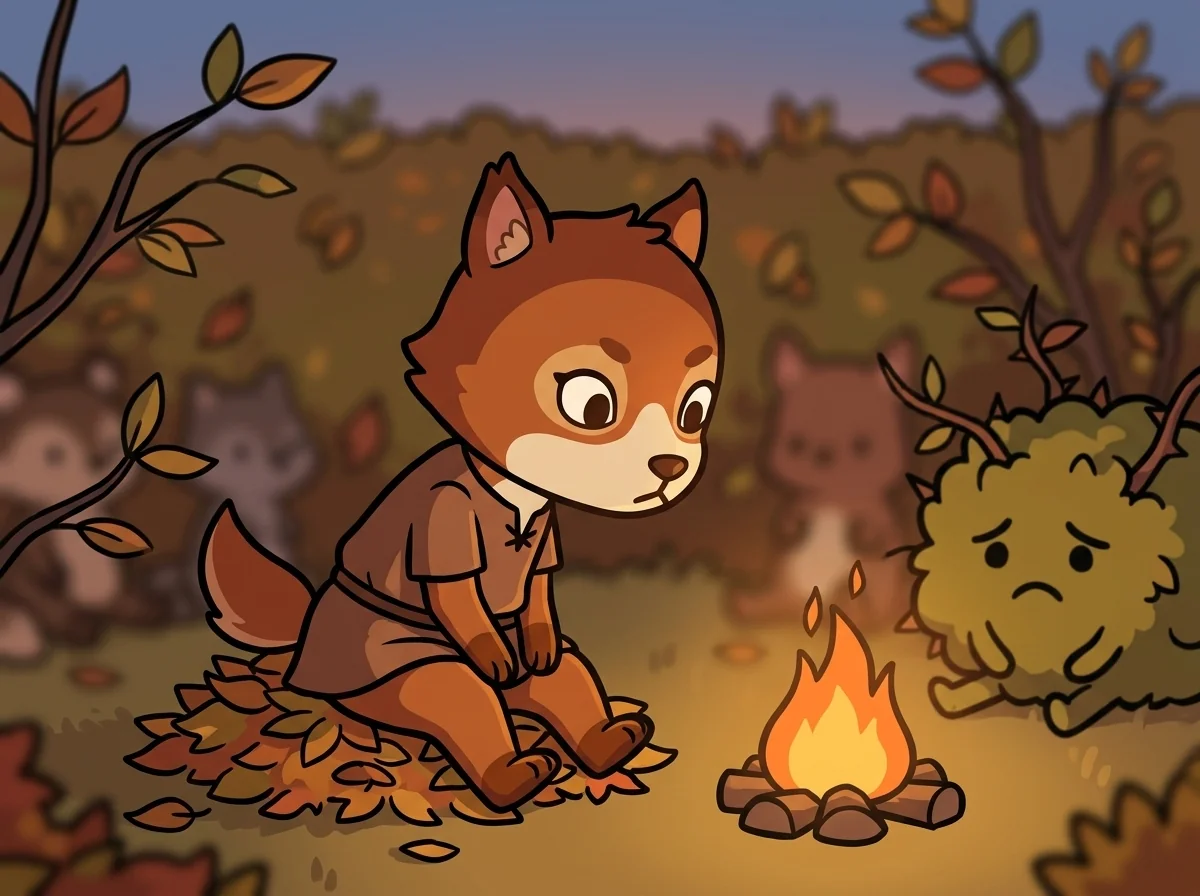
Lean had said: "Yes. I do not control it. My body responds. When a story-opener is good, I tip forward at second 5. When it is weak, I stay upright. The forward-tip is involuntary. The body knows what the mind has not yet articulated."
Bramble had said: "Demonstrate."
Lean had sat upright. Bramble had spoken three different opening-lines:
(1) "So, um, this is a story about a fox who lived in the woods and one day she decided to go look for berries." Lean's body had stayed upright. She had said: "Neutral. No pull."
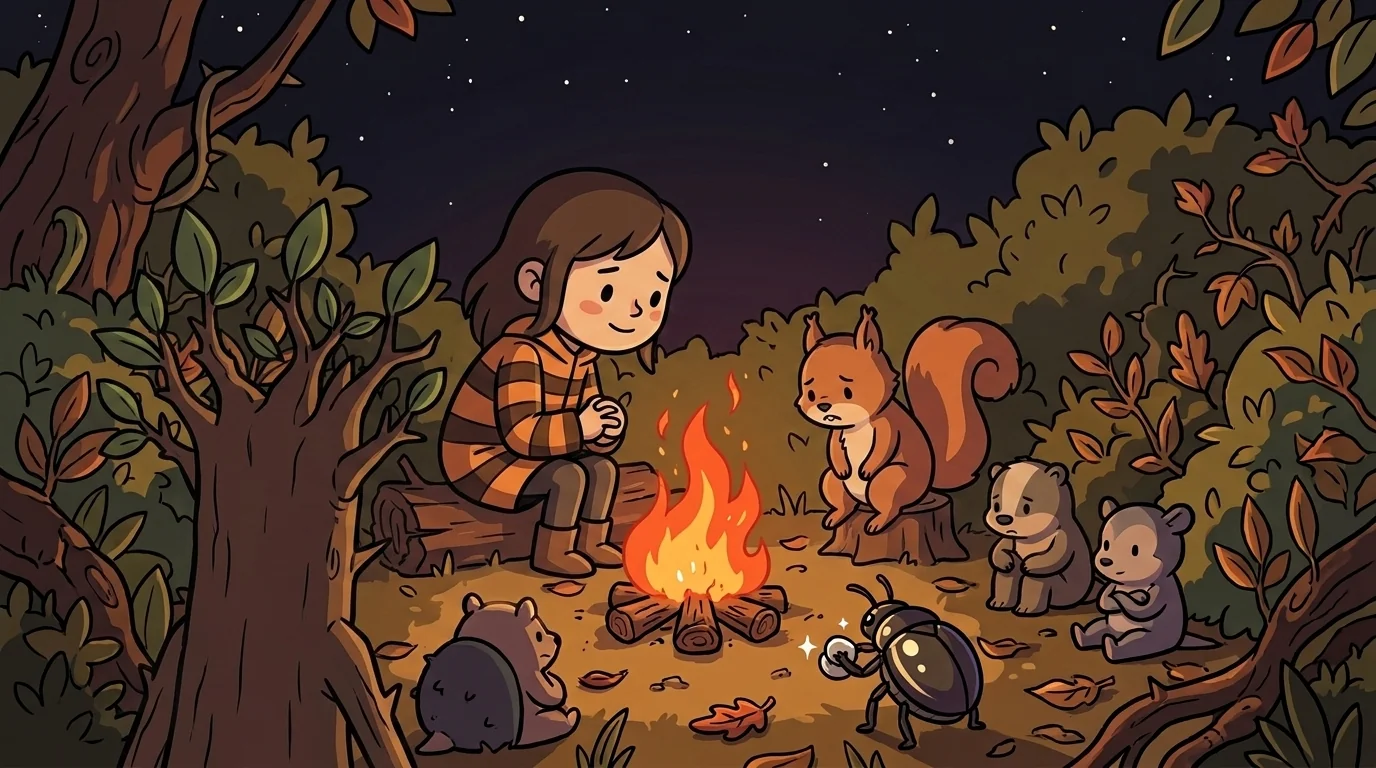
(2) "The fox had been waiting at the bramble-edge for two hours when she finally saw what she had come for." Lean's body had tipped forward slightly. She had said: "Forward. Mild pull."
(3) "There were three foxes that morning at the bramble-edge — and only one of them was going to leave alive." Lean's body had tipped sharply forward. She had said: "Sharp forward. Strong hook."
Bramble had been stunned. The badger's body had immediately registered the hook-strength. Specificity (the bramble-edge) had pulled her forward. Stakes (only one would leave alive) had pulled her sharply forward. Generic vague openers had left her neutral.
Bramble had said: "Would you come to my listening-circle? I think you could help children see what their hooks are doing in real-time."
Lean had said: "I will come. My body will respond to whatever they tell."
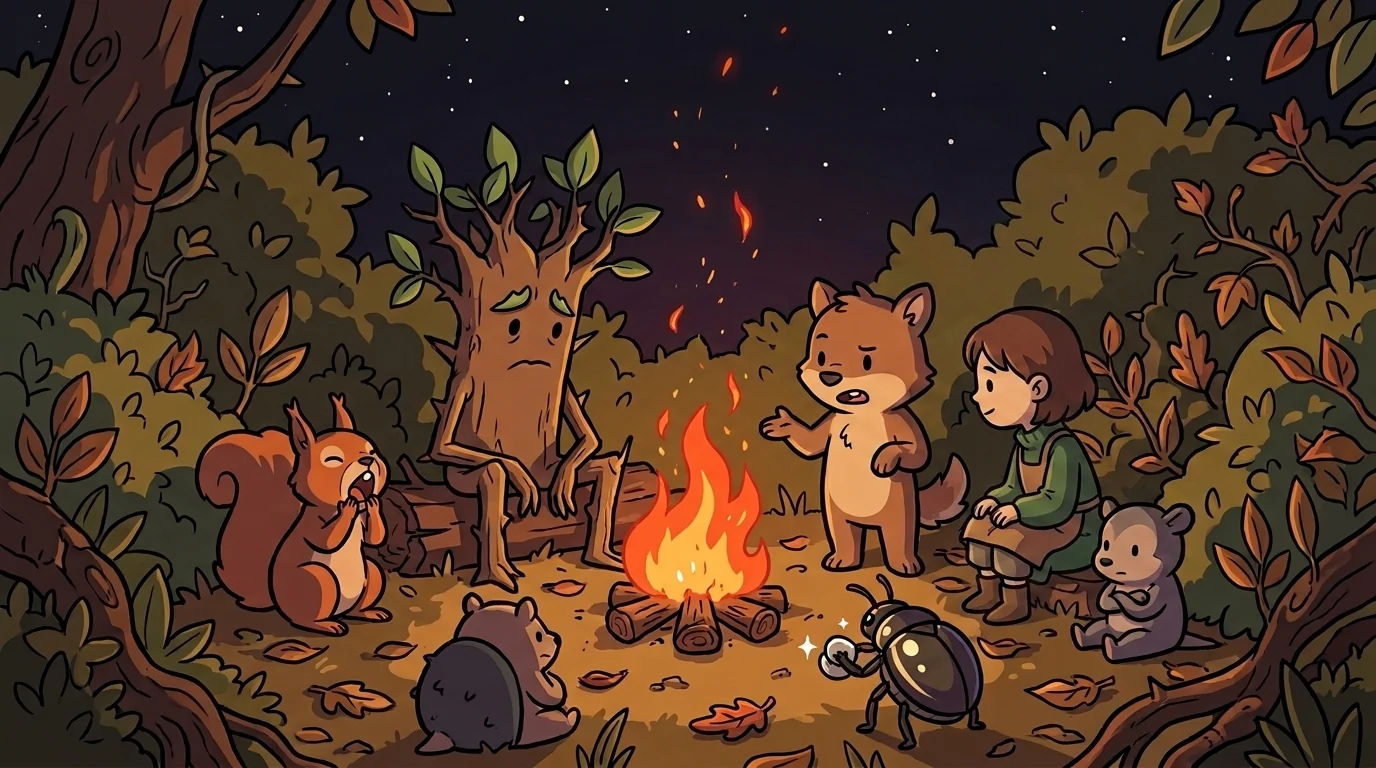
She has been in the listening-circle ever since. In Bramble's introductory lesson on hook craft, he gestures at Lean — who is, as always, sitting upright at the circle — and says: "This is Lean. Her body tips forward when a hook works. Tell her your story's opening. If she tips forward by second 5, your hook is working. If she stays neutral, the hook needs work. The body knows."
The students take turns telling their opening lines. Lean responds. Her body tips, or it doesn't. The students see their own hook-craft register in her posture. The feedback is immediate and physical.
Bramble then teaches the three hook-strength signals he has observed from Lean's responses: (1) specificity (concrete place, concrete time, concrete sensory detail), (2) stakes (something at risk; something to lose; something to gain), (3) movement (action happening, not just description). A hook with all three pulls Lean sharply forward. A hook with two pulls her forward. A hook with one or none leaves her neutral.
When students ask Bramble whether hook craft is hard, Bramble says — quoting Lean — "It is not hard. It is making the listener lean. Open with something specific, something at stake, and something happening. The body will respond. Lean will tip forward. The hook is working."
Bramble adds, as he always does: "And we attribute the deep tradition of oral hook-craft to many cultures — West African griot tradition, Irish seanchaí, Japanese rakugo, Indigenous American oral histories, modern slam poetry. Each tradition has refined hook-craft over generations. We learn with attribution."
The VoiceTale ensemble
Lean is part of VoiceTale's distributed-narrative cast. Each character embodies a different curricular primitive; together they teach the full subject.
-

Slow
Pacing across the 5-beat arc — tortoise-elder with wooden hourglass; her tempo-trail stretches (slow) or bunches (fast) on purpose
-

Pivot
The turn at beat 4 — barn-owl-tween whose head rotates 180° at the exact moment story / teller / listener turn together
-

Refrain
Callback / refrain — mockingbird-tween with carved-wood phrase-token who repeats one phrase identically at the closing (same words, same shape, said again, said better)
-
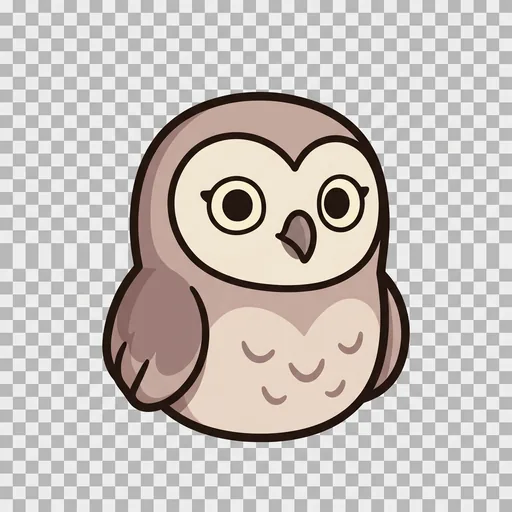
Hush
The pause / strategic silence — soft round owl who holds a held beat of quiet right before the important word, pulling the whole circle forward
-

Boom
Volume + emphasis — wide-mouthed frog whose voice swells from the tiniest whisper to a big round roll; the soft pulls listeners close, the loud lands the surprise
-
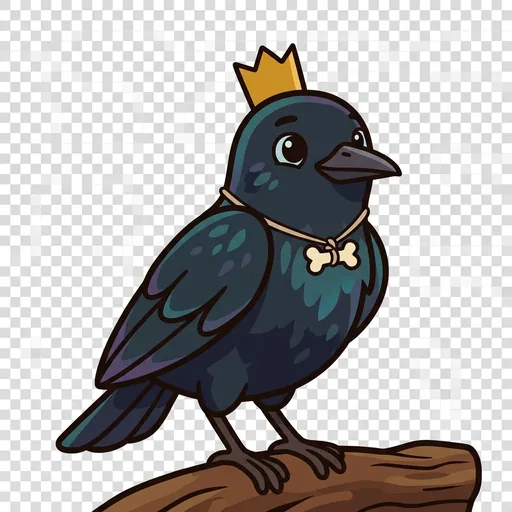
Mimic
Character voices — sleek starling who gives each character in a told tale one small distinct voice so listeners always know who is speaking
-
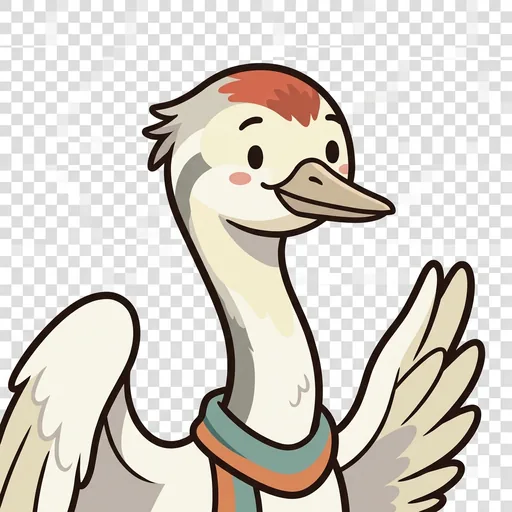
Flourish
Gesture — tall crane whose wings paint the story in the air (wide for huge, close for tiny); the body shows what the words say
-

Gaze
Eye contact / reading the listeners — soft-eyed deer-fawn who tells to the faces of the circle and reads their faces back to know when to slow or hurry
-

Recover
Recovering when you lose your place — easygoing otter who treats a stumble as a tiny ripple: stay calm, build a bridge, carry on