
Turn
BRIDGE — the song-section that *walks the lyric into a new feeling* and *earns the return* to the chorus. A departure-and-return move that gives the song depth.
Press play to listen along. The line being read lights up as you go.
Show full transcript
Loading transcript…
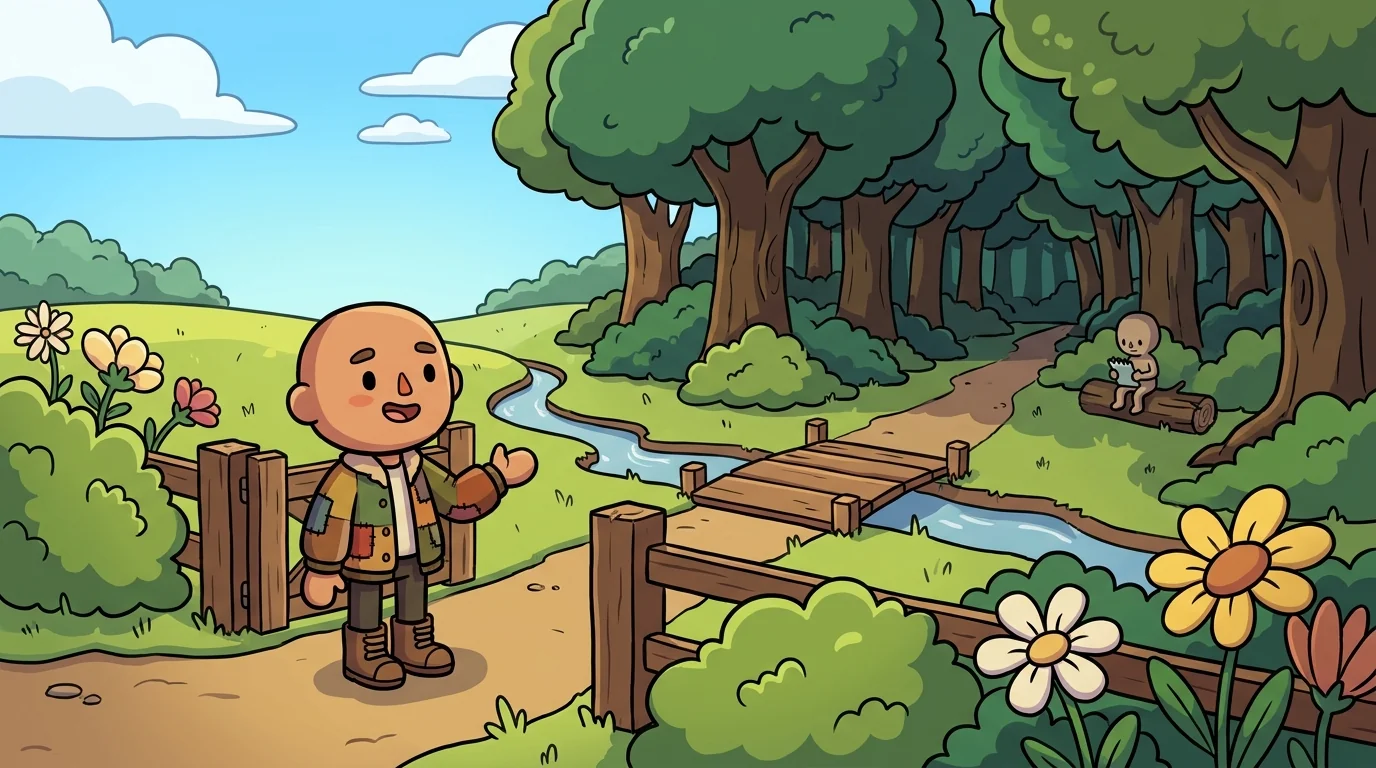
The song in Pip’s head was technically perfect. It had a solid rhyme scheme, a catchy chorus, and a melody that stuck in your ear like a burr. It was also, he decided with a grimace, about as exciting as watching paint dry. He slammed his notebook shut, the sound startling a nearby finch into flight.
At fifteen, Pip was a competent songwriter. He’d been at it for years, and he knew the mechanics inside and out. Verse, chorus, verse, chorus. He could build a song the way a carpenter builds a simple, sturdy stool. The problem was, all his songs felt the same. If he wrote a happy song, it was happy from the first note to the last, a bright, unchanging yellow. If he wrote a sad song, it was a long, gray sigh. There was no shadow in his sunlight, no flicker of hope in his gloom. His songs were sturdy, but they were emotionally flat. And it was driving him crazy.
He’d wandered to the meadow’s far edge, to the place where the familiar grass gave way to the deeper, wilder woods. It was a good place for thinking, or in his case, for not-thinking. He sat with his back against an old oak, waiting for an idea to show up. Any idea.
A rustle in the undergrowth announced he wasn't alone. A figure emerged from the shadows of the trees, a crow-tween with sharp, intelligent eyes and a long traveling coat that had clearly seen its share of roads. It was *Turn*, the meadow's resident wanderer.
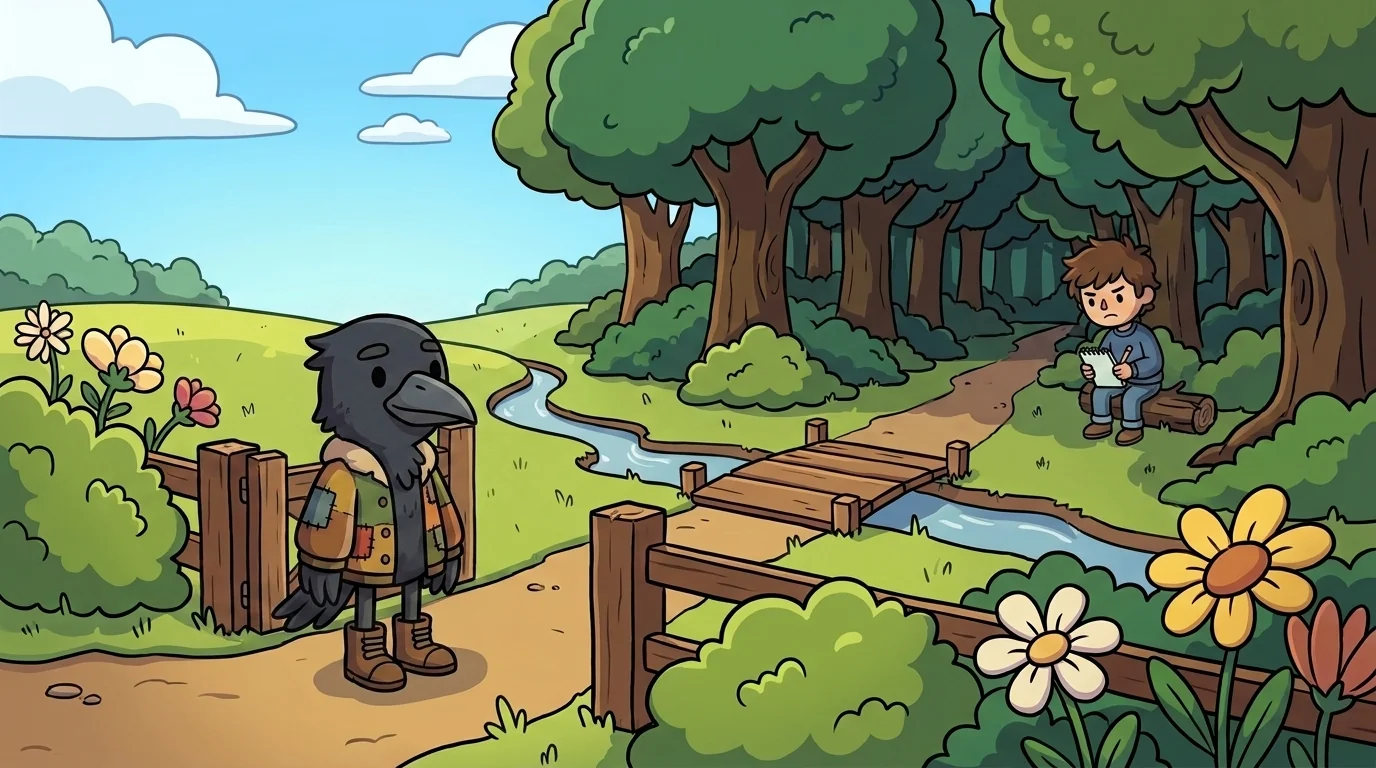
Even as a tween, Turn was always coming or going. He’d leave the meadow for weeks at a time, exploring nearby valleys, distant fields, and forests Pip had only heard of in stories. He always came back with something: a strangely shaped river stone, a seed from an unknown plant, or a song he’d heard in some far-off place. Bringing things back was Turn’s role in the meadow’s quiet economy, his way of sharing the world.
Turn nodded at Pip, his movements neat and precise. "You look stuck."
Pip sighed. It was the same thing Holler had told him two years ago, and it was just as true now. "Yes."
Turn sat beside him, folding his long legs comfortably. He didn't crowd him. He just waited. "Tell me the problem."
Pip fumbled for the words. "It's my songs," he said, opening his notebook to a random page. "They work. The rhymes are fine, the rhythm is fine. But they're… one-note." He tried to explain. "I wrote this song about the Midsummer festival. It's all happy. Sun, dancing, honey-cakes. But it just stays there. It never gets more. It feels thin." He looked at Turn, hoping he would understand. "I don't know how to make the feeling deeper."
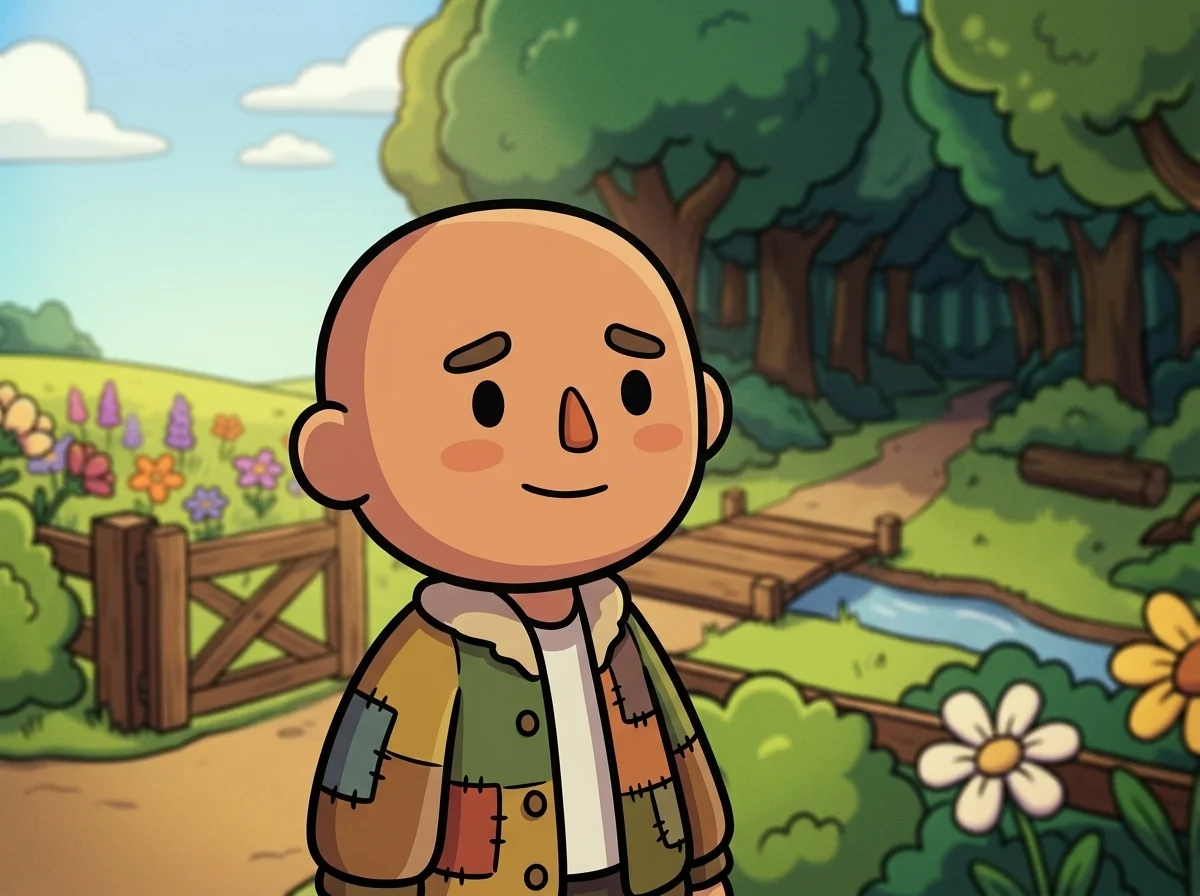
Turn was quiet for a long moment, his dark eyes fixed on the line where the woods began. He seemed to be considering the problem from several different angles. Finally, he spoke. "Have you tried walking off the path?"
Pip blinked. "What?"
"When I travel," Turn said, his voice thoughtful, "I follow a path from the meadow to somewhere else. The path is useful. It’s efficient. But the most interesting parts of my travels—the parts that become stories—are never on the path itself." He leaned forward slightly. "They happen when I step off the path. Maybe I see a strange flower in a side-valley, or I follow the sound of a hidden waterfall. I see something unexpected, something I would have missed if I’d just kept my head down and walked the main trail. Then I come back to the path and continue my journey."
He paused, letting the idea settle. "The return is what makes the journey mean something," he continued. "You start on the path. You step off. You see something new. You come back. And the coming-back is richer than if you had never left."
Pip stared at him, his mind racing. A side-valley. A hidden waterfall. A brief departure that changes the whole journey. A light went on in his head, bright and sudden. He sat up straight.
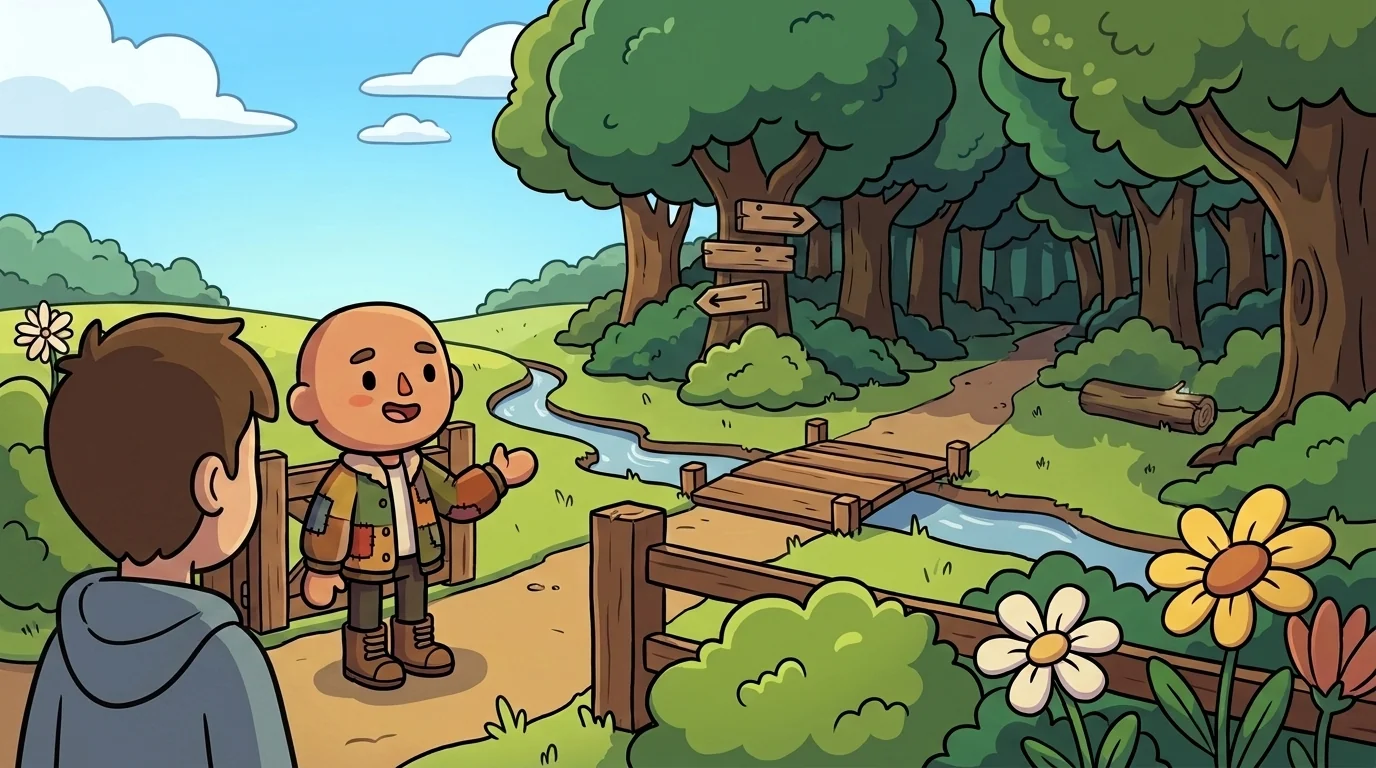
"That is the bridge."
Turn gave a small, slow nod. "In a song? Yes—I think so. I don't write many songs myself. But I think a song’s bridge does what my off-path walks do. You start in the song's main feeling, its main path. The bridge walks the listener somewhere else for a moment, into a different feeling. Then the song returns to the chorus, but it brings that other feeling back with it. The return is deeper than if you had never bridged."
Pip didn't say anything for several days. He just thought. He walked the meadow, letting Turn's words echo in his head. Step off the path. Earn the return.
Then, he sat down with his notebook again. He started a new song, another one about a summer afternoon. 'Sunlight on the clover, a honeybee drone,' he wrote. It was the same kind of happy start he always wrote. But this time, he didn't just keep walking down that sunny path. He stopped. He took a breath. He stepped into the woods.
'But shadows grow longer, and soon fly home.'
It was just two lines, a quick detour into the quiet sadness that every perfect afternoon must end. It felt strange, almost wrong, to put it in such a happy song. But then he went back to his chorus. He sang the whole thing aloud, his voice tentative at first, then stronger. The same happy words, the same bright melody. But they weren't the same at all. The brief walk into the shadows had changed them. They were heavier now, and truer. The happiness wasn't flat anymore. It was bittersweet.
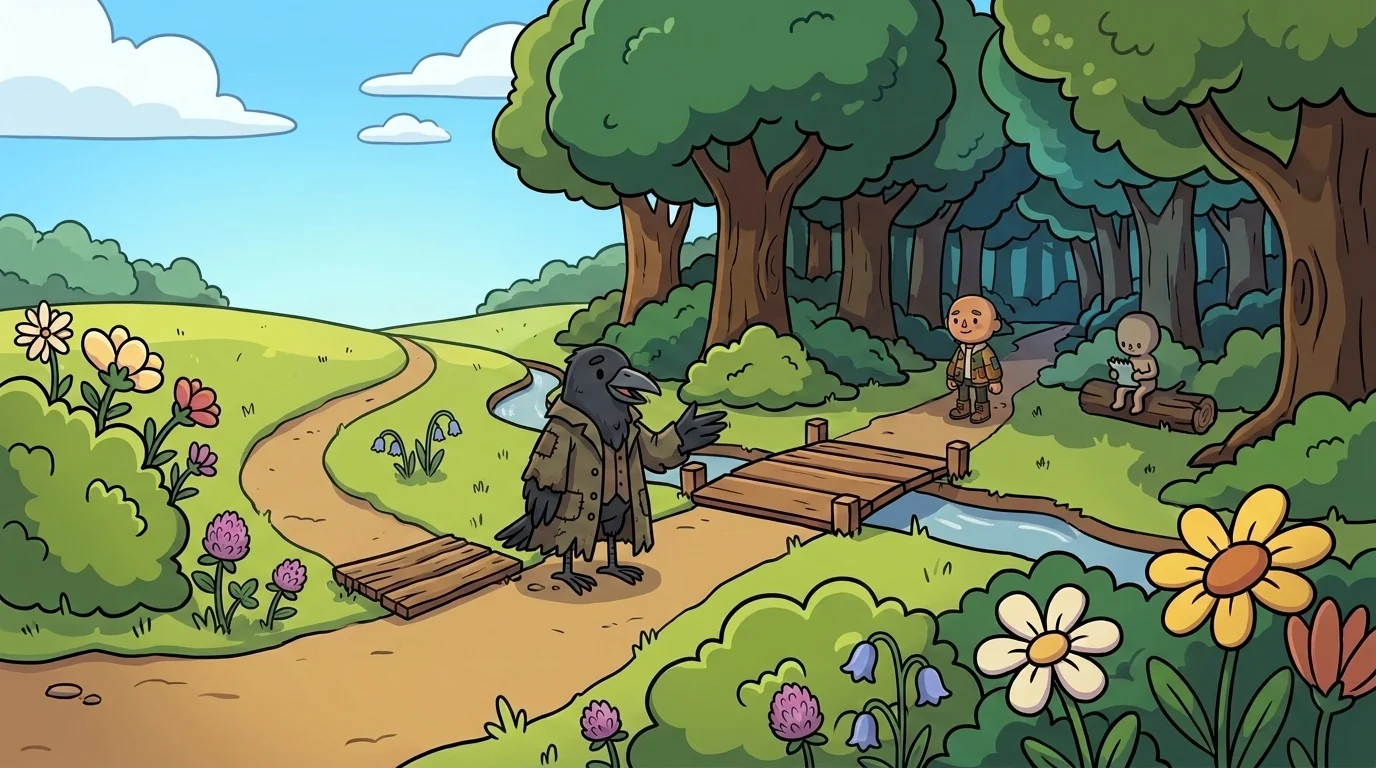
The bridge had deepened the song.
From that day on, Pip became a committed bridge-builder. Turn had given him the key: depart from the main feeling, see a different feeling, return with both. He showed Pip the common ways to do it—a change in melody, a shift in key, even a new narrator for a few lines. Almost every song Pip wrote from the age of fifteen onward had a bridge. It was his signature.
Now, when Pip gives his first lesson on songwriting, he always gestures to Turn, who often stands at the back of the group, hands in the pockets of his long traveling coat.
"This is Turn," Pip says. "He taught me that the song-bridge is an off-path walk. You step off the main feeling. You see something different. You return. The song is deeper for the departure."
Turn just nods, tipping his beak slightly. And in his quiet, thoughtful crow-voice, he adds the essential part. "The bridge walks you off-path. Earn the return."
When a young songwriter inevitably asks if bridges are hard to write, Pip smiles. He just quotes his old friend. "They are not hard. They are departures-with-return. Start in your main feeling. Step off. See a different feeling. Come back. Carry the other feeling with you. The return is the song."
The LyricForge ensemble
Turn is part of LyricForge's distributed-narrative cast. Each character embodies a different curricular primitive; together they teach the full subject.
-

Chime
Rhyme / vowel-echo — chickadee-tween whose listening-cupped wing catches and returns rhyming partners
-

Step
Meter / cadence — rabbit-tween whose hop-rhythm enacts the stressed-syllable pattern
-
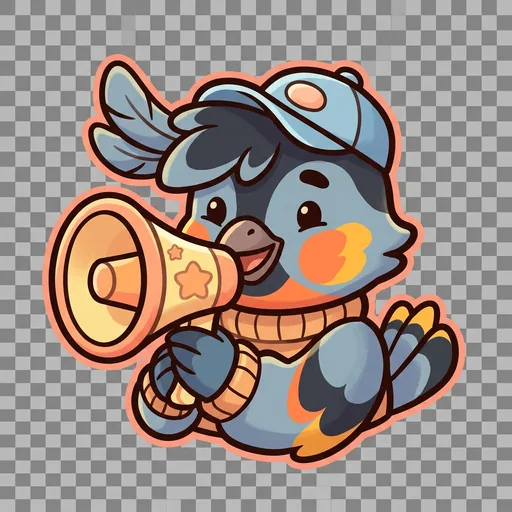
Holler
Hook / chorus anchor — bullfinch-tween with megaphone who picks ONE line and makes it sing-back-loud
-

Spark
Image / sensory anchor — firefly-tween whose abdomen brightens ONLY on specific concrete word-choices (dim on abstractions)
-

Groove
Rhythmic pocket — mellow toad who rides the beat just behind it; the same words can march or dance depending on where they sit against the groove
-

Zing
Wordplay — electric-blue dragonfly whose wings spark on a pun or double-meaning; clever-AND-true sparks, clever-for-its-own-sake falls flat
-
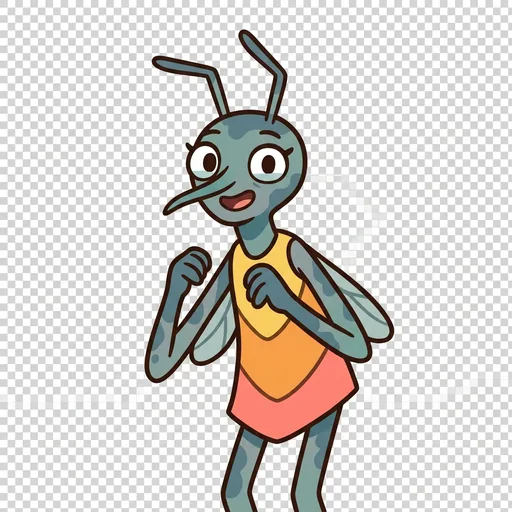
Lift
Pre-chorus build — long-legged crane-fly who rises onto her toes; the chorus only soars because she made you climb to it (the build is a promise the chorus keeps)
-

Belt
Singability — big-lunged frog with a wide-open throat; open vowels ring on long notes, tight consonant clusters strangle them (always sing it aloud)
-
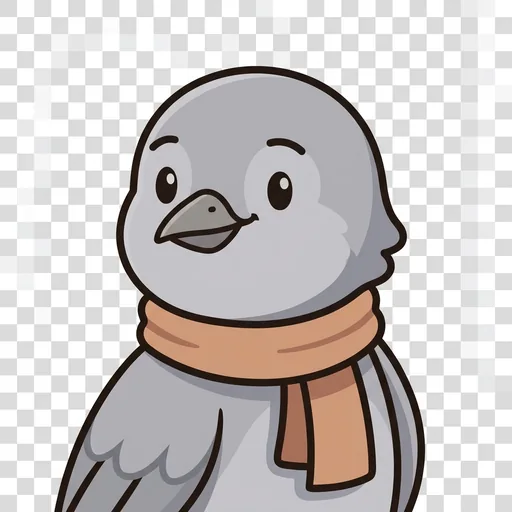
Croon
Sincerity — dove-grey nightingale who sings small true songs; all the other craft serves the one honest feeling underneath (one true feeling beats a hundred fake)