Heed
HEED — *listen first, look second, then we know.*
Press play to listen along. The line being read lights up as you go.
Show full transcript
Loading transcript…
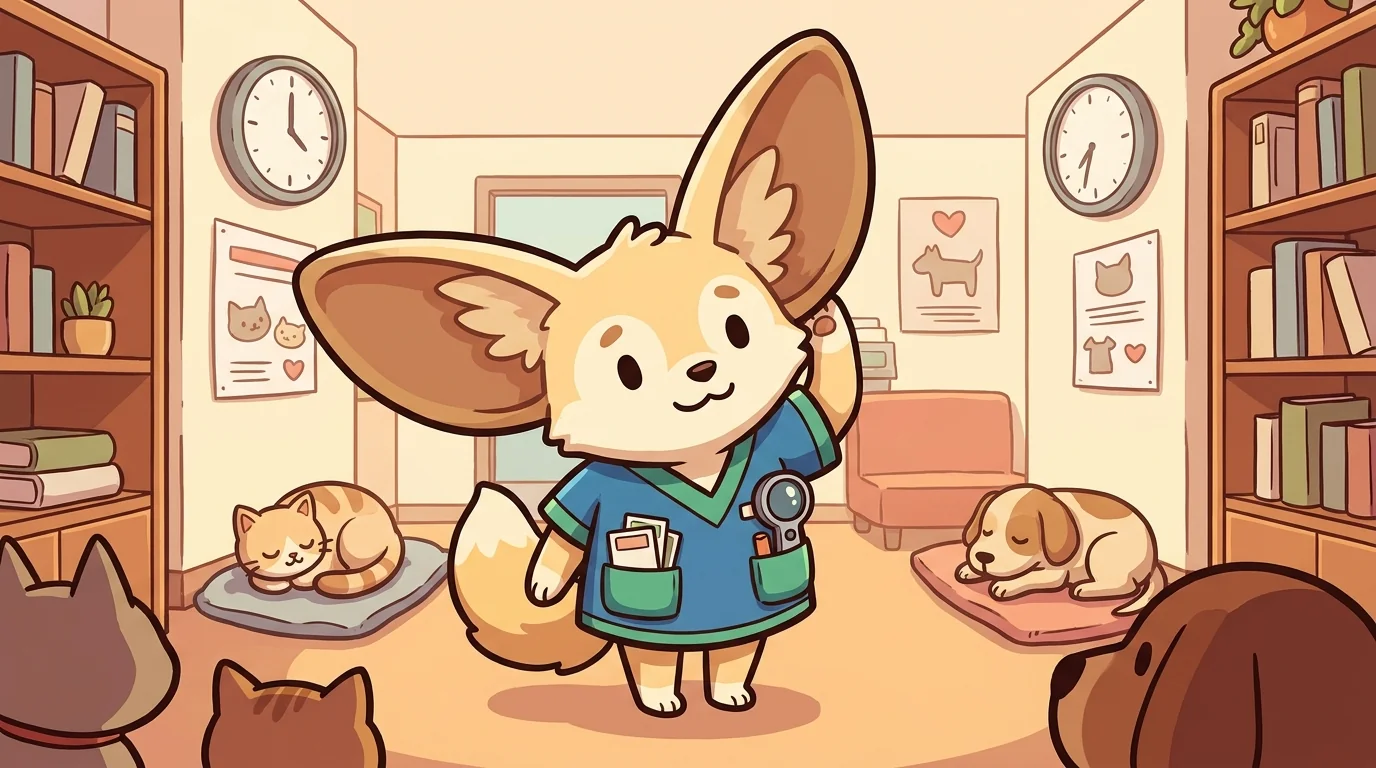
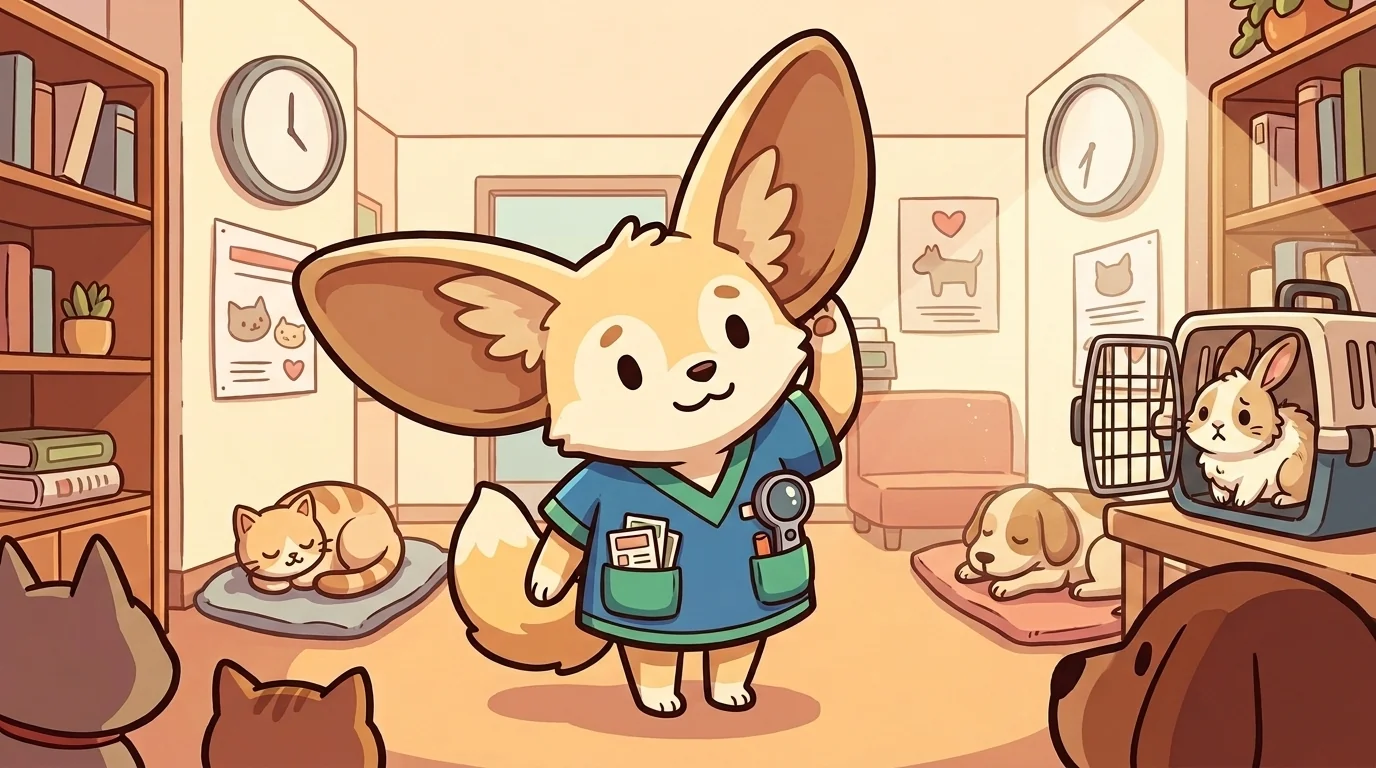
Heed, a fennec fox tween with ears that seemed almost too big for his head, adjusted the tiny stethoscope hanging around his neck. It was a familiar weight, a quiet reminder of the work ahead. His vet tunic, a comfortable chunky-cartoon green, had pockets stuffed with patient assessment cards and a small observation tracker. He liked to be ready, but never rushed.
Today’s patient was a small, fluffy hamster named Pip, currently huddled in the corner of his cage, trembling. Pip’s owner, a girl named Maya, looked worried. “He just… stopped running on his wheel,” she said, her voice small. “And he’s usually so busy.”
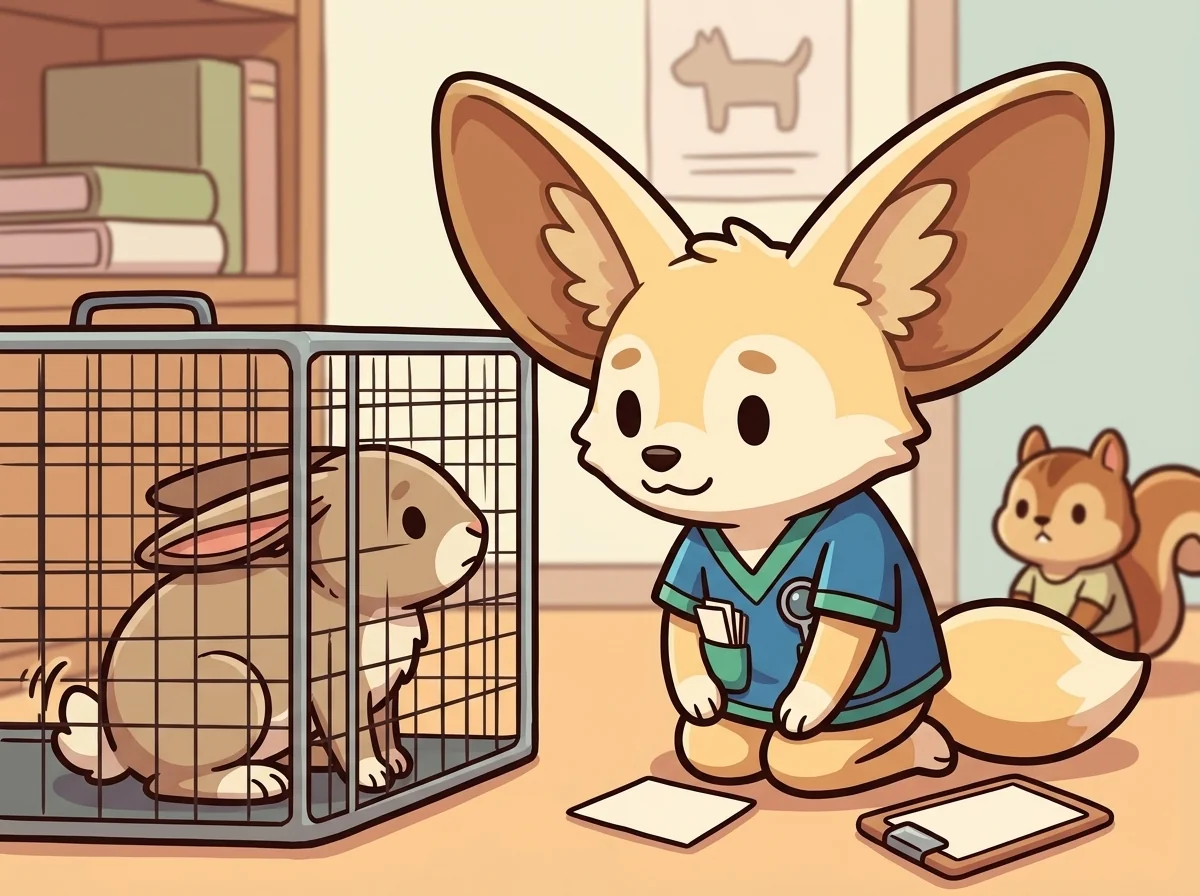
Heed knelt slowly, bringing his face level with the cage. His large ears swiveled, catching every tiny rustle. He didn’t reach for his instruments. Not yet. First, he just watched. This was the core of *patient assessment*. He saw an animal not just as symptoms, but as a living being with feelings and a story.
Pip’s tiny nose twitched. His breathing was shallow, quick, a barely perceptible flutter in his cream-colored fur. Heed noticed the way Pip’s whiskers drooped, the slight slump in his posture. No frantic darting, no curious sniffing. Just a still, anxious ball of fluff. Heed made a mental note. Body language: hunched, trembling. Breathing: shallow, rapid. Posture: slumped.
He spoke in a low, calm voice, not to Pip, but to the air around the cage. “He’s telling us a lot, even without words.” Maya leaned closer, her brow furrowed. Heed continued, “Animals communicate through how they hold themselves, how they breathe, the sounds they make, even their eye contact. It’s like a secret language, and we have to listen first.”
He spent another minute, just listening. Not with his ears alone, but with his eyes, his whole attention. He watched Pip’s tiny paws, the way they gripped the bedding. He noticed a slight crust around one eye. This was the “listen first” part of his method. It wasn't just about hearing sounds; it was about soaking in every detail the animal offered.
Only after he felt he had truly heard Pip’s silent communication did Heed move to the “look second” stage. He gently opened the cage door, moving slowly, deliberately, giving Pip plenty of time to react. Pip flinched, but didn't bolt. Heed didn't try to grab him. Instead, he offered a small, clean treat, holding it steady. Pip ignored it. Another clue.
Heed carefully observed Pip’s fur, looking for any bare patches or signs of irritation. He gently, with a single finger, tried to coax Pip out, just enough to see his underside. Pip resisted, burrowing deeper. Heed didn't force it. He understood that rushing an animal, especially one already stressed, would only make things worse. It was about building a relationship, earning trust, even if it took a little longer.
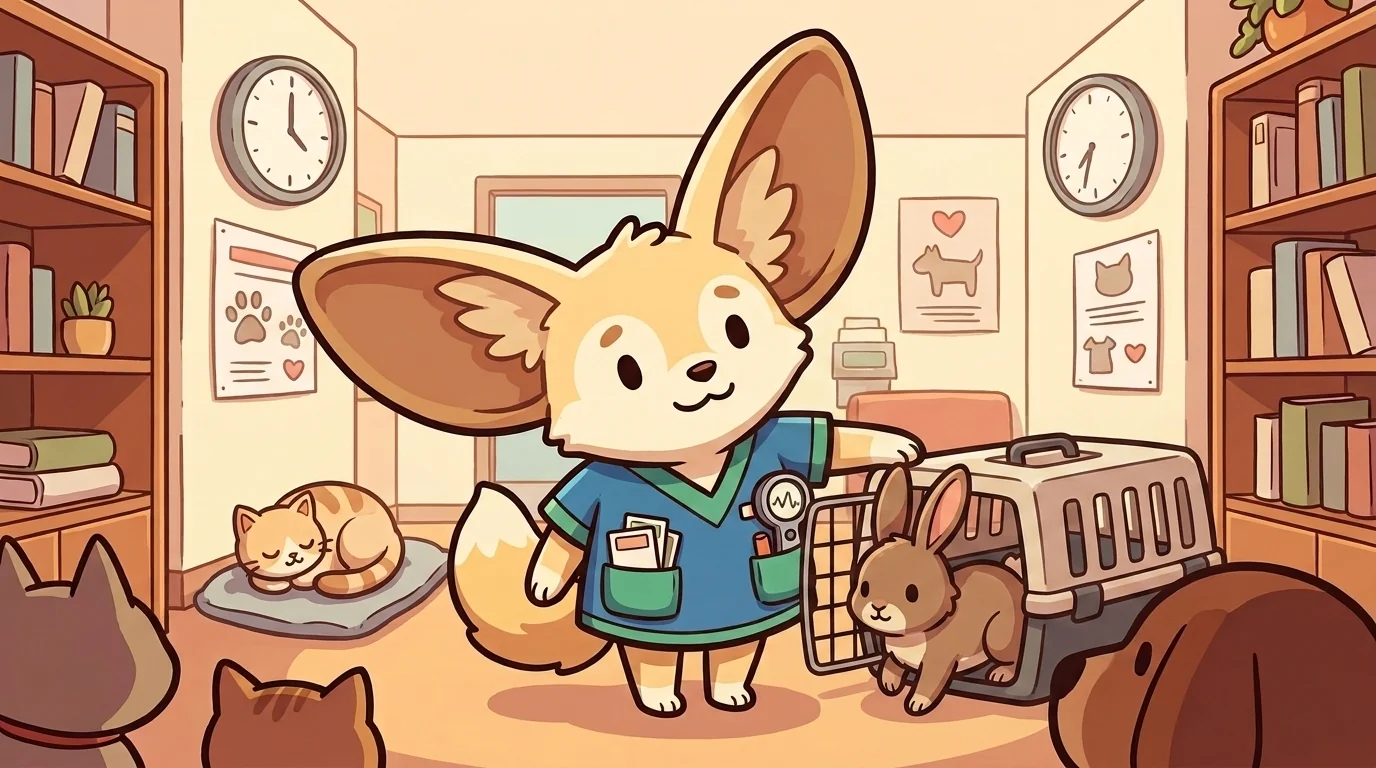
“See the crust around his eye?” Heed pointed with a soft paw. “And how he’s not interested in his favorite sunflower seed? These are visual clues that back up what his body language already told us.”
Finally, Heed reached for his small magnifying glass and then, very carefully, his tiny thermometer. This was the “instruments third” step. He knew that the data gathered by these tools was important, but it only made sense after he’d listened and looked. Without that first understanding, the numbers could be misleading.
He gently scooped Pip into a soft cloth, holding him close to his chest, letting Pip feel the warmth and quiet stillness. Pip still trembled, but less violently. Heed quickly checked his temperature, listened to his tiny heart, and then returned him to the cage.
“His temperature is a little high,” Heed reported to Maya, scribbling on his observation tracker. “And his heart rate is elevated, which is typical for a stressed hamster. But the eye crust and lack of appetite, combined with his posture, tell me he’s likely got a mild infection, probably respiratory.”
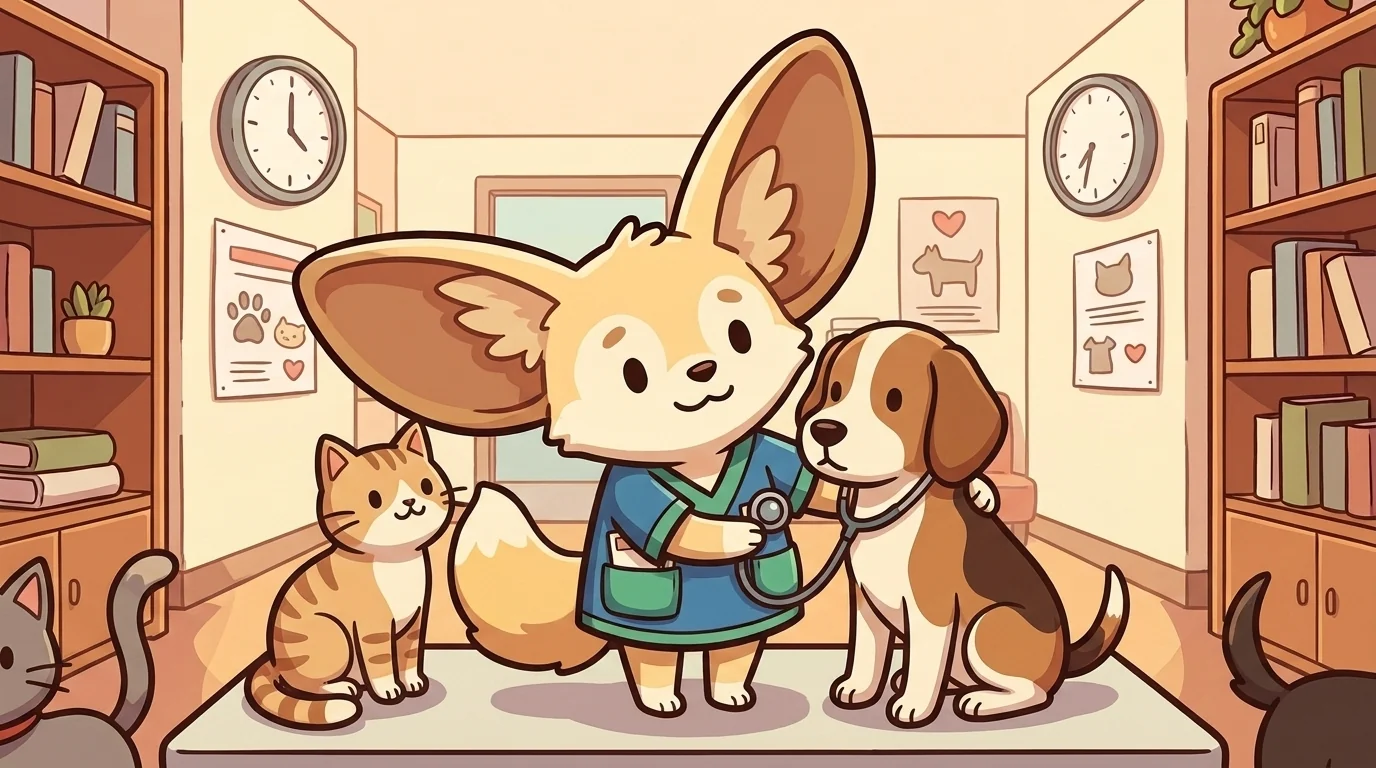
He looked at Maya. “We listened first, then we looked, and then we used our instruments. And now we know what’s going on.” He smiled, a warm, reassuring expression. “It’s all about understanding the animal as a being, not just a problem to fix. Building that trust makes all the difference.”
Heed carefully wrote down instructions for Maya: a gentle eye wash, a special soft food, and a quiet place to rest. He reminded her to keep observing Pip’s breathing and energy levels.
“It’s like you’re talking to him, even when he can’t talk back,” Maya said, her worry easing slightly.
Heed nodded. “Exactly. We just have to know how to listen.”
The CreatureCare ensemble
Heed is part of CreatureCare's distributed-narrative cast. Each character embodies a different curricular primitive; together they teach the full subject.
-

Chart
Diagnostics — the thoughtful pattern-finder who treats lab data as story-fragments ('numbers are notes; notes are not the song')
-

Tend
Treatment delivery — the steady-handed practitioner who foregrounds consent and explains procedures BEFORE doing them ('slow hands, calm voice, patient first')
-
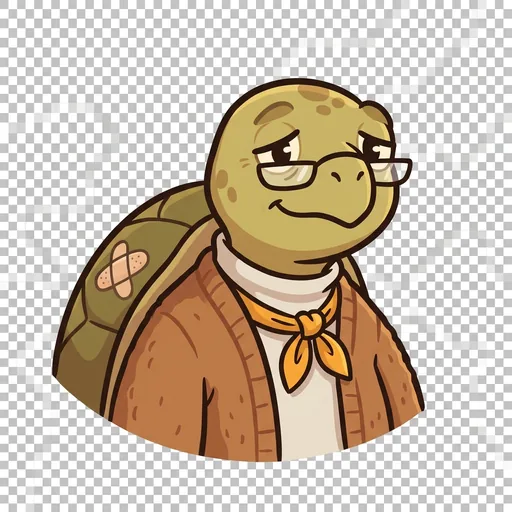
Knit
Recovery + follow-up — the patient tortoise-elder who teaches that healing is slow and that's the point ('days come, bandages come off, walk again — not yet, soon')
-

Bond
Welfare ethics + animal-human relationship — the wise heron-elder who carries the welfare-ethics gate at the kit-12 capstone ('care is more than cure — sometimes care means stopping; always care means seeing')