Sway
GRAVITY / ORBITS / MUTUAL ATTRACTION — *every mass pulls every other mass; orbits are falling without hitting.* The astrophysics primitive of *gravitation as the universal architect of cosmic structure.*
Press play to listen along. The line being read lights up as you go.
Show full transcript
Loading transcript…
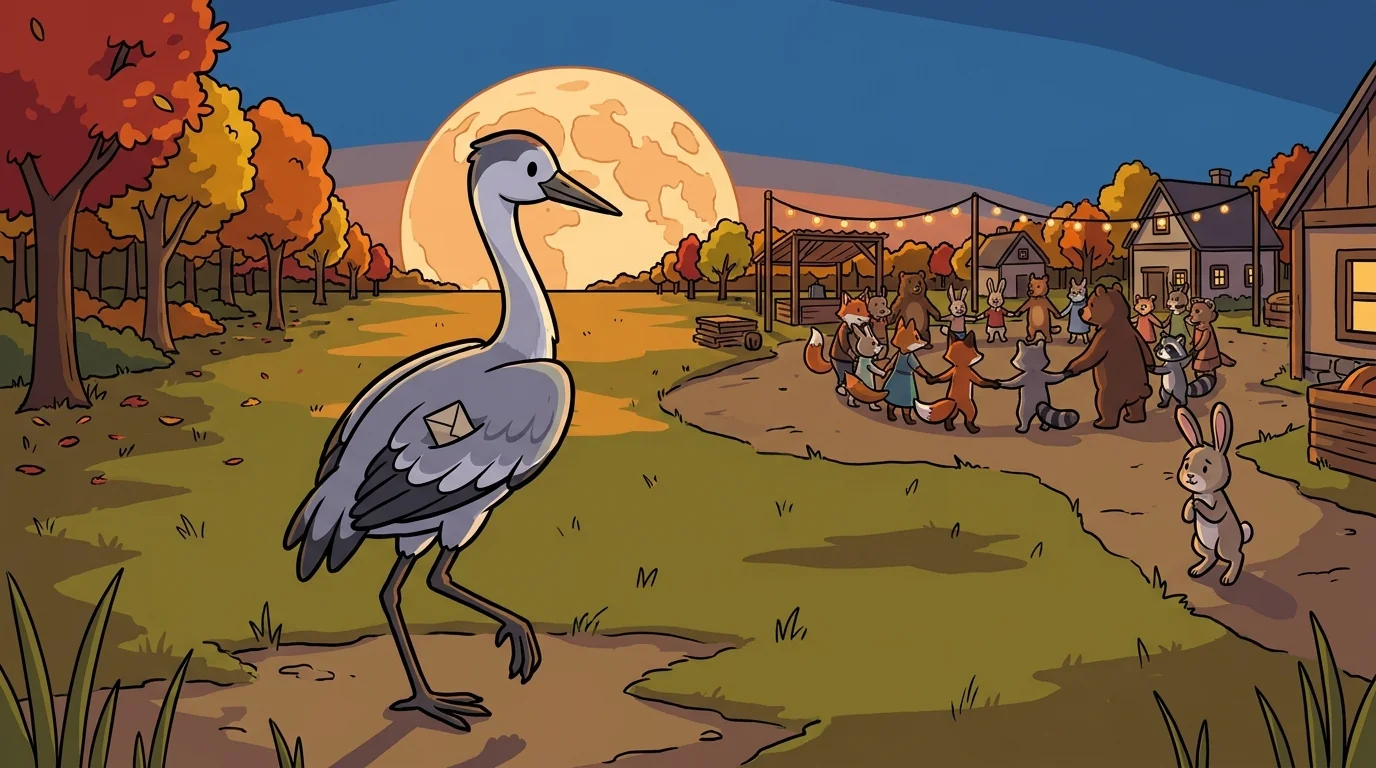
Sway was a crane-tween, small for her age, with feathers the color of storm clouds and fresh snow. She always held herself in a paired-step posture, as if ready to waltz. In a small pocket sewn into her wing, she kept a folded diagram of orbits.
She stood tall, even for a tween, with a quiet grace. Her posture was steady, her attention sharp. That paired-step posture was her signature. She stood with her feet slightly apart, knees soft, weight balanced. It looked like she was mid-dance with an invisible partner. Her body seemed to say: gravity is a partner-dance. Two masses, pulling each other, finding balance and motion together.
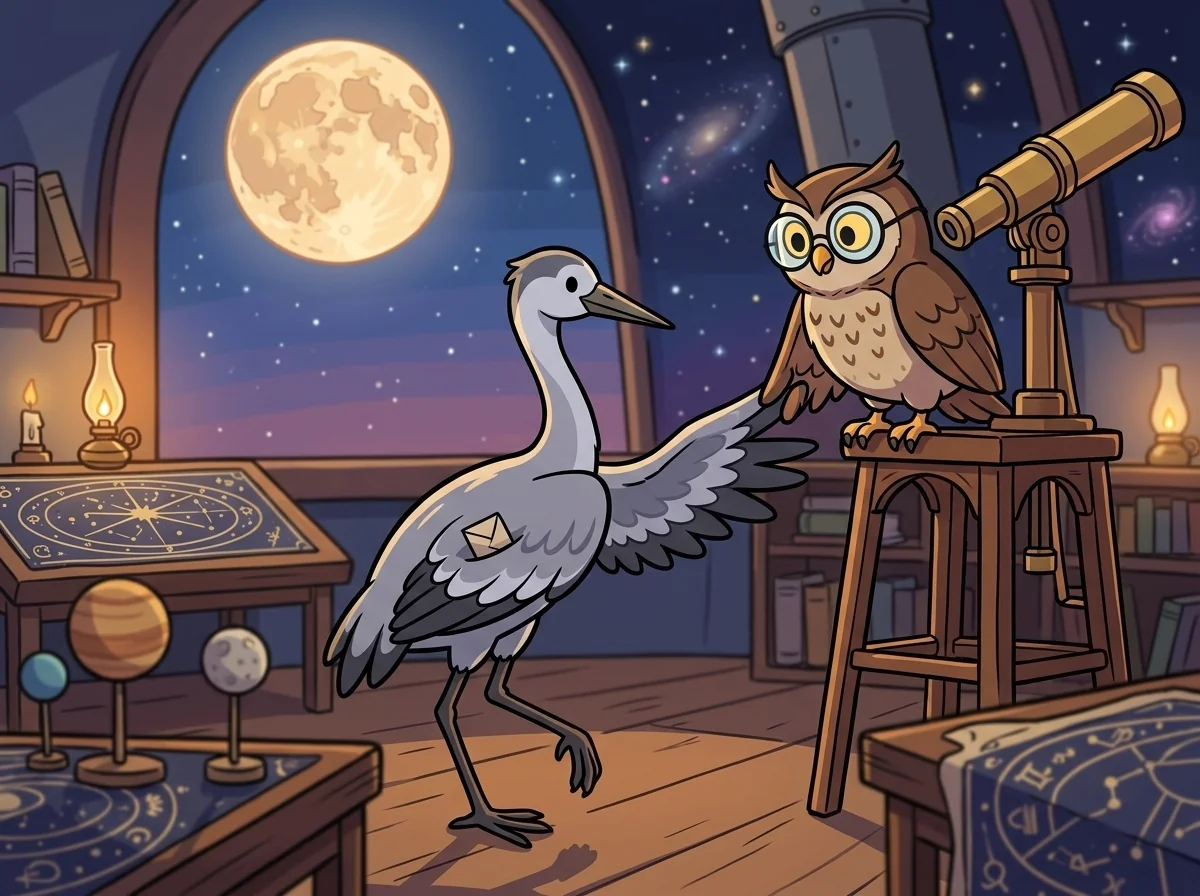
This was important. Sway taught about *gravity + orbits*. She showed how gravity was a universal, mutual attraction. Every mass in the universe pulled on every other mass. Newton’s law explained it: F = G·m₁·m₂/r². This meant the pull got stronger with bigger masses. It also got weaker the farther apart things were. The Sun pulled Earth, and Earth pulled the Sun. You just didn't notice Earth's pull as much. The Moon tugged at Earth’s oceans, making tides. Earth, in turn, pulled the Moon, locking its spin. Galaxies pulled other galaxies across vast distances. Gravity was the slow, universal partner-dance of the cosmos.
Orbits were a tricky idea: falling without hitting. It sounded strange, but it was the key. An orbit happened when an object moved sideways fast enough. As it fell toward a central body, the central body's surface curved away at the same speed. The orbiting object never touched the surface. Yet it never escaped either. It just kept falling toward and missing forever.
Sway made one thing very clear. She never described gravity as just pulling things down toward Earth. "Gravity is mutual," she would say. "Every mass pulls every other mass. The Sun doesn't just pull Earth. Earth pulls the Sun too. The pull is paired." She'd pause, letting that sink in. "And orbits aren't mysterious. They're just falling without hitting. The Moon is falling toward Earth right now. Earth is falling toward the Sun right now. They keep missing because they're moving sideways fast enough."
Sway grew up in a small village. Her family had always been the village's dance-callers. They were the cranes who led the seasonal partner-dances at the harvest festival. This work taught her about mutual motion. A dancer who pulled too hard broke the dance. A dancer who didn't pull at all also broke it. The right amount of pull, balanced by the partner's pull, kept the dance flowing. By age six, Sway knew that partnership, as a form of mutual attraction, was her family's special skill.
When she was twenty-two crane-years old, Sway walked to the CosmosForge academy. Nova, the academy's founder, asked her a simple question: "What is gravity?"
Sway stood in her paired-step posture. "It is mutual attraction," she said. "Every mass pulls every other mass. F = G·m₁·m₂/r². Orbits are falling without hitting — moving sideways fast enough that the central body's surface curves away just as fast. The Moon falls toward Earth forever and never hits. Earth falls toward the Sun forever and never hits."
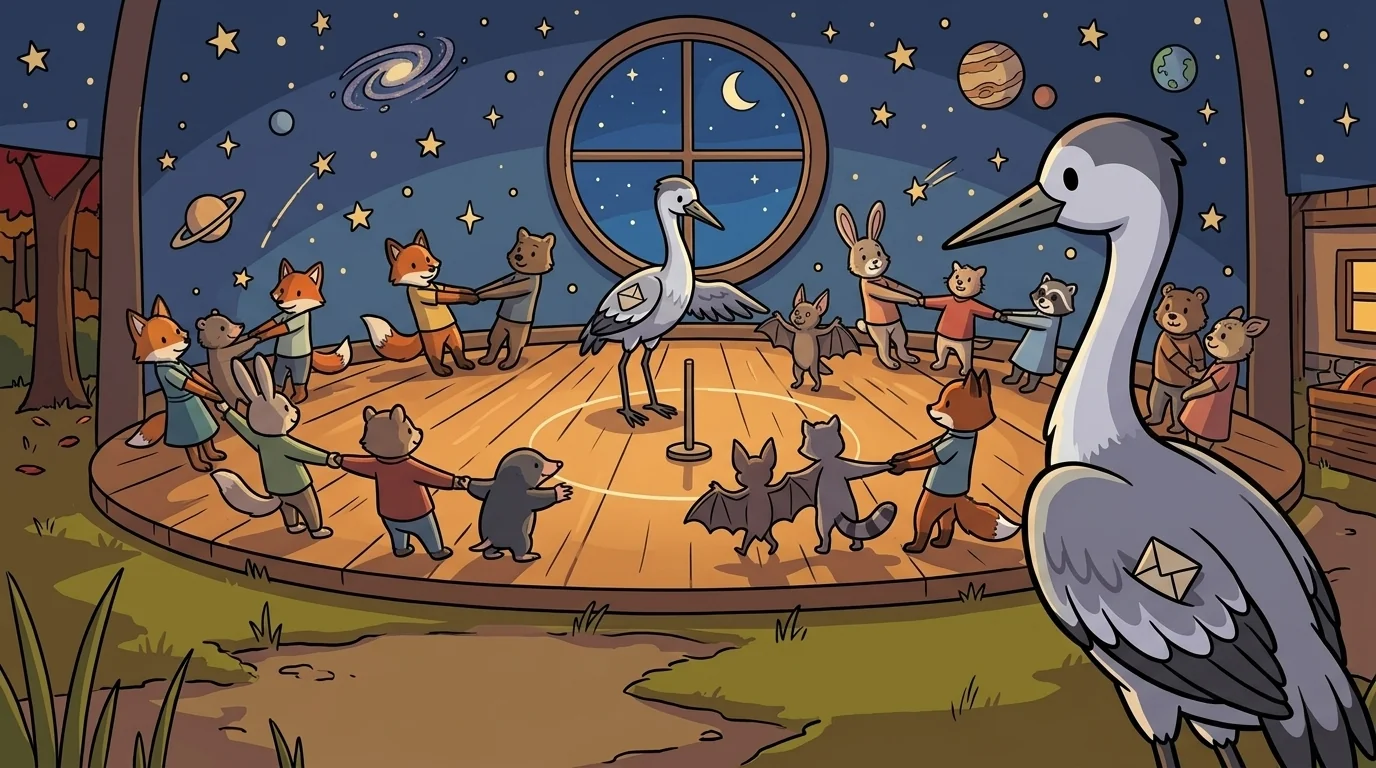
Nova smiled. "You are appointed," she said.
In her workshop, Sway started every first-day lesson the same way. She would take her paired-step posture. Then she'd unfold her orbit-diagram on the workbench. "I am Sway," she would say, her voice calm and clear. "The astrophysics primitive I teach is gravity and orbits. The move is every mass pulls every other; orbits are falling without hitting. Gravity is the partner-dance of the cosmos. Slow. Universal."
She taught her students the basic ideas of gravity. These were the things that built up the bigger picture:
Newton's law of gravitation: This was the math part. F = G·m₁·m₂/r². It meant the force of gravity got stronger when masses were bigger. It got weaker, very quickly, as the distance between them grew. *Gravity is mutual: Both masses pull each other with equal strength. The Sun's pull on Earth is just as strong as Earth's pull on the Sun. Earth just moves more because it's so much smaller. *Orbits are falling without hitting: This was the main idea. An object in orbit has enough sideways speed that it keeps falling around the central body, never quite reaching its surface. *Kepler's three laws: These described how planets move. First, orbits are not perfect circles, but ellipses, like stretched circles, with the central body off to one side. Second, a planet sweeps out equal areas in equal times, meaning it moves faster when closer to the Sun. Third, a planet's orbital period (how long it takes to go around) is related to its average distance from the Sun. *Tides come from gravity gradients: The Moon pulls on the side of Earth closest to it more strongly than the far side. This difference in pull creates the bulges of water we call tides. *Gravity assembles cosmic structure: Gravity is the architect of the universe. It pulls together gas clouds to form stars. It gathers dust and rocks into planets. It collects stars into galaxies, and galaxies into clusters. *Einstein's general relativity refined*: Newton's law worked for most everyday things. But Einstein's theory gave a more complete picture. It described gravity as curved spacetime. This explained things like black hole orbits and the slight wobble of Mercury's path. Both theories were right, just at different scales.
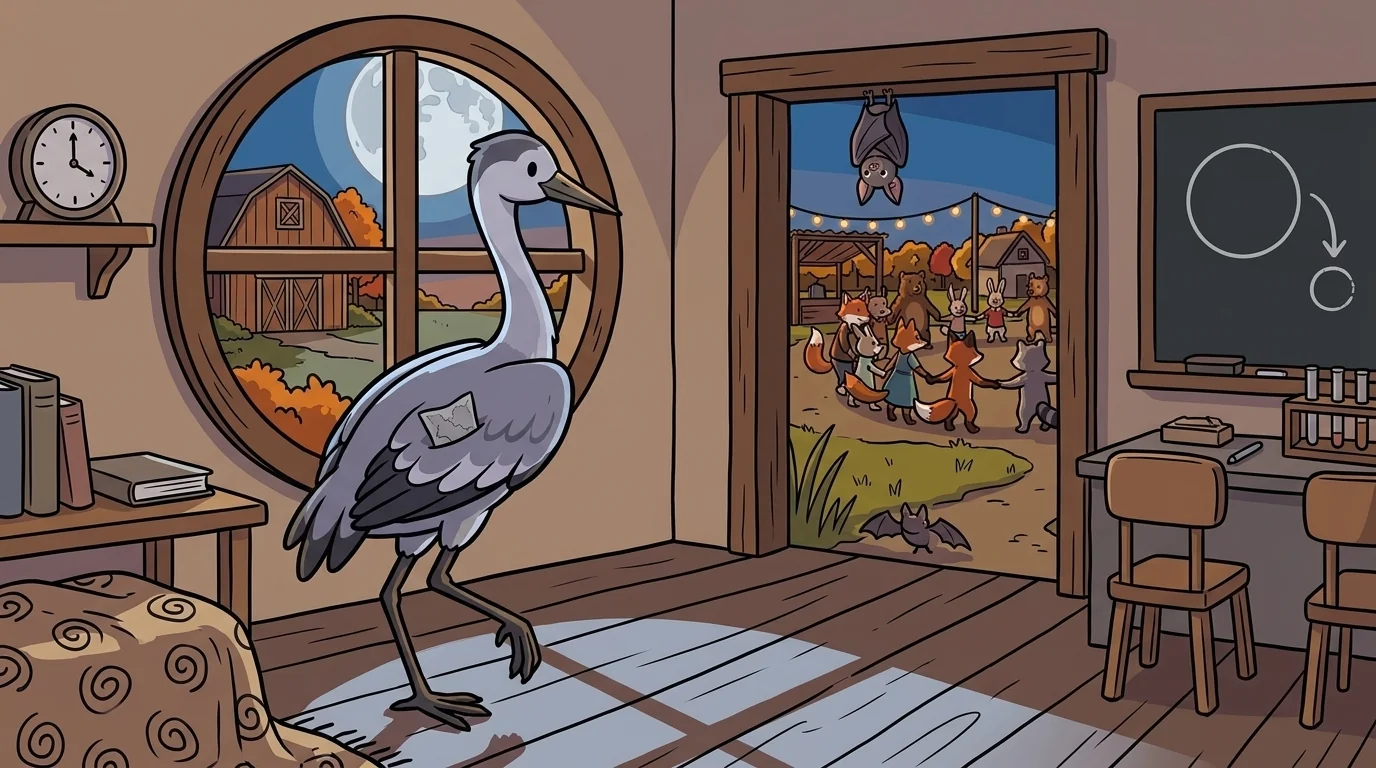
Sway always made a point of saying: "Gravity is gentle on small scales. You barely feel it from the person sitting next to you. But it's enormous on large scales. It holds entire galaxies together. The same simple law explains both."
When students asked Sway if gravity was hard, she always gave the same answer.
"It is not hard," she would say. "It is mutual attraction + falling without hitting. The partner-dance of the cosmos."
Her paired-step posture held steady. The next orbit waited to be calculated.
The CosmosForge ensemble
Sway is part of CosmosForge's distributed-narrative cast. Each character embodies a different curricular primitive; together they teach the full subject.
-
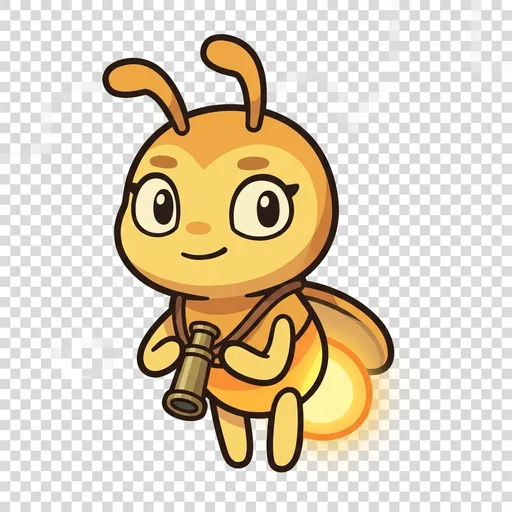
Gleam
Stellar luminosity / electromagnetic radiation / observation
-

Swirl
Galactic rotation / spiral structure / angular momentum
-
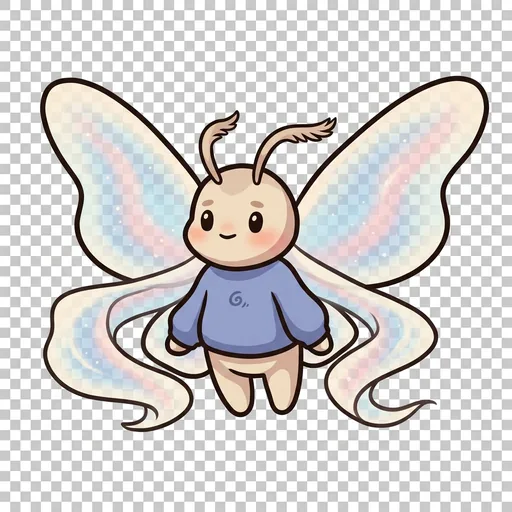
Mist
Nebulae / dust / gas / accretion / stellar nurseries
-

Tide
Cosmological expansion / Hubble flow / cosmic time
-

Maw
Black hole / event horizon — gravity so strong that even light comes to rest
-
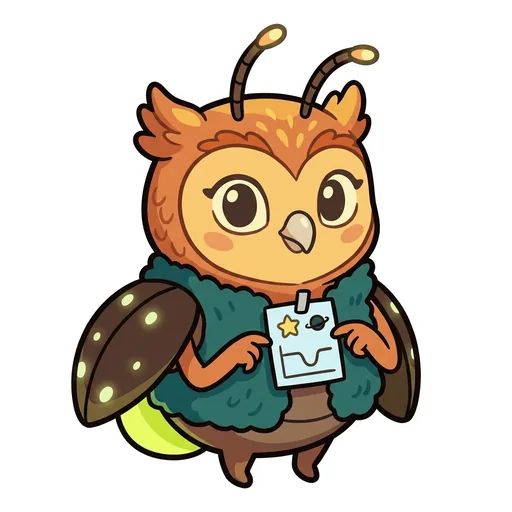
Wink
Exoplanet detection — finding hidden worlds by the tiny dip they make in a star's light (the transit method)
-
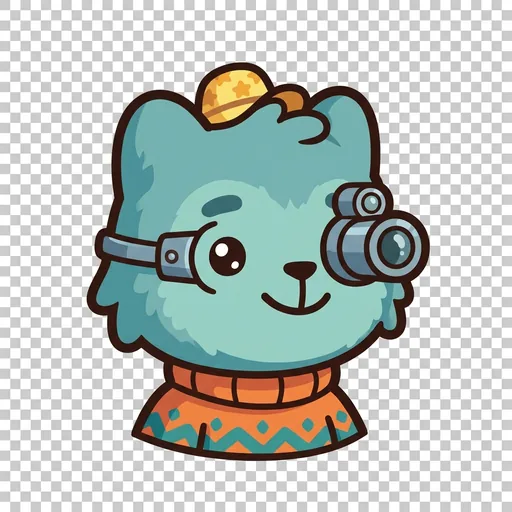
Squint
Cosmic distance / parallax — measuring how far a star is by how much it shifts between two viewpoints
-

Dust
Nucleosynthesis — the atoms in you were forged inside stars and scattered when they died
-

Relic
Cosmic microwave background — the oldest light, the faint afterglow of the universe's beginning