Hub
TRANSIT NODES + ACCESS — *many ways, equal ways; the bus matters as much as the train.*
Press play to listen along. The line being read lights up as you go.
Show full transcript
Loading transcript…
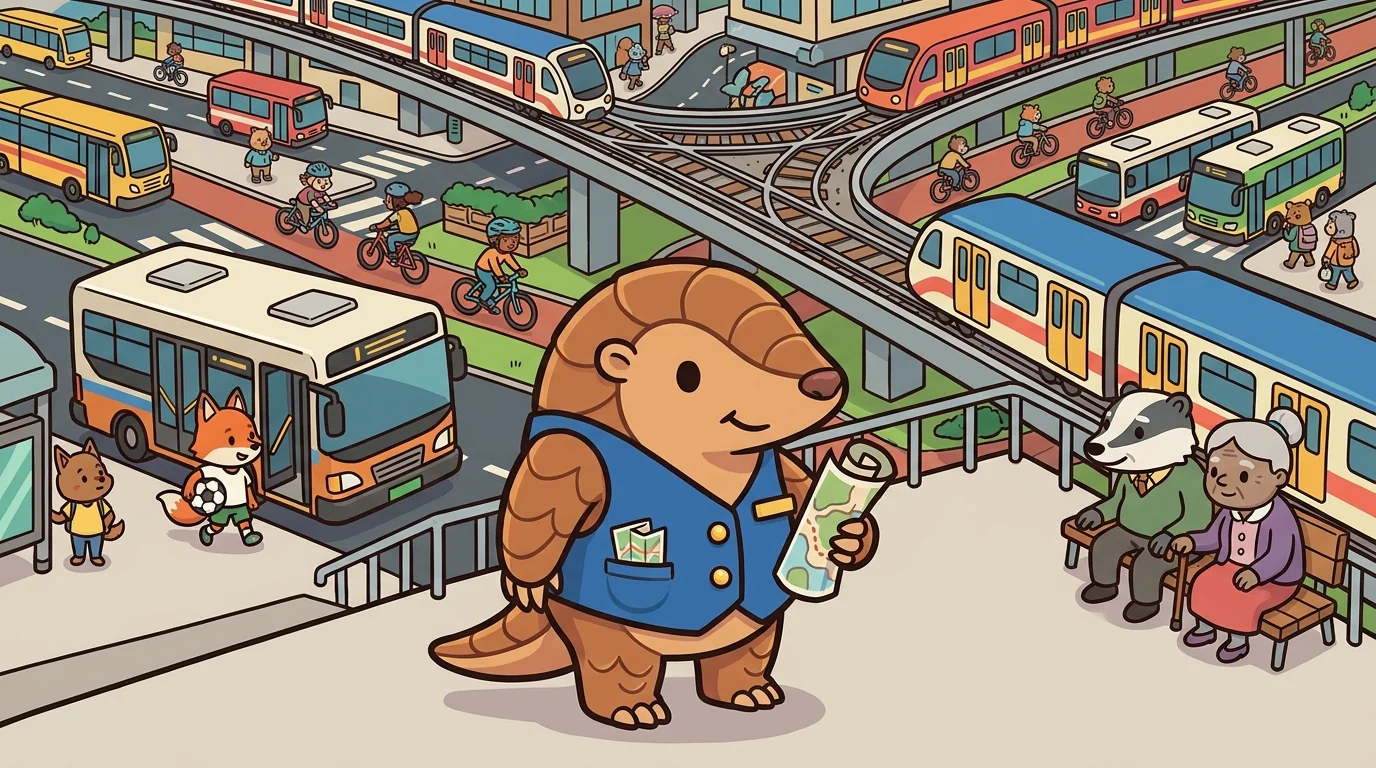
Hub was a small pangolin-tween, no taller than a fire hydrant, with soft, chunky armor plates that looked more like cozy pillows than anything sharp. She always wore a conductor’s vest, a slightly oversized thing in dark blue with brass buttons that gleamed even on cloudy days. Tucked into one pocket was her most prized possession: a small, carefully folded transit map of CityForge.
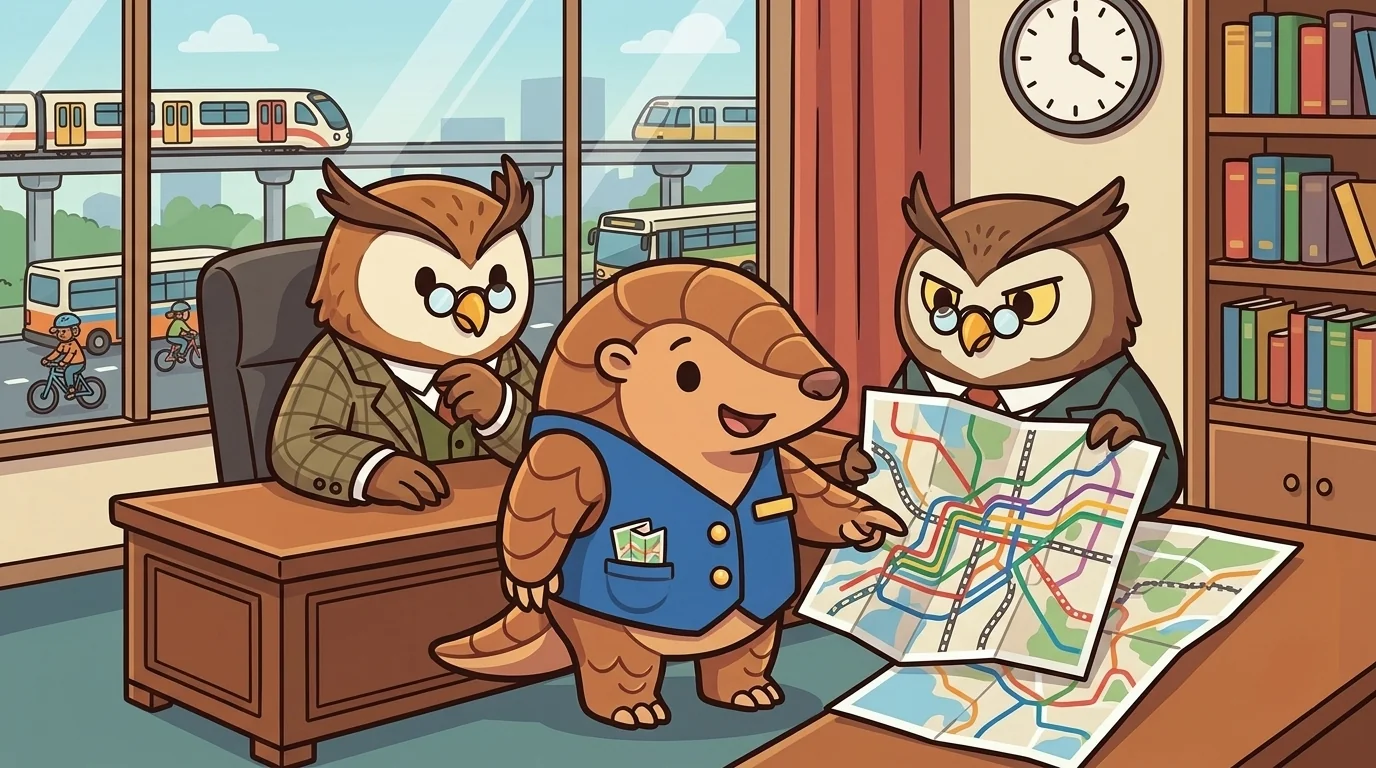
Her fur was a warm mix of bronze and cream, and her eyes, steady and observant, seemed to take in every detail of the busy streets. Hub loved connecting routes. Not just physical routes, but the ways people moved through their lives, linking one part of the city to another. The conductor’s vest, to her, wasn't just a costume. It was a promise. I help people get to where they need to go.
Most people in CityForge thought about transit in simple terms: cars versus trains. They argued about which was better, faster, more modern. Hub saw it differently. She saw the city as a giant puzzle, and the real question was *access*. Could people get to their jobs? To school? The doctor, the grocery store, their family, or just a place to have fun? That was the core of it.
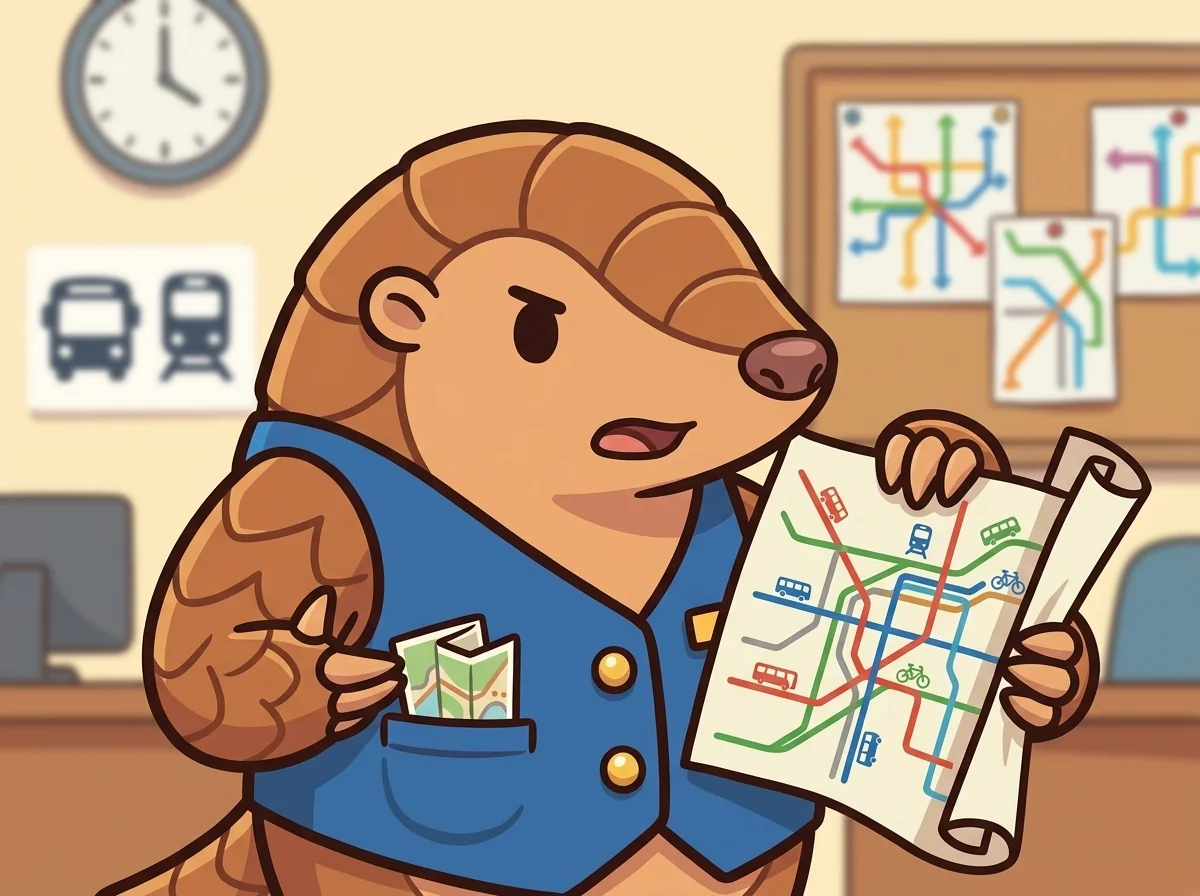
For Hub, the answer wasn't one single perfect way. It was many overlapping transit modes. Buses, trains, light-rail, bike-share, even walking paths – they all mattered. She knew the bus system served far more people in most cities than fancy rail lines ever would. But buses often got less respect, less investment. That, to Hub, was the clearest sign of transit inequity. It was an unfair balance.
She often thought about it, almost like a mantra. "Transit is about ACCESS, not about cars-vs-trains." She’d trace a finger over her map, following a bus line that snaked through a neighborhood others called "out of the way." "Many ways, equal ways," she'd murmur. "The bus matters as much as the train. The bike-share matters. The shuttle van matters. The walkable distance to a transit stop matters." She believed every single mode was a legitimate way to access the city. Each one was a thread in the city’s fabric.
Hub understood that reaching essential destinations affordably and reliably was key. She called this transit is about ACCESS. She knew that a bus wasn't "lesser" than a train; it was just another part of the network. Bus is transit. She also knew that a bus coming every ten minutes was completely different from one that showed up once an hour. Frequency matters. And a bus that was always late? That wasn't useful at all. Reliability matters.
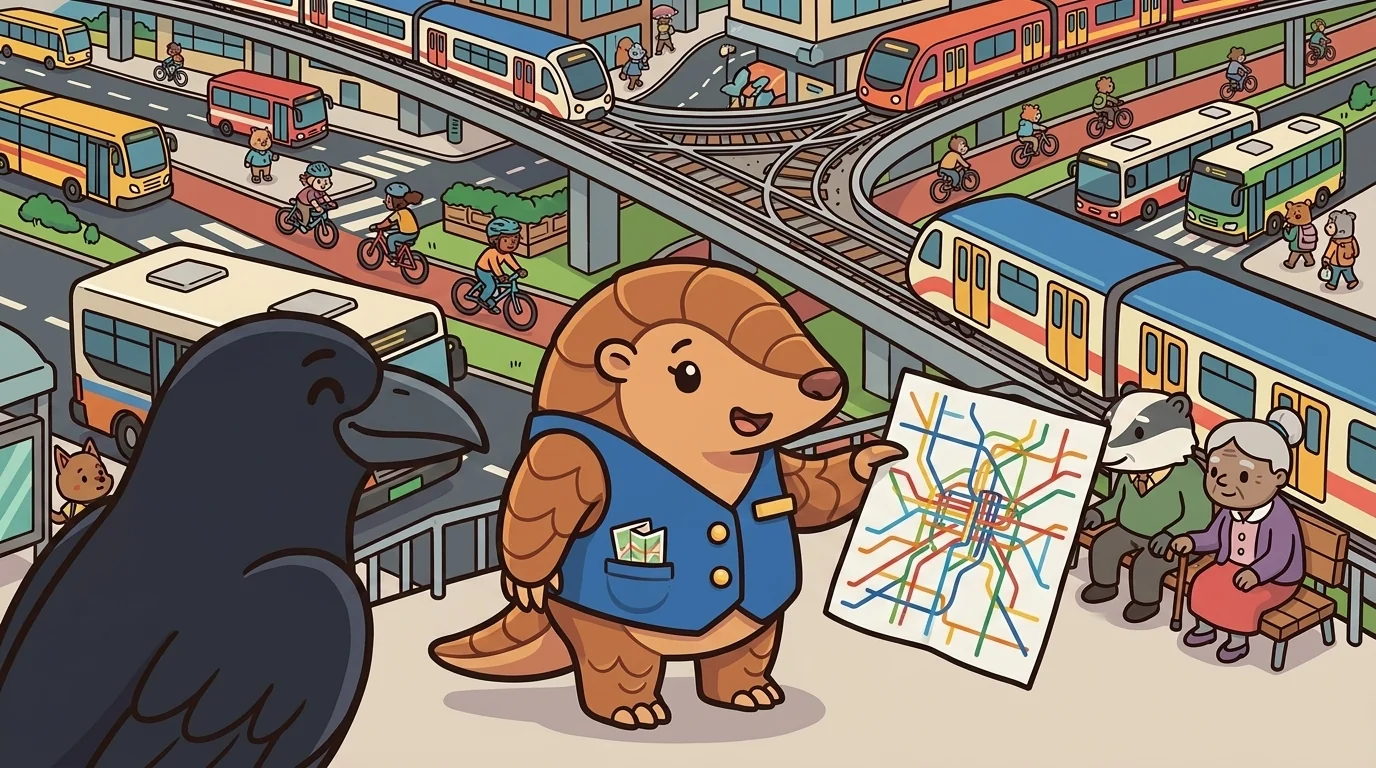
She’d look at the map and see how some neighborhoods, often the wealthier ones, had multiple train stations and frequent bus service. Other areas, usually where low-income families lived, had only a single, unreliable bus line. That was coverage matters, and it was often where transit inequity showed its face. Hub also saw how Lane’s work on walkable streets fed directly into her own. A good sidewalk meant people could reach a bus stop easily. Transit + walkability are linked. And Block’s idea of mixed-use buildings, where homes, shops, and offices were all close together, meant people didn't have to travel as far. It was all connected.
Hub’s family had been the wayfinders in their small village for generations. They were the pangolins who guided travelers along a complex network of paths between villages. Her grandfather had taught her to honor every trail, whether it was a wide, paved road or a narrow, winding dirt track. Each one was a legitimate way to travel. Knowing many routes, and respecting each one, was simply how they worked.
When she arrived at CityForge, she was twenty-two, but felt much younger. Plumb, the city’s chief architect, asked her directly, "What is transit equity?"
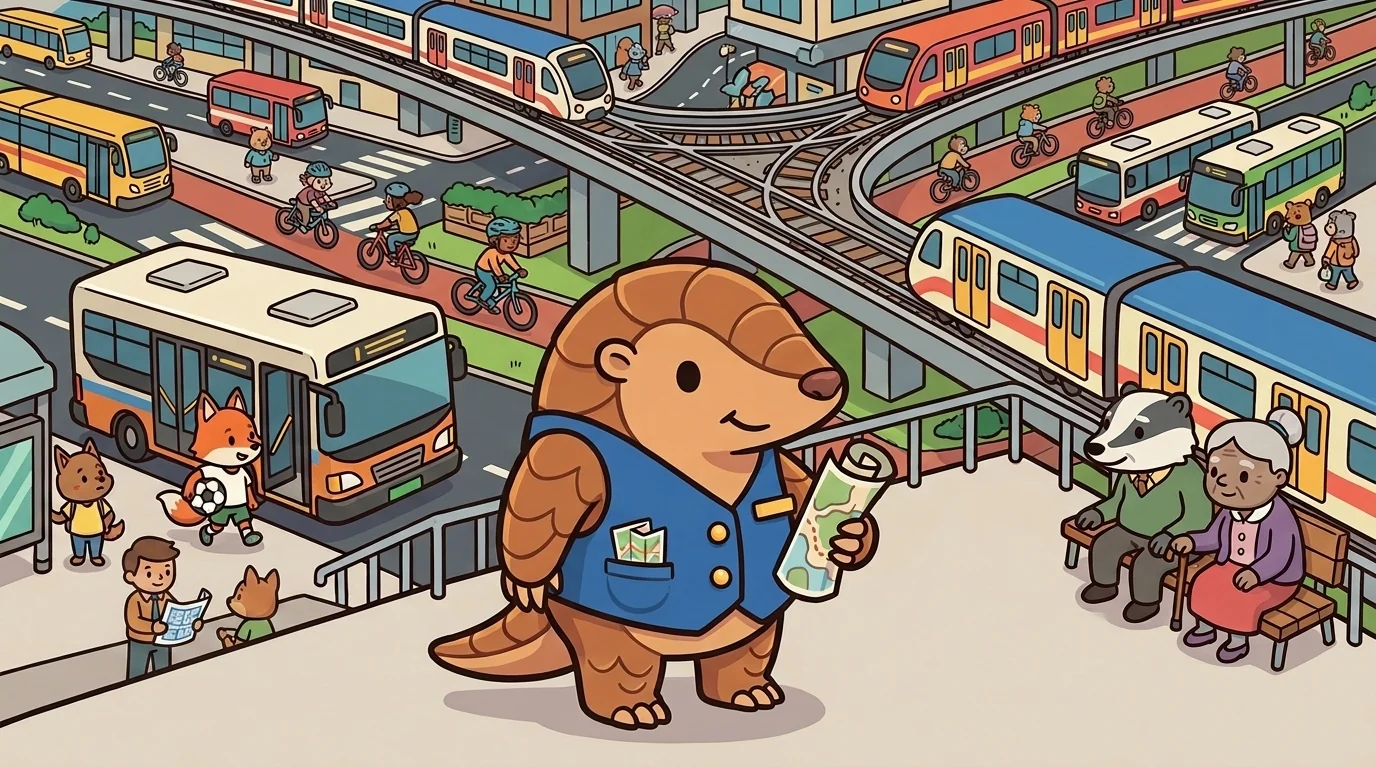
Hub didn't hesitate. She pulled out her map, smoothing a crease. "Access for all neighborhoods," she said, her steady eyes meeting Plumb’s. "Many ways, equal ways. Bus matters as much as train. Frequency and reliability and coverage. That equals access."
Plumb looked at her for a long moment, a small smile forming. "You are appointed."
Hub felt a warmth spread through her. It wasn't hard, she thought. It was just access for all, and the bus matters as much as the train.
The CityForge ensemble
Hub is part of CityForge's distributed-narrative cast. Each character embodies a different curricular primitive; together they teach the full subject.
-

Block
Zoning + density — the badger-tween with clay-block models who teaches zoning as 'plan for the neighbors first, not the buildings'
-

Stoop
Public space + community — the capybara-elder on a wooden stoop who treats public space as the city's living room, foregrounding existing stoop-cultures (Brooklyn / Latin American plazas / Italian piazzas / West African gathering trees)
-
Lane
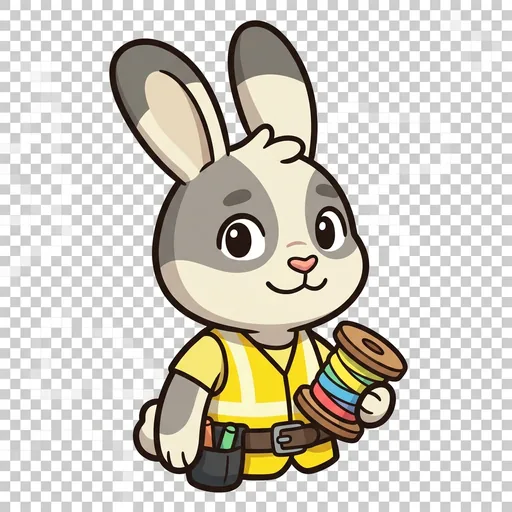
Walkability + mobility — the rabbit-tween in safety-vest with a chalk-spool who teaches streets-as-spaces ('streets are rooms; cars are guests, not owners')
-

Dwell
Housing equity + repair — the owl-elder in a mended quilted-coat who teaches anti-displacement, repair-not-replace urbanism ('repair before replace; listen before plan; the people who live here ARE the design')