
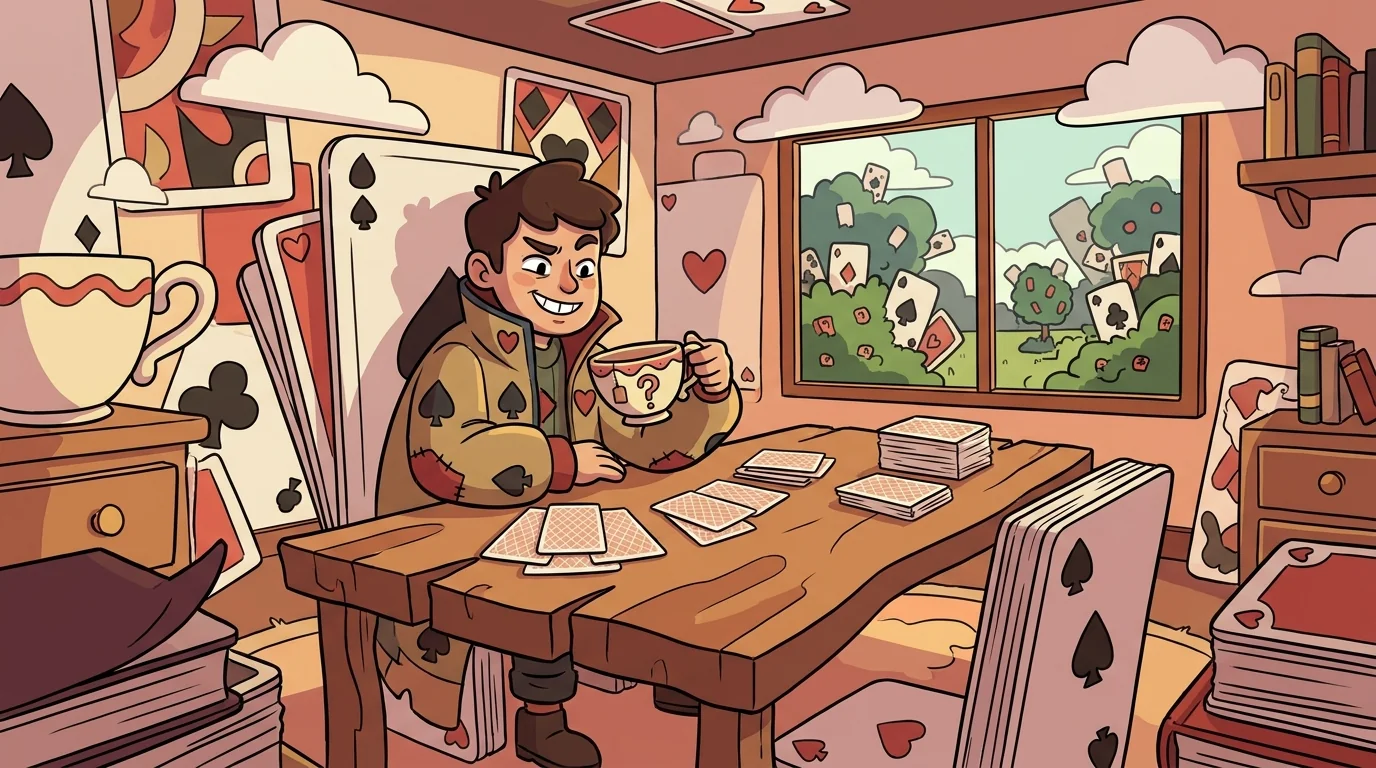
The Bluffer
BLUFFER — *bet a hand you don't have so they fold the one they do.*
Listen along — The Bluffer
Loading audio…
Press play to listen along. The line being read lights up as you go.
Show full transcript
Loading transcript…
Chapter 6 — The Bluffer and the Story You Tell with Bets
The green felt of the folding table glowed under the porch light. Leo, known to everyone here as The Bluffer, tapped a stack of red chips. His eyes, dark and sharp, moved from the community cards in the middle to the faces of the other players. He didn’t just see the cards dealt. He saw the story those cards could tell. More importantly, he saw the story he wanted them to tell.
Leo was small for his age, with an intense focus that made him seem older. He wore a dealer’s vest, a chunky cartoon print of an octopus playing cards. It was a joke, but it also fit. Like an octopus, Leo seemed to have eyes everywhere, processing every small movement, every hesitation. He was deeply attentive to the betting story, the silent conversation happening with every chip pushed forward. He often said, “Bet a hand you don’t have so they fold the one they do.” It was his signature move, a small story chip and a reading card he kept tucked in his vest pocket. These weren’t for playing cards. They were for tracking the bets that had been made, helping him shape the next bet into a story his opponent would believe.
This was Leo’s gift. He embodied the art of poker deception, a craft built on representation versus reading. In a game like Texas Hold’em, the cards in your hand are only half the battle. The bets you make, the way you play each round, these actions tell a story. A simple “check” followed by a big “raise” tells a very different story than a steady “bet” then a “call.” Leo’s particular skill was making his betting pattern so consistent, so believable, that it matched the hand he wanted his opponent to imagine. He could make them fold a genuinely good hand, simply because they believed his lie.
But there was an opposite side to Leo’s craft. He was just as good at reading the opponent’s story. He’d watch for tiny inconsistencies, a bet that didn’t quite fit the pattern, a moment of hesitation. A hole in their story meant they might be bluffing, too. And if they were bluffing, you should call. Poker, Leo knew, was a story-game built right on top of a card-game.
Leo taught them about pattern-consistency. He showed them how “betting is communication,” a language without words. He drilled in the rule: “If their story has a hole, the call is the move.” It was a mix of game theory, psychology, and something he called Bayesian updating—which, he explained, just meant constantly adjusting your guesses about what someone else had, based on every new piece of information. This skill wasn’t just for cards. It crossed over to StrategyForge, where you planned your moves, and EthosForge, where you understood what your actions said about you. Even DialogueQuest, where you crafted stories, used the same principles.
“I am The Bluffer,” Leo would announce, though everyone already knew. “The primitive I teach is deception under uncertainty. The move is bet a hand you don’t have so they fold the one they do.” He’d pause, letting the words sink in. “Cards are half. Story is the other half.”
One Saturday afternoon, the sun was already dipping low, painting the sky in streaks of orange and purple. A backyard poker game was in full swing. They played for chips, never for money, just for the thrill of the strategy. The air hummed with concentration. It was Leo’s turn to act. He glanced at his two cards: a pair of fives. Not terrible, but not great. The community cards on the board showed the Ace of Spades, the King of Spades, the Queen of Spades, the Two of Hearts, and the Seven of Clubs. Three spades. A possible flush.
His opponent, a kid named Sam, had been betting moderately all game. Sam had a consistent rhythm, a steady confidence that usually meant he had something decent. This time, Sam had bet a comfortable stack of blue chips. He looked relaxed, almost bored. Too relaxed, maybe.
Leo considered his options. He had nothing close to a flush. Just his pair of fives, which was easily beaten by the three high spades on the board, let alone anything Sam might be holding. He picked up his story chip, a small, polished stone, and turned it over in his fingers. What story was Sam telling? A strong hand, but not an unbeatable one. He wanted people to call, but not to raise too high.
Leo decided to tell a different story. A big story. He pushed a towering stack of red chips into the pot. “Raise,” he said, his voice even. It was a huge bet, far more than Sam had put in.
Sam blinked. His relaxed posture stiffened. He picked up his own cards, fanned them, then gathered them again. His eyes flickered to Leo, then to the board, then back to Leo. He was trying to read the new story. Leo had just bet as if he held the Ace of Spades and another spade, completing the flush. Or maybe he had a full house, fives and something else. It was a terrifying story to hear.
Leo leaned back in his chair, a small, almost invisible smile playing on his lips. He didn’t have the flush. He didn’t have a full house. But his bet said he did. Loud and clear. He watched Sam’s face, the subtle twitch near his eye, the way his fingers drummed a quick, nervous rhythm on the table. Sam was trying to make his own story hold together, but Leo’s big bet had punched a hole right through it.
Finally, Sam sighed. He pushed his cards forward, face down. “Fold,” he muttered. “Too rich for my blood.”
Leo pulled the chips toward him. He didn’t gloat, not exactly. He just picked up his pair of fives and showed them to the table. Two small, unassuming cards. “The story matters as much as the cards,” he said, a quiet triumph in his voice.
A few kids around the table laughed, surprised by the reveal. But Maya, known as The Counter, who remembered every card played and every bet made, shook her head. “That’s not memory, Leo,” she said, a hint of frustration in her voice. “That’s performance.”
Leo just smiled. He tapped his story chip. “Both are noticing, Maya. You notice what’s been played. I notice what’s been bet. We’re both reading. Different signals.”
essential gambling-adjacency gate (HIGHEST RISK chapter — the bluffer + poker framing). Poker in CardForge is played for CHIPS / POINTS / TOOTHPICKS / NEVER REAL MONEY. The framing is mathematical game-theory + psychology + Bayesian reasoning — comparable to chess or go in intellectual depth. Texas Hold’em is the most-played mind-sport-card-game in the world; the World Series of Poker is the canonical pro venue but kids’ poker leagues (LeaGameNight, NJ Poker Kids, etc.) explicitly use no-cash framing. The Bluffer’s whole craft is INFORMATION GAME THEORY — what economists model as signaling games. The cast NEVER frames poker as bet-for-cash; NEVER frames bluffing as a path to easy money; ALWAYS frames it as a thinking-game.
Cross-app: The Bluffer echoes StrategyForge’s signaling + game-theory; EthosForge’s “what story does this action tell?” (intent vs perception); DialogueQuest’s character-revealed-through-through-action (the bets ARE the character’s choices).
The CardForge ensemble
The Bluffer is part of CardForge's distributed-narrative cast. Each character embodies a different curricular primitive; together they teach the full subject.
-

The Finesseur
Finesse (force an opponent's high card via positional play; bridge / hearts / spades)
-

The Squeezer
Squeeze (force a discard that gives up a winner; advanced bridge + hearts)
-

The Endplayer
Endplay (throw opponent in to force a losing lead; bridge / hearts / whist)
-
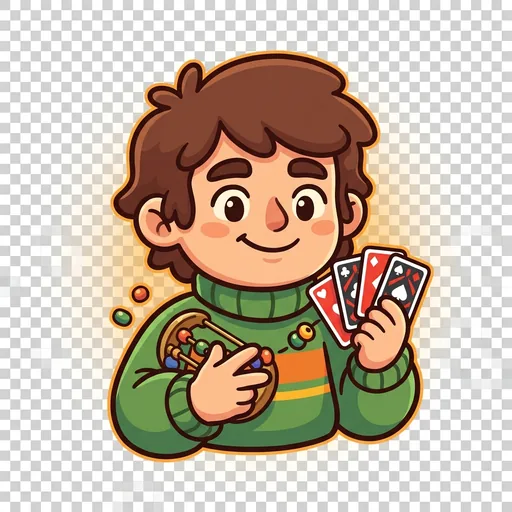
The Counter
Card-counting / pip-tracking (track played cards to deduce remaining hands; gin / bridge / blackjack-style)
-

The Long-Suit
Suit establishment (set up a long suit to run for tricks late in the hand; bridge / whist / spades)
-
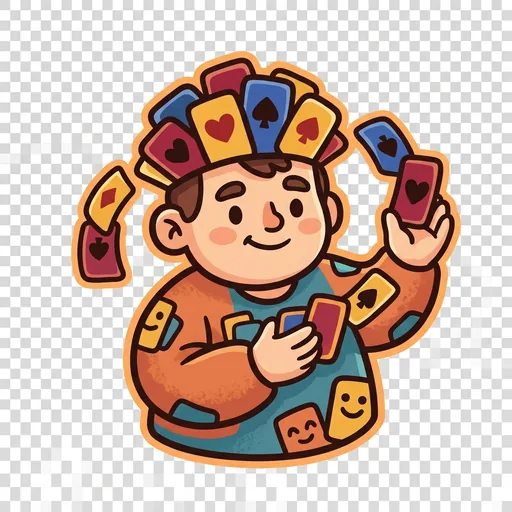
The Discarder
Strategic discard (hearts: avoid points; spades / gin / rummy: shed dead wood)
-

The Trumpkeeper
Trump management (when to ruff, when to hold; whist / spades / euchre / pinochle)
-
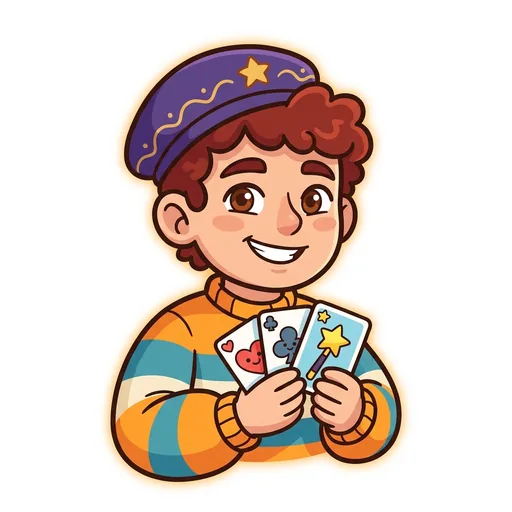
The Forcer
Magic forcing (the spectator "freely chooses" the card you intended)
-
The Shuffler
False-shuffle / stack management (control card order while appearing to randomize; mathematical card magic)